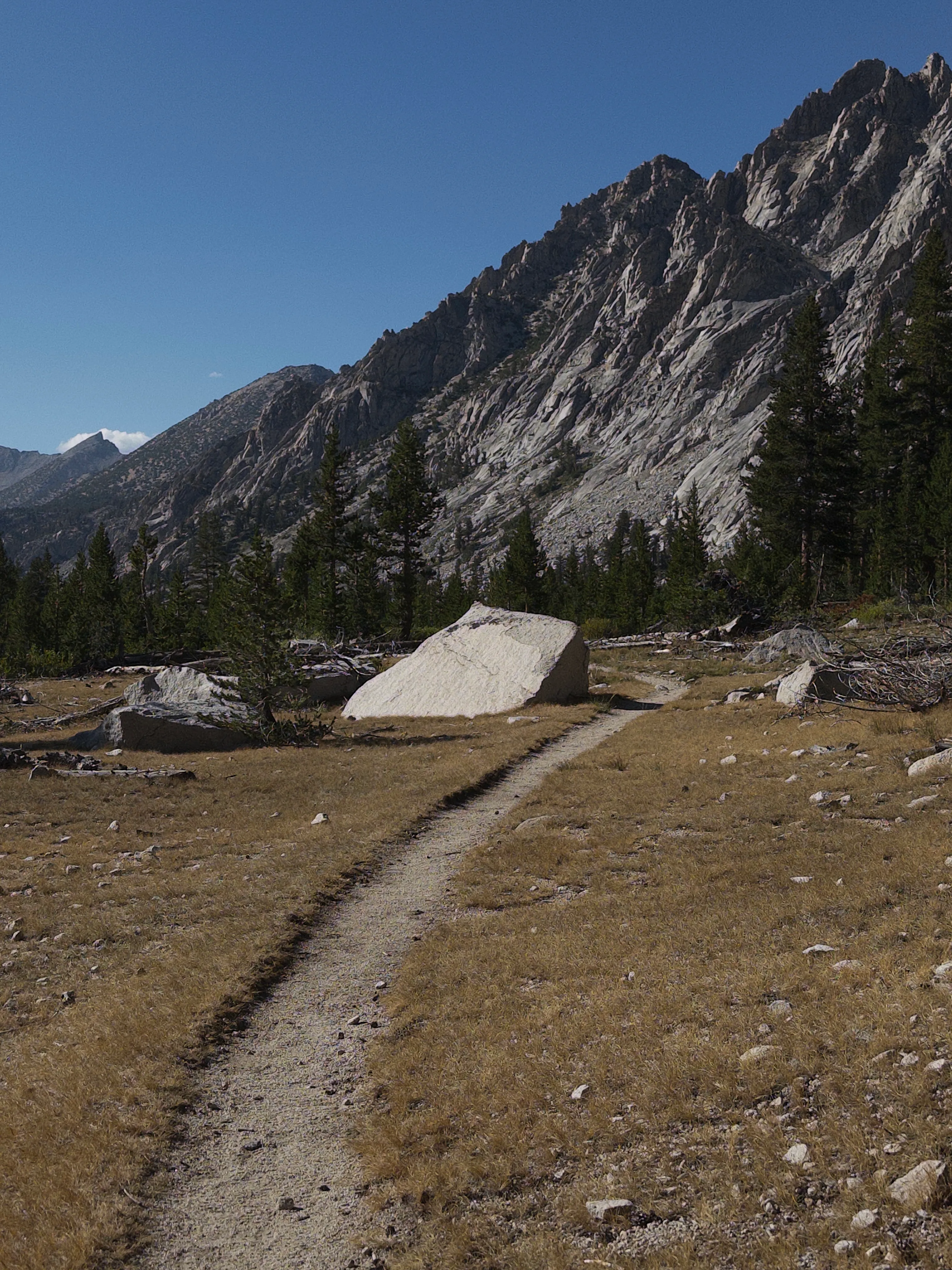
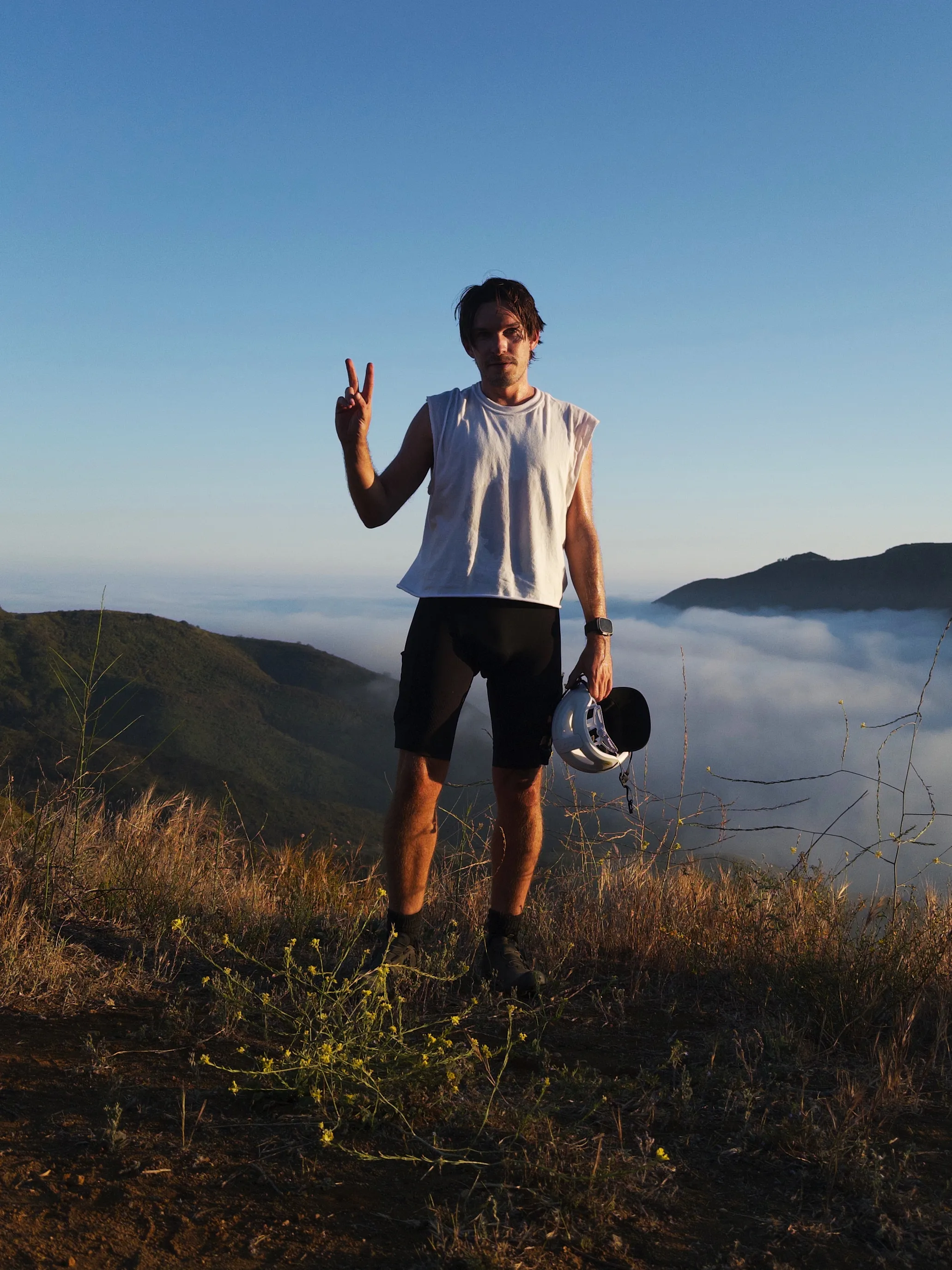
The canyon is dry. But it’s early, and the air as I move through it feels cool. Running the switchbacks up sunset ridge, you usually hear a light cascade of water moving down Millard Canyon. Consistently this time of year. The white noise of the water has a similar effect to the sound of being in the shower, and lends itself to something like shower thoughts. Running trail tends to do this anyway—trail thoughts—but you really sense it when moving up Millard.
Sunset Ridge tops out and connecting with the meandering Mt Lowe Road. A train once ran here between a hotel halfway up the face of the San Gabriel and an alpine tavern. The foundation is all that’s left after burning down in a wildfire soon after completion almost one hundred years ago.
I stop briefly and look around. At how the shadows move. The rooftops of the houses below in Altadena as they fall away. At just how parched the chaparral is.
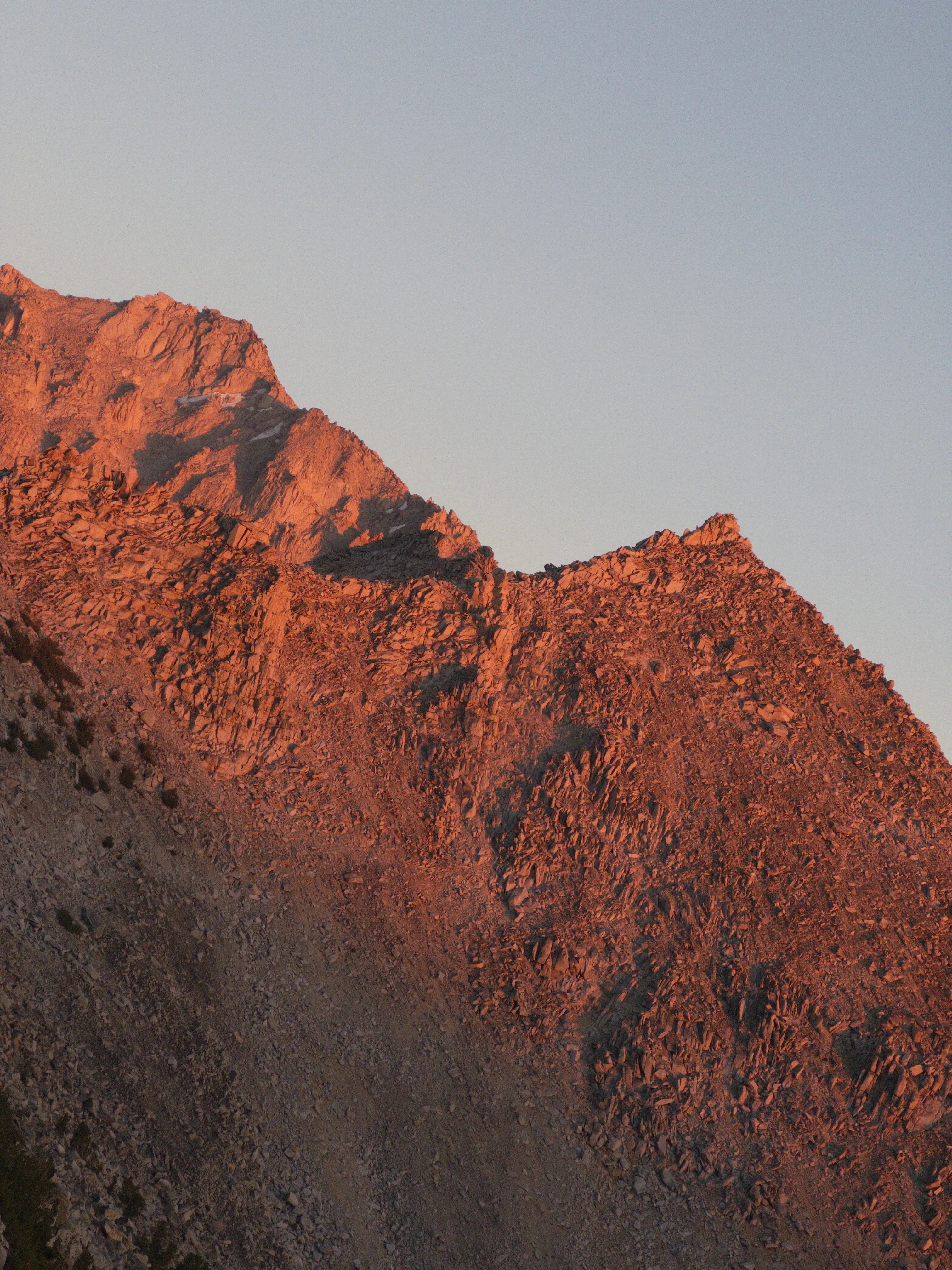
4,200ft of elevation now behind and beneath me. San Gabriel Peak, the namesake true high point of the Gabs, is to the east of this saddle. But for reasons unclear to me, I decide to climb up Mount Disappointment. I think because it’s been a regular destination over the years. Topping out there is personally significant in a way that reaching San Gabriel peak maybe isn’t.
When the first land surveying team moved through the San Gabriel they pushed through the dense brush and reached the top of the tallest peak, only to realize the adjacent peak was taller. “Mount Deception” they wrote. After climbing that peak, the same realization repeated. “Mount Disappointment.”
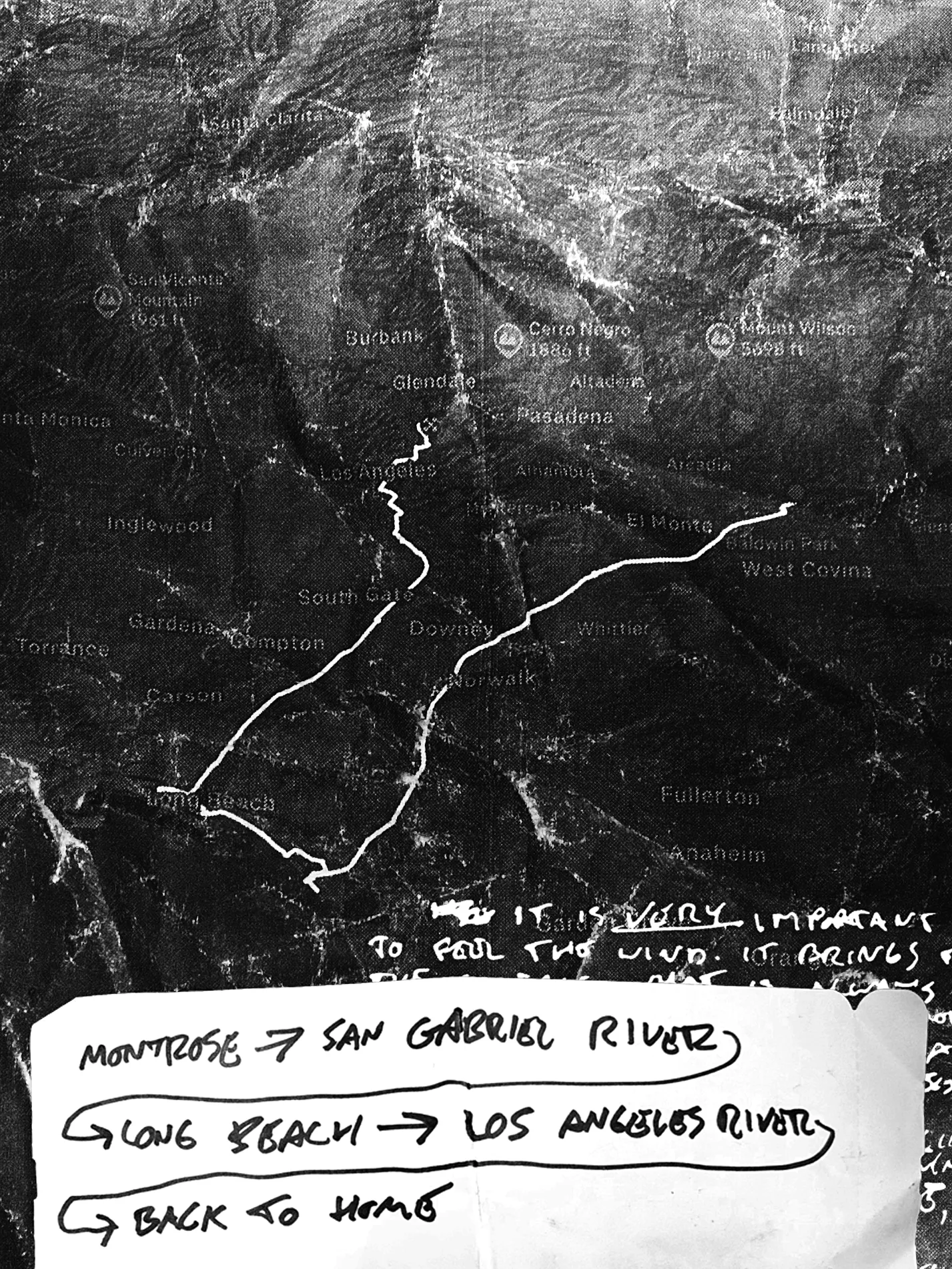
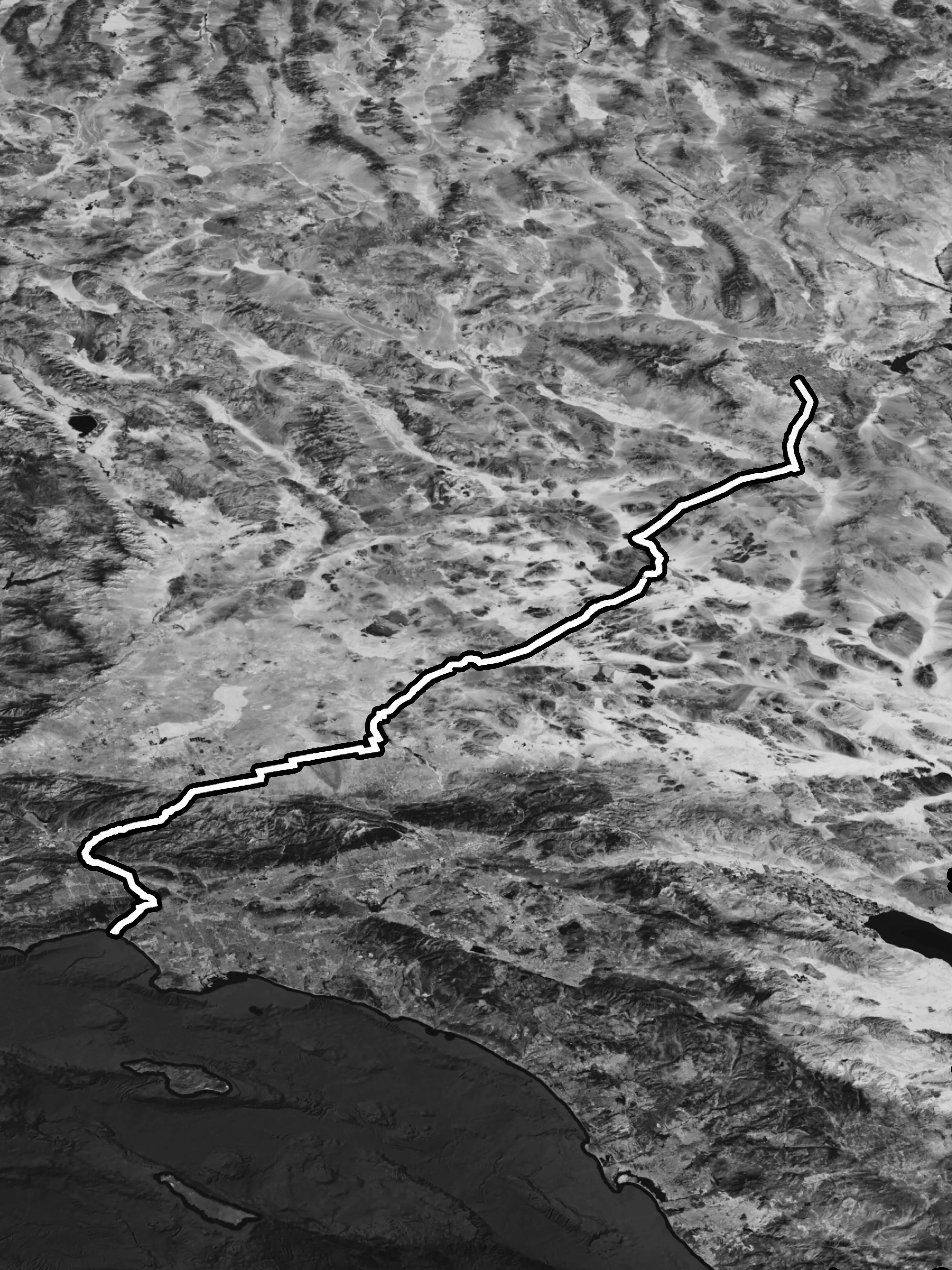
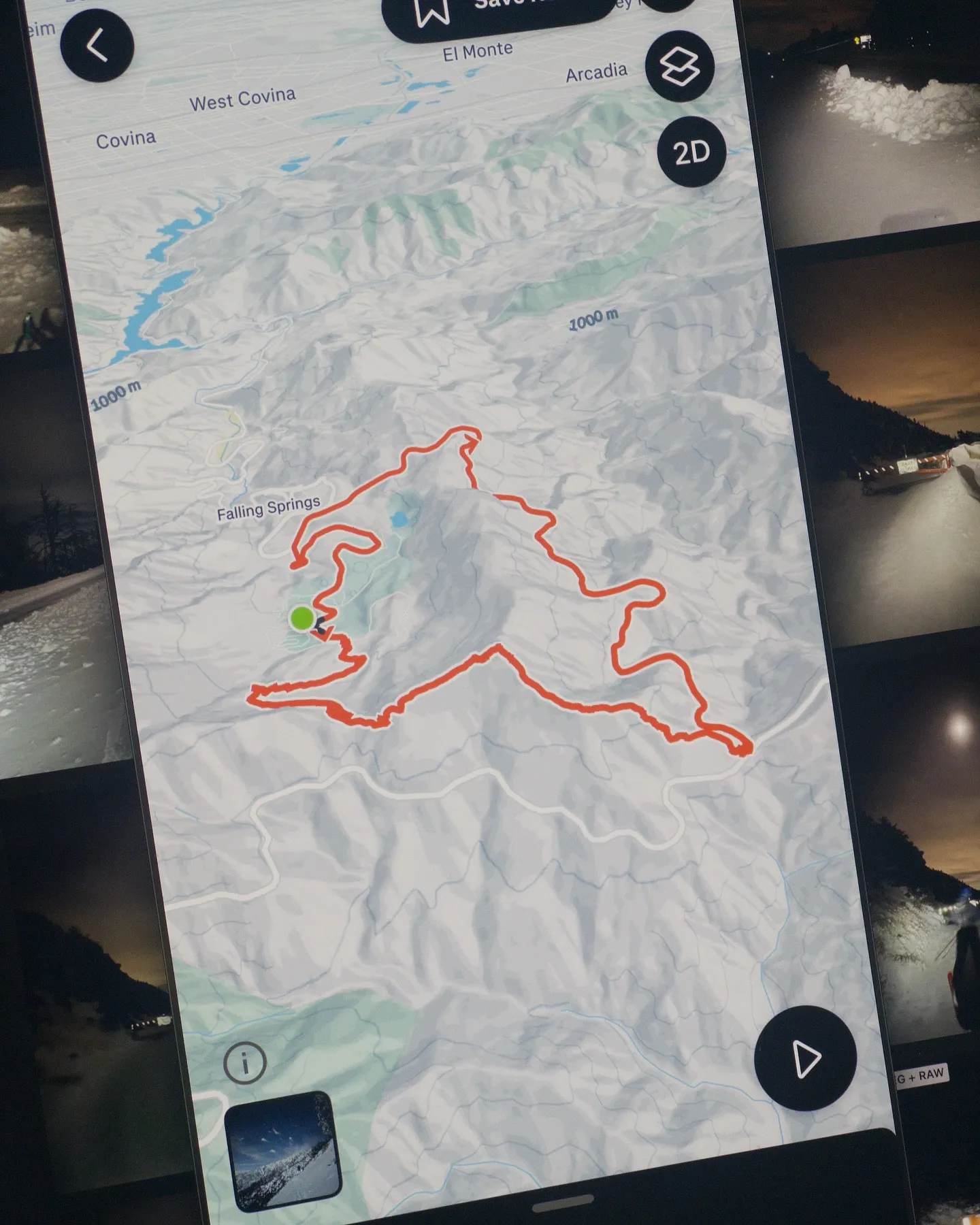
Disappointment is anything but, and after a little siesta at the top there’s a decision to make. Retrace the ascent, now letting gravity do the work, or drop down the backside and follow the Arroyo Seco down and out. The legs feel strong today. Two years of consistent and injury-free movement. A sort of personal peak fitness. The day is beautiful. Committing to the Arroyo isn’t even a choice, it’s the only way. The line has a quality that draws me to it. It’s not an exit. It’s a connection between points like making a gesture on paper. Climbing up and over the front of the San Gabriel. Connecting the start of the drainage and the headwaters of the San Gabriel. The long climb, followed by a meandering flow tracing the water course. That’s the stuff right there.
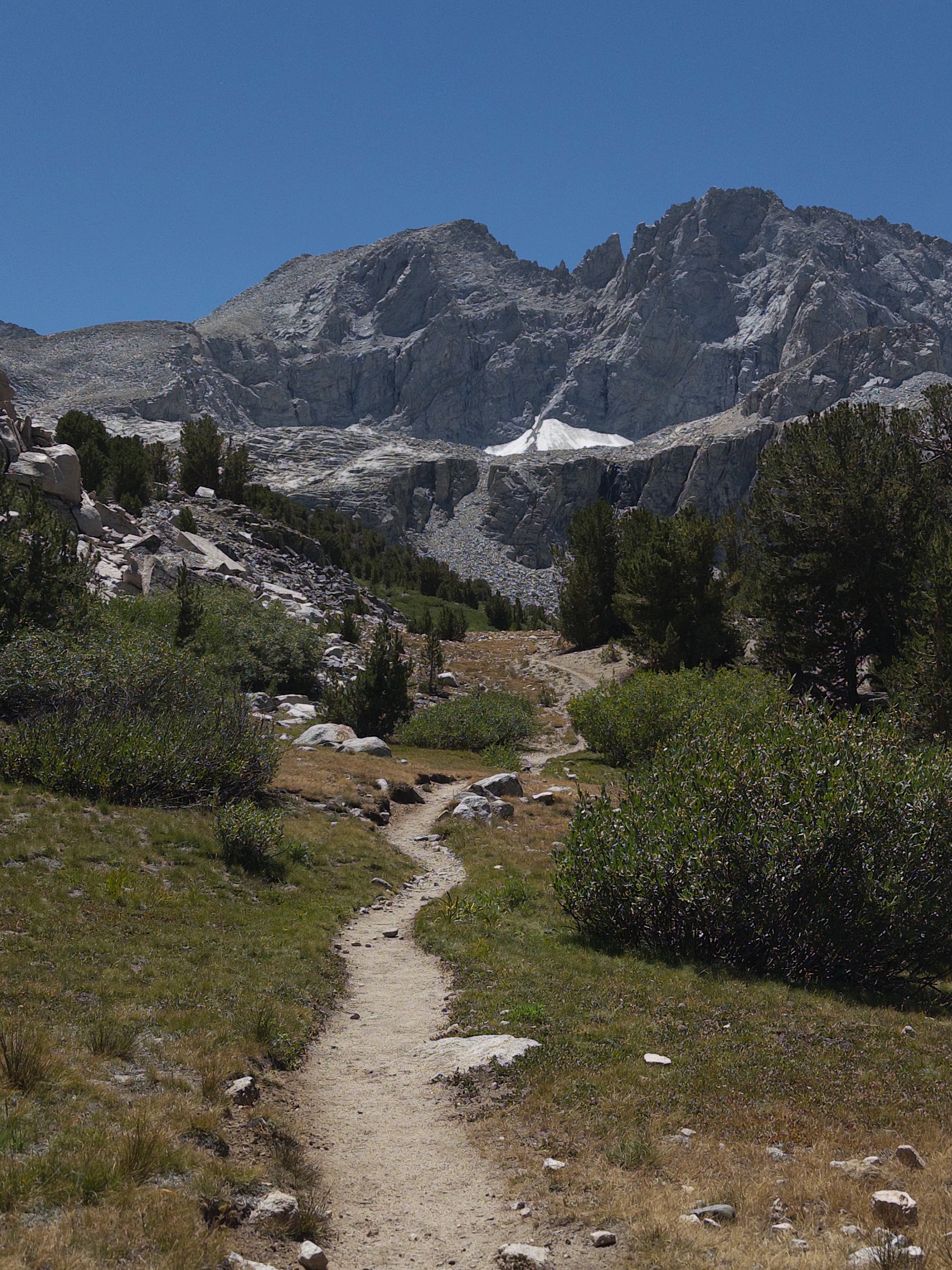
The single track to Redbox saddle moves through dense oaks and offers perfectly framed windows of San Antonio to the east. A little snow hangs around the summit. Taking a beat at the junction to appreciate it all. Hopping on the Gabrielino Trail towards Switzer Falls. The arroyo has a trickle. Families picnic here along the banks.
A narrow catwalk carries the feet to the edge of Bear Canyon. A lush pocket of green sustained by another small trickle of remaining water. The midday sun overhead roasts in the more exposed zones. I stop for a while. More trail thoughts.
Running for me is not about speed. It’s movement at a boundary edge. You park your heart rate at a certain place and distances shrink over time, but somehow you feel no greater fatigue than you would walking. Maybe even less than walking when done with quality of movement and a sensitivity to efficiency. It’s all rests at a point of balance.
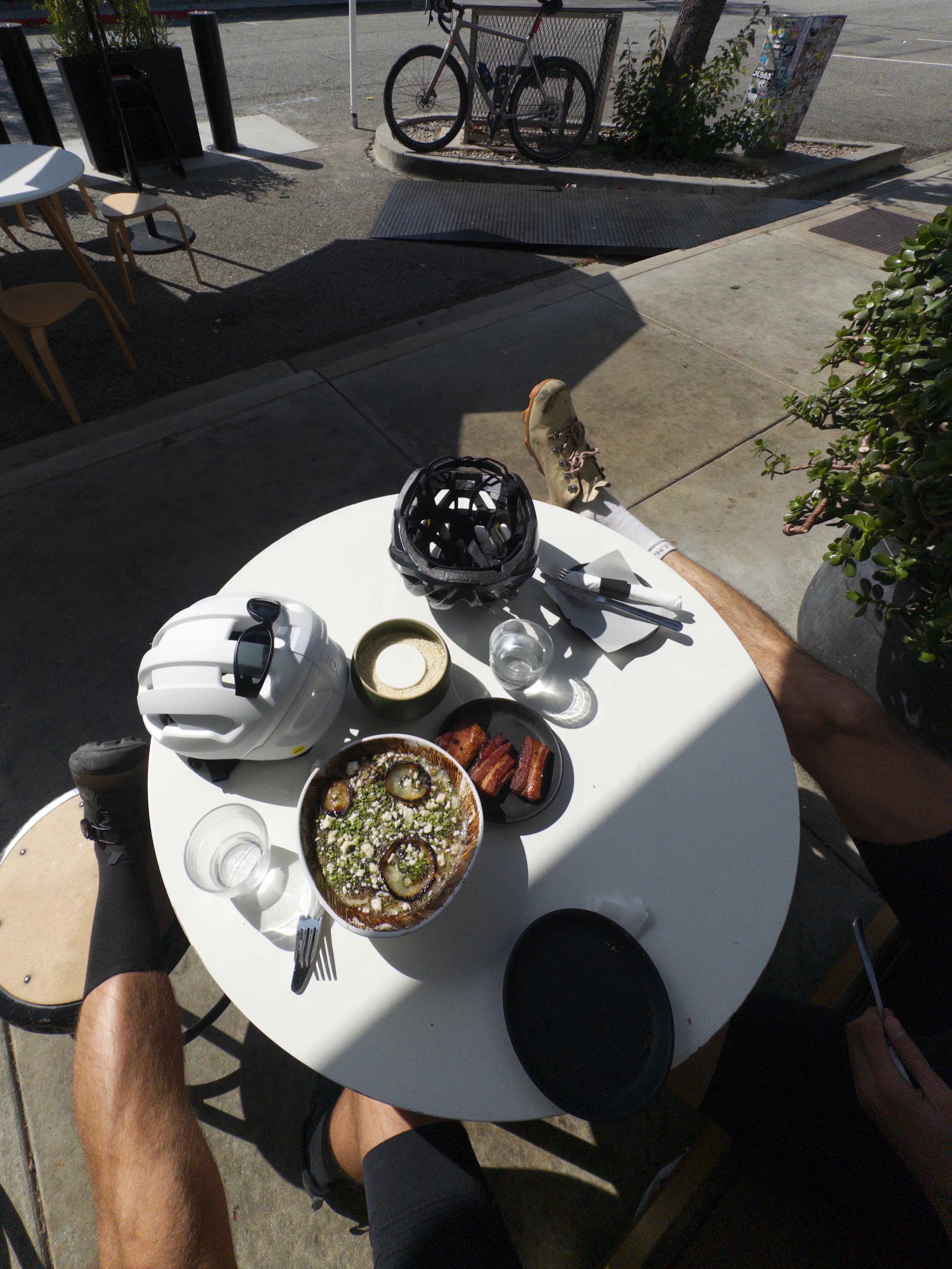
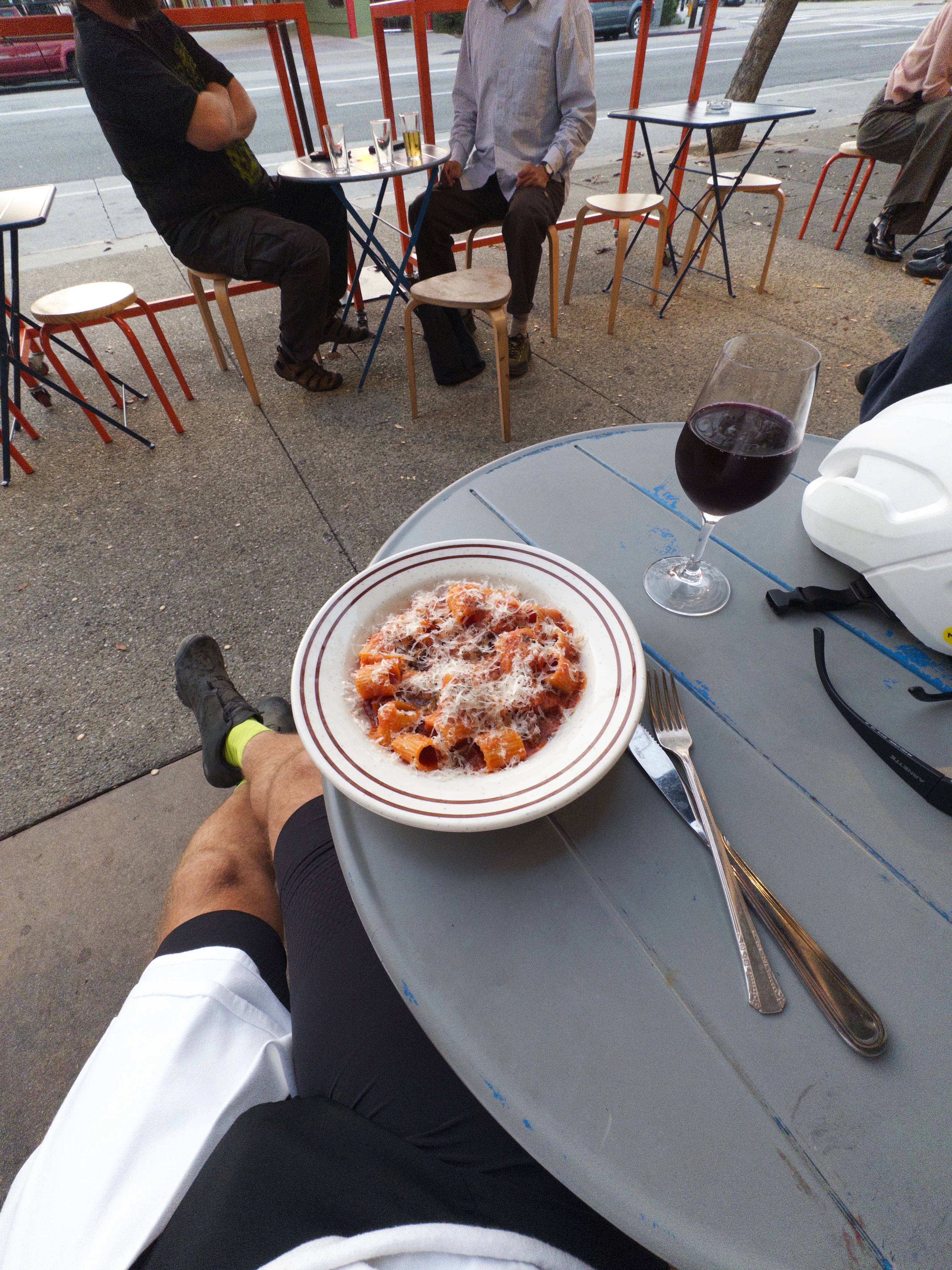
So it may seem a little counterintuitive to run for hours to then sit and relax for half an hour. As in, what was the hurry about? But it’s all centered on the joy of movement and quality time with environment. To move a certain way is to be in the groove, in the pocket, both with the landscape and with yourself. It just happens to look like running, or we just happen to call it running.1
So I sit here for a while and really take it in. A little more than usual, but you respond in the moment to what feels right. After a while, moving again, weaving through the oak tunnels. Light leaks through the pockets of leaves, the temperature drops falling deeper into the canyon.
The Arroyo Seco runs low. Really low. Your feet tend to get wet crossing back and forth through here. But today the feet are dry. The arroyo and I spill out into the Hahamongna Basin. A few moments later and I unlock the car door, the loop completed.
30 miles. 5,500ft of elevation gain. I’m very glad I made the decision to commit at the top of the climb and make it a loop.2
A couple days later I wake up and the sky is black. Easily mistaken for night if it wasn’t for a sliver of blue sky peaking out from under the enveloping cloud of smoke. Santa Ana winds cascaded down the foothills yesterday. Mountain wave. High voltage transmission line failure. A bad recipe, and a fire broke out. As the sun set, I watched from my house as the fire tore through the brush. It looked like when you touch a battery to a brillo pad. Reaction-diffusion on landscape scale. A layer of ash now covered everything outside. I went north to June Lake, where several months earlier I had packed my house into boxes and moved back down to Los Angeles after two years living in the alpine. Home there was buried in almost a thousand inches of snow and ice during a historic winter season. Now home is being covered in ash during a historic fire.
Being in the Sierra over the next few days I felt restless. Being physically distant from the fire didn’t change the proximity in the heart and mind. It became important to experience the fire and it’s effects directly, so I returned home. The fire was suppressed, but home smelled like smoke. Still drifting and settling in the basins trapped by the atmospheric inversion layer.
With all this particulate came an actuate awareness of the air quality. A concern with the longterm effects, the masks stockpiled during COVID came out of retirement. “Don’t go outside unless absolutely required.” Every store sold out of air purifiers. The amazon back order was weeks.
A few days after the fire the collective awareness of Los Angeles briefly shifted. David Lynch had died. Something changed in the magic of Los Angeles. Smoke still drifted around in the air.
Emphysema was a contributing condition. Years of smoking cigarettes left him unable to walk across the room without oxygen. I sat with restless legs reading this on my couch. Beside me my air purifier cranking away. Sometimes what you love isn’t good for you. Sometimes that’s ok.
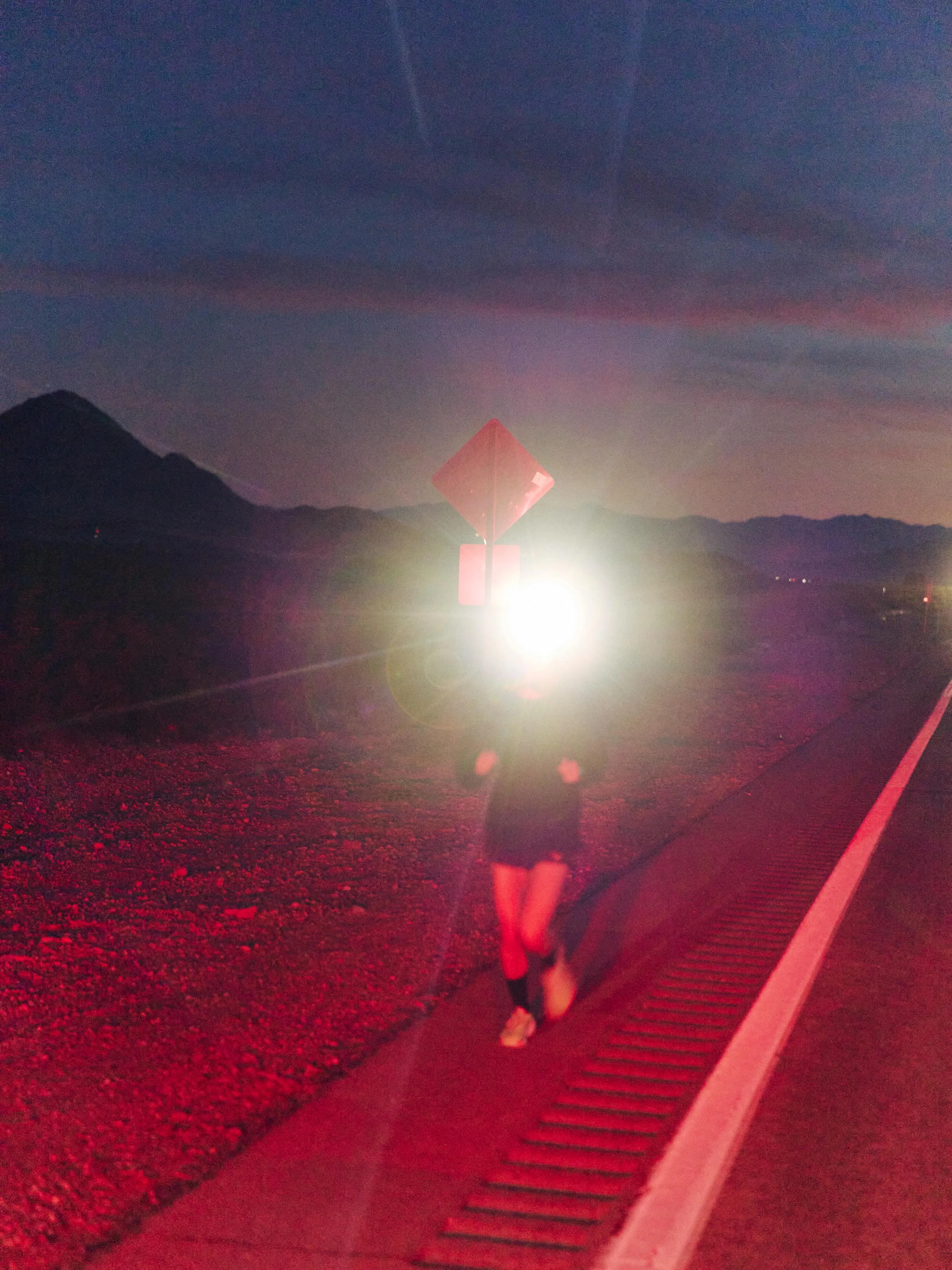
I laced up my shoes and ran out the front door. I live in Mount Washington, in a canyon defined by steep walls. After days of being sedentary moving fast uphill is purely euphoric. A total high. Inhale, exhale. Deep deep breathes.
The road I’m running tops out at Kite Hill. A few days before I walked here to get a clear line of sight on Eaton Canyon minutes after the fire took off. That image of the flames now projected by my mind onto the landscape in-front of me. A slippage between that moment and now. That lucky run during the days proceeding the fires comes flashing past. Those were the last moments in that terrain indefinitely, unknowingly.
Friends had lost their houses. Their musical instruments. Their paintings. Family photos. Hundreds of hours of work building homes.
All of it now suspended in the air as particulate. Deep breathes. All of it was coming part of me. Embedded in my lungs. For who knows how long. The fire becoming part of me.
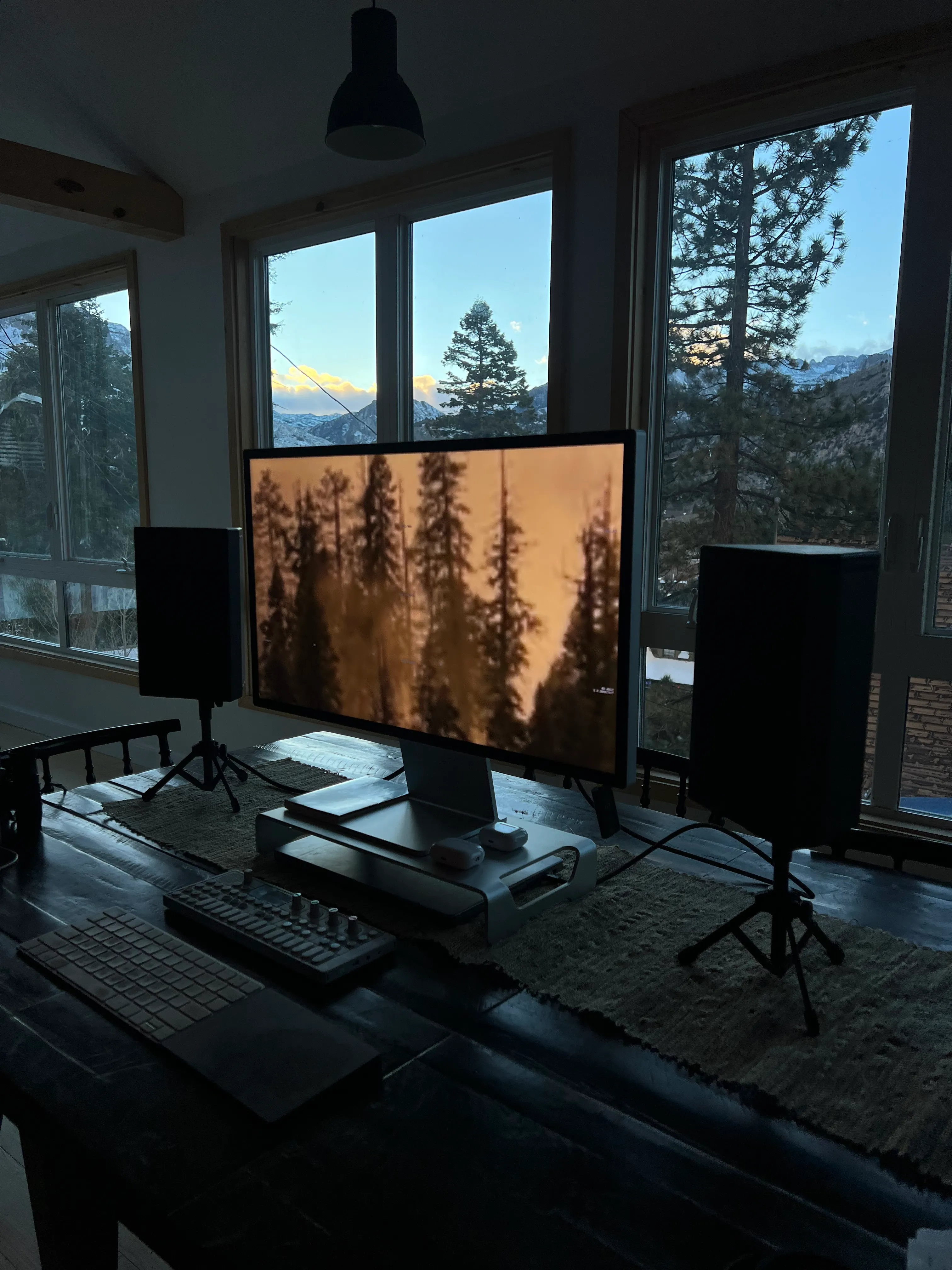
The legs are a little heavier these days. The past year has been one of different priorities. After two years living in the alpine centered on movement, this year was decidedly a counterpoint. A couple months in New York, a lot of screen time. A period of risk and learning in new and unfamiliar ways.
Still getting out. Still moving. But the “fitness index score” is way down. It’s liberating in some ways. I knew when leaving June Lake a ceiling to my athletics was hit. A sense of growth in the direction I was headed in how I spent time in the alpine required risk I was unwilling to take. At least in that moment and context. Finding stasis is hard without the motivation of frequent big objectives, and with increased responsibility at the desk, the fitness was now taking a hit.
Occasionally the awareness of this bothers me, but you must have periods of recovery. It’s an inescapable counterpoint to the intensity. Of course this is all relative, but to take a few months of reduced volume is alright, I think.
It’s been a year since the fires has passed, and in that way time work. It feels like both an eternity and a blink. Friends most effected shared impressions. It was encouraging to see the connecting thread being the generosity and support they received, both in the immediate aftermath, and over the course of the year.
The next day I see an announcement from the Cheney Trail account. “Partial reopening.” The map shows what terrain is back in play. All of Millard. Bear Canyon. Sunset ridge and Mount Lowe Road. A true surprise. With no established time frame for re-opening, the ambiguity had extended outward indefinitely. With clarity comes relief, and I fall asleep with trail on the mind.
My hip belt is stuffed with nutrition and 1.5L of water. Inspiration point, a shade structure about 12mi and 3k vert away.
I park on Lloma Alta near the corner of Cheney trail in front of a foundation where a house once stood. First steps. My achilles are barking from the grade of the road thanks to reduced volume and sticking to mostly flat terrain during the past few months. While there are pockets of charred skeletal brush, the tress are mostly intact. An incredibly welcomed surprise.
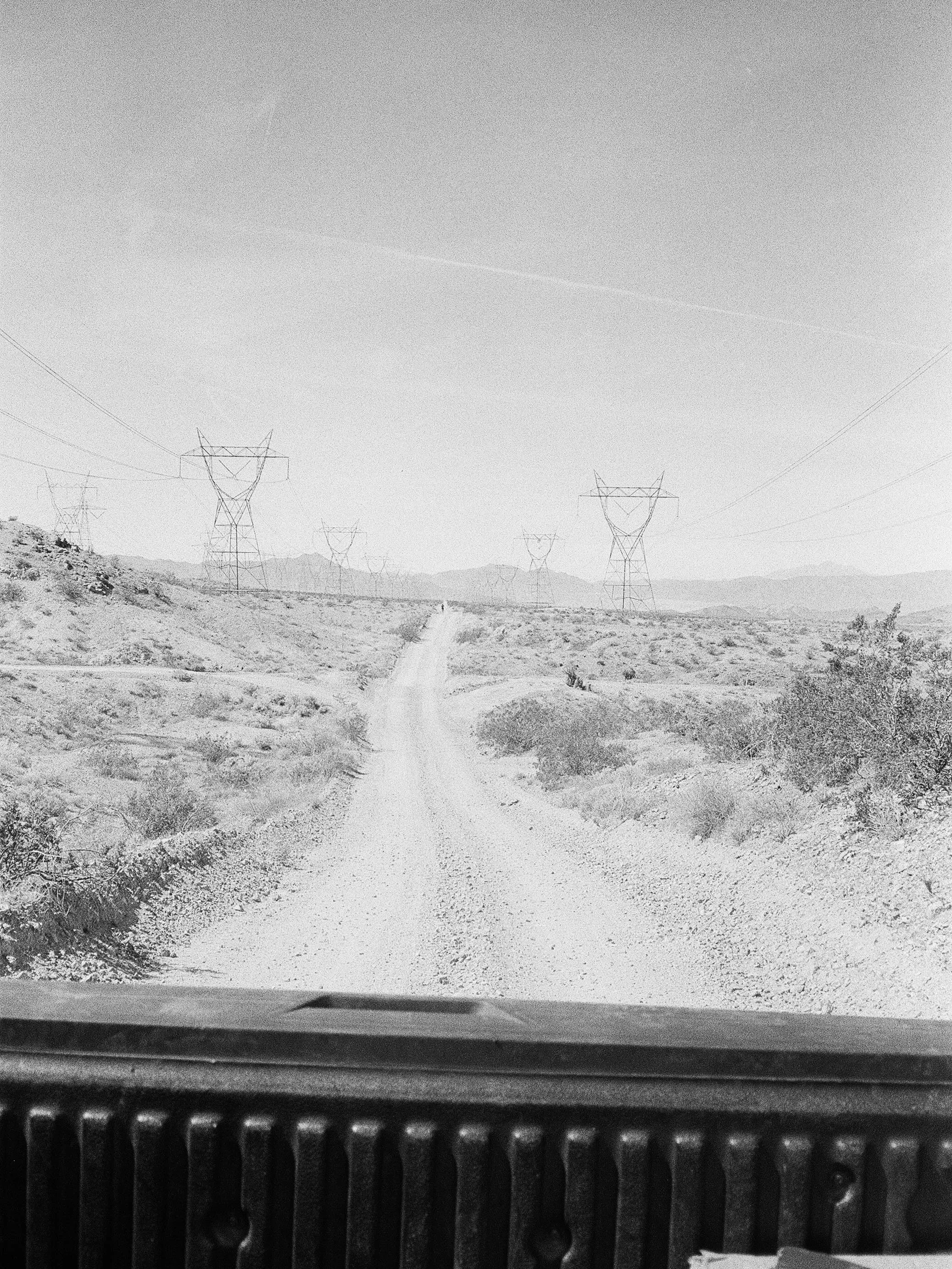
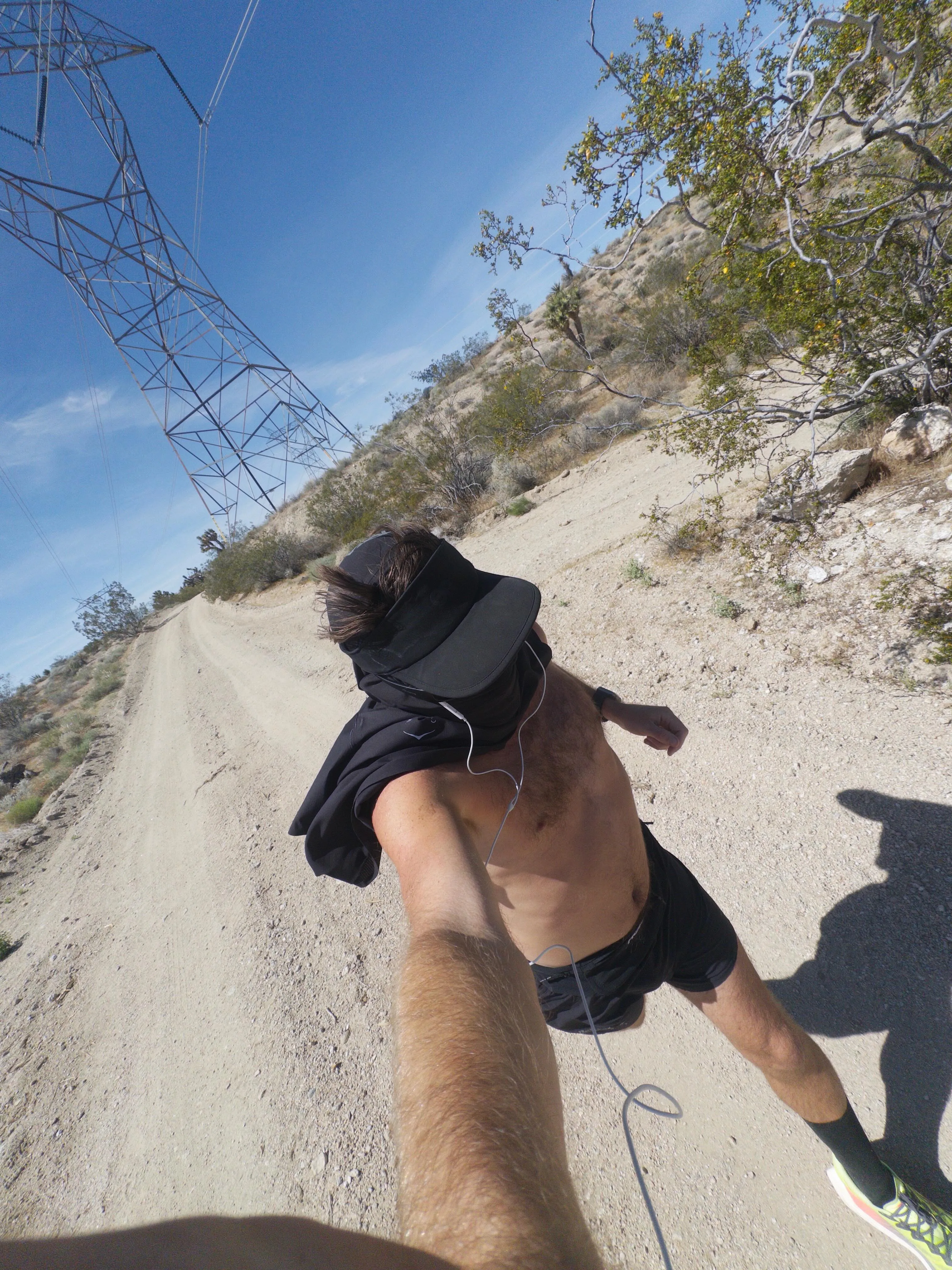
Moving upwards along Sunset Ridge. Power lines pass overhead, extending ridge to ridge and spanning the expanse of canyons below. These are the same high voltage transmission lines that failed during the windstorm. The source of the fire. Their contorted forms, straight lines and right angles, visually contrast the rolling folds and flow of the landscape. I move through the towers like gates, and a few switchbacks later they fall behind and below me.
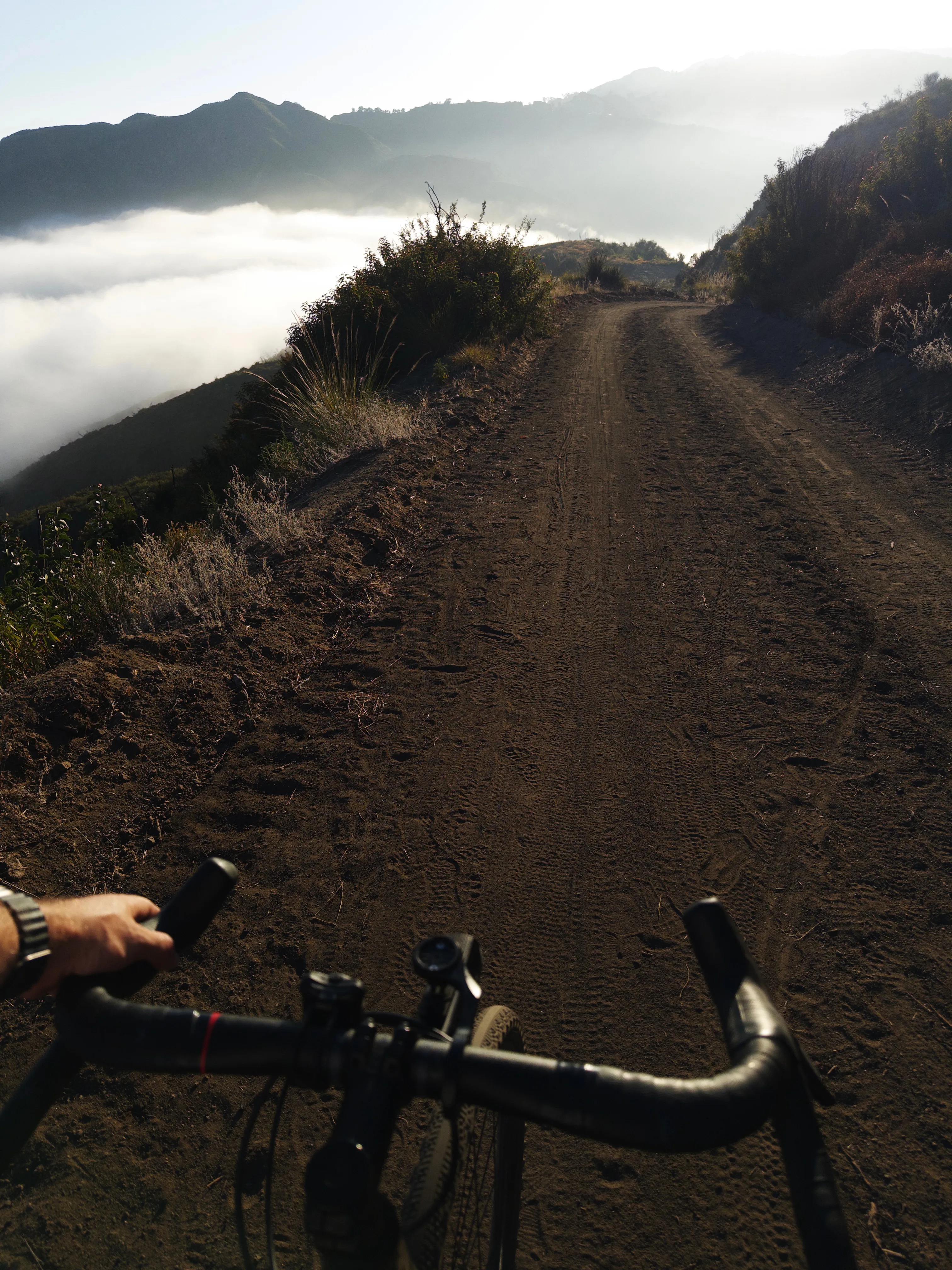
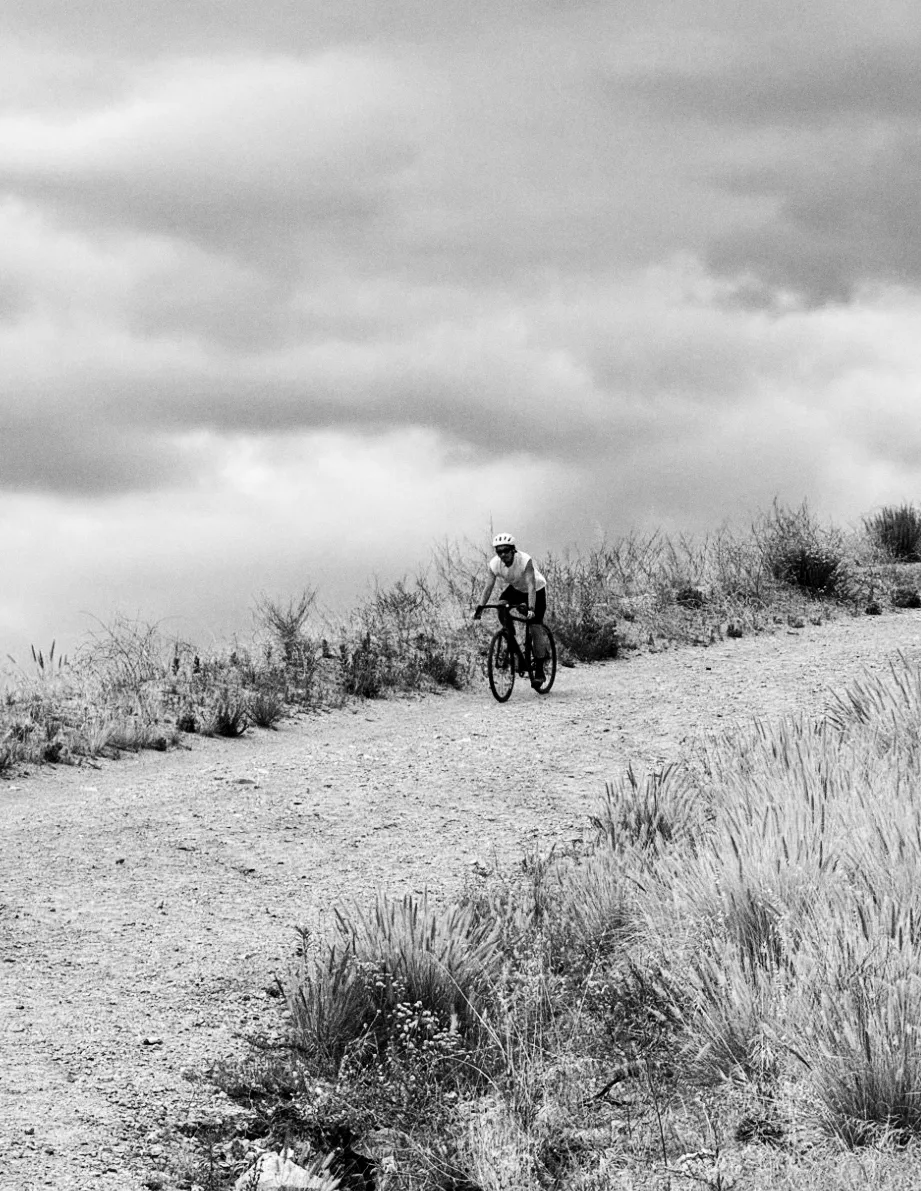
Sunrise Ridge intersects Mount Lowe Road here. The fractured pavement turns to dirt, and the grade mellows out. My engine is warmed up now, and the miles come easily. It really opens up, on the feet and on the mind. Big views and small details I’ve greatly missed over the past year.
Soon the concrete foundation of the Alpine Tavern passes by. The movement has a real quality to it. A real connection. Reaching the saddle where the turn-off to inspiration point is. I’m not ready to wrap this up. Instead of making the turn to the right, I swing around to the left, contouring along Mount Lowe Road.
I’m doing the full climb from the base to the top of San Gabriel Peak again by total impulse. These things just sort themselves out sometimes. Something calls you. The trail drops a hint. What can you do?
I hit a cloud of un unmistakable stench. The smell of a recent fire. Poodle dog bush has taken hold. Only in a small pocket here. I’m surprised it’s been so reclusive in this zone. When fire sweeps through the transverse poodle dog comes barking. It looks freakish and leaves a hell of a rash. I once ran into a kid on trail who said he just came across weed growing nearby and smoked some. A gnarly case of mistaken identity. I wonder how that went?
Past Mount Lowe, then Mount Markham. The heat begins kicking in. The climb from the end of Mount Low Road to the top of San Gabriel Peak. The trail tucking into chutes of speckled black and white plutonic stone.
Points of location in landscape can transport you to points in time. Being here takes you there. It’s like a de je vu. But different. A certain type of access unlocked. The body’s presence at a certain place. It’s a space/time thing you can sometimes sneak a glance at. It’s always a real occurrence when it happens.
This place, this pocket of the Transverse, underwent a period of stress and recovery through the fire. A period of being out of form, out of play. I can’t help but feel the timing of this coincides with my own shift in my movement practice. Out of form, out of play.
But seeing the landscape, the chaparral bouncing back, the way winter’s rain has draped the foothills in green… it’s nudging me to respond in kind. To get back at it.