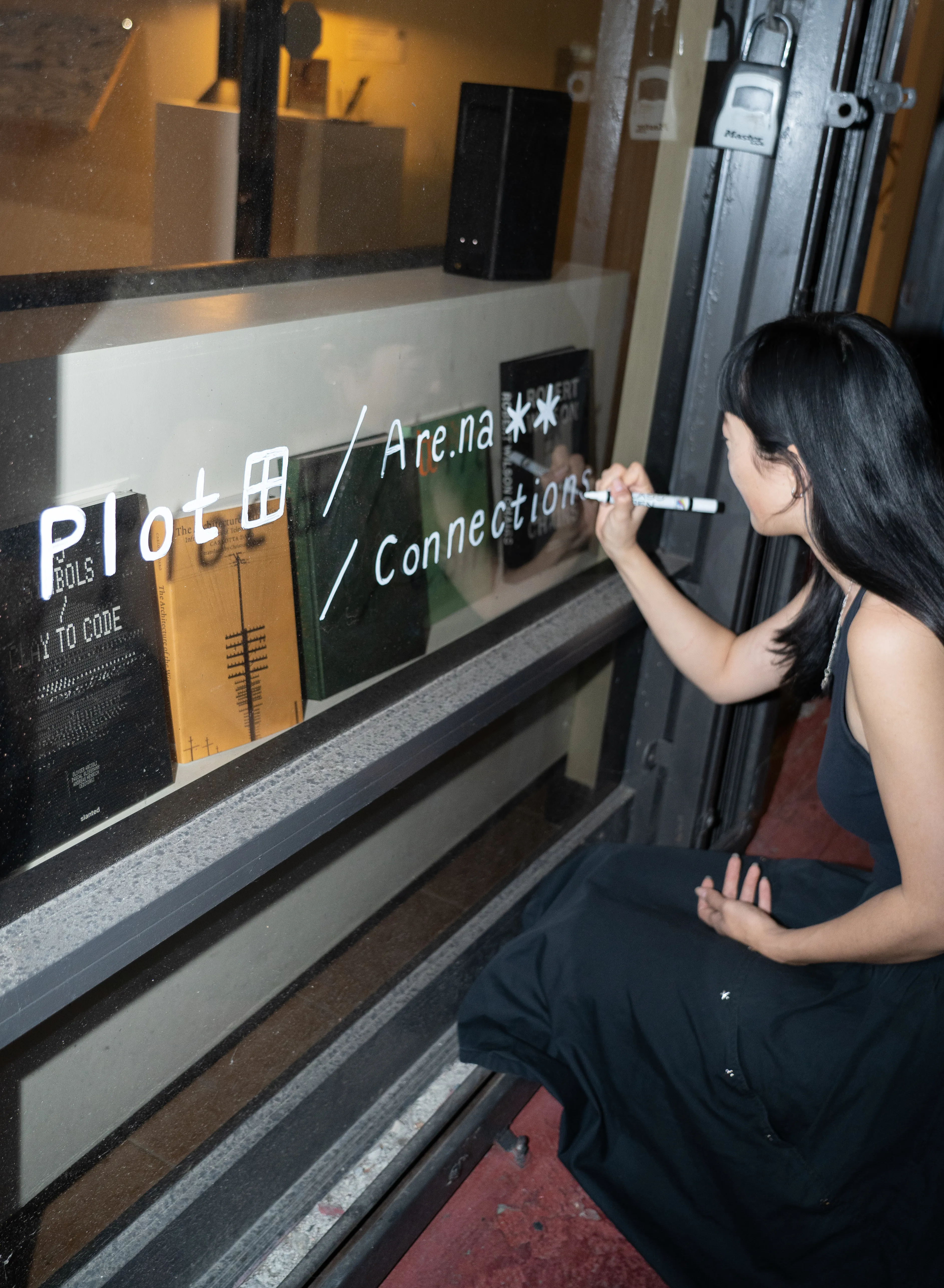
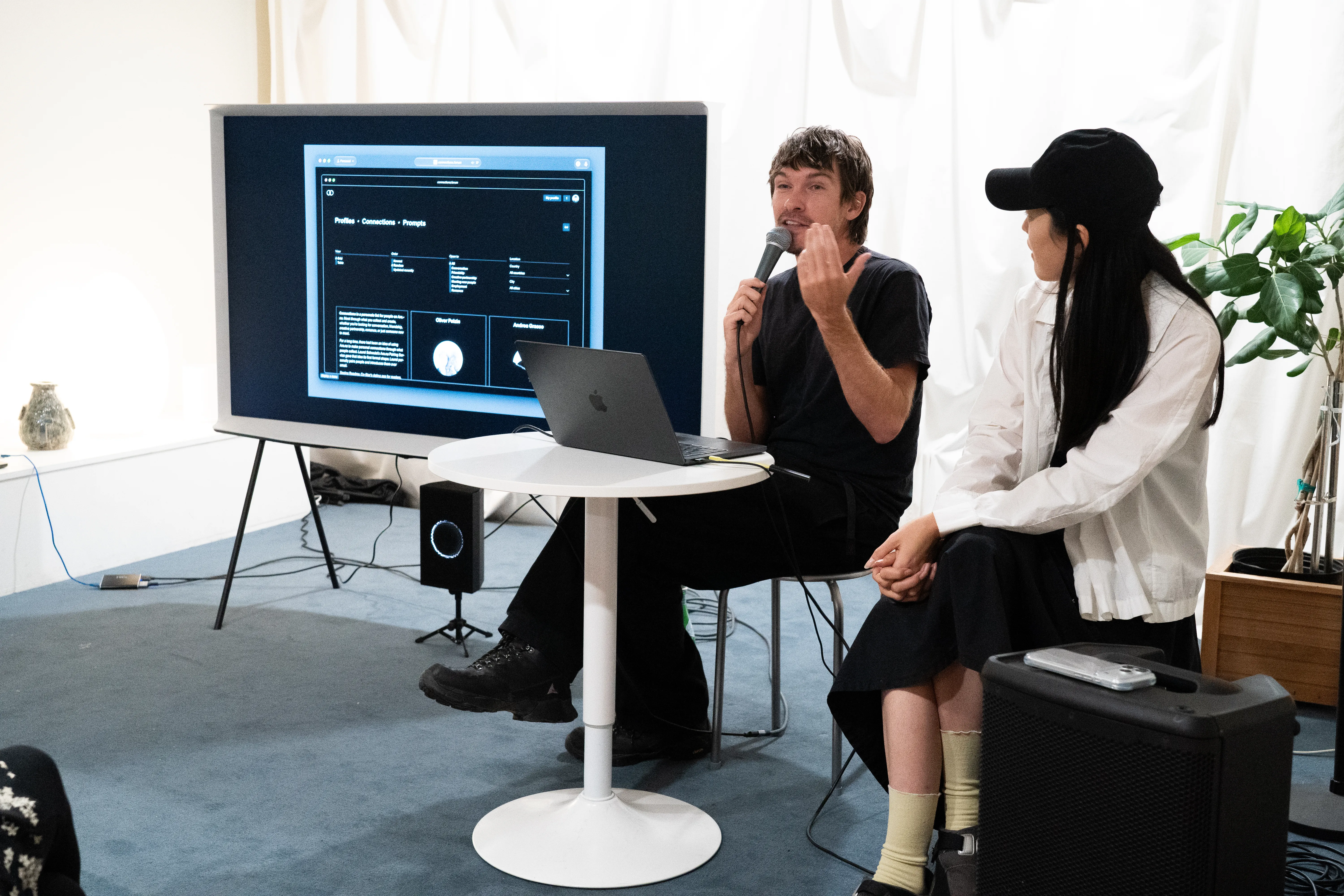
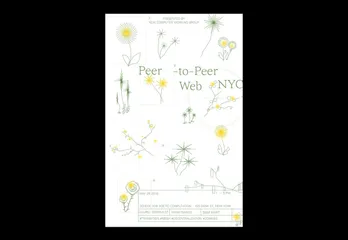
Connections is a small app I made that runs on Are.na. You connect with your Are.na profile, and Connections is a personals list for Are.na. If you meet someone at a party who is on Are.na, it really says something about them. The joke is that Are.na, like many apps, is at the core something of a dating app, in that it is about connections. I wrote more about this here.
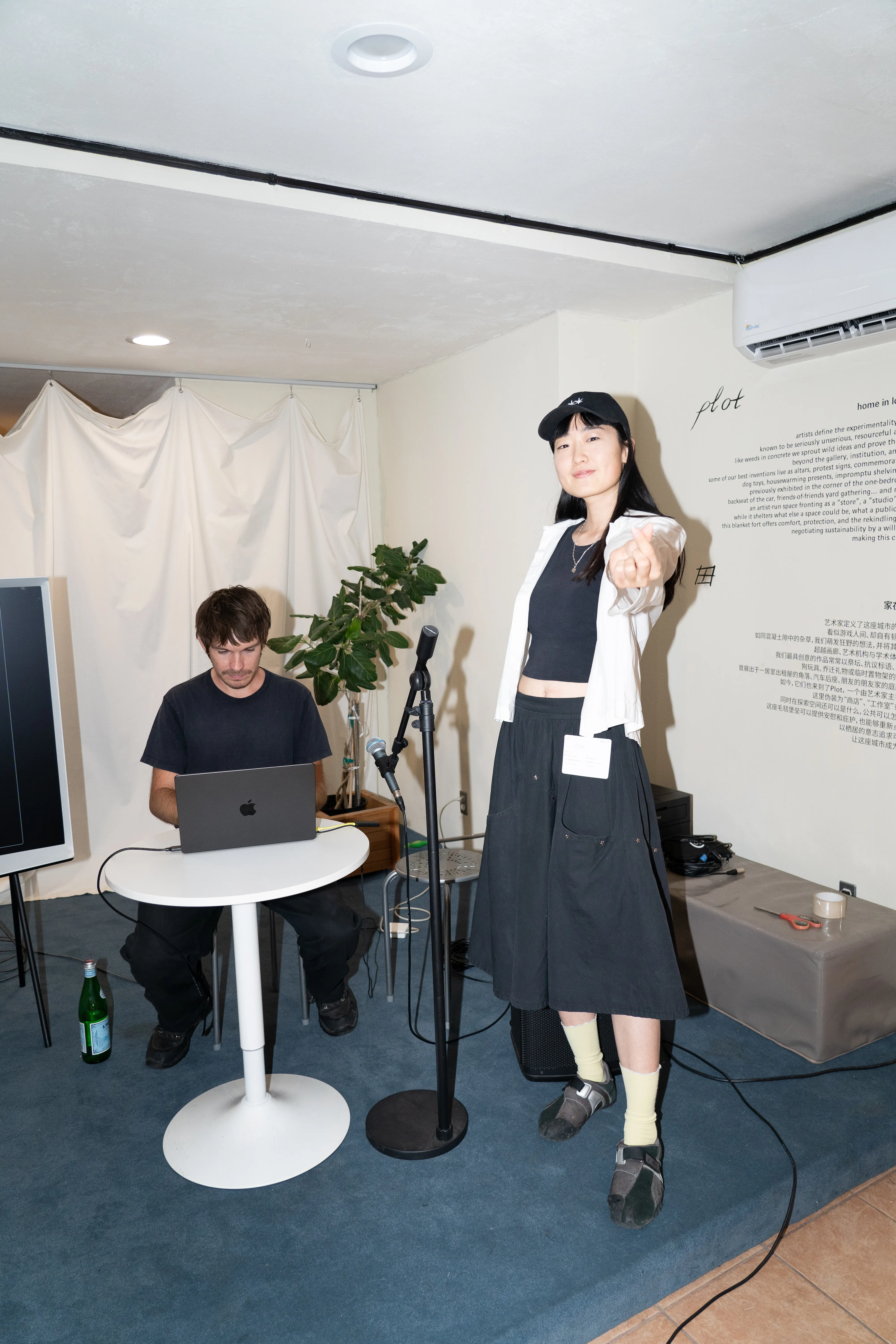
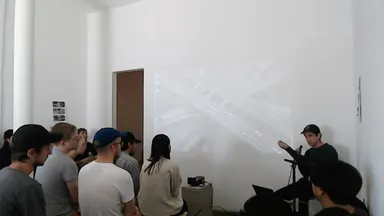
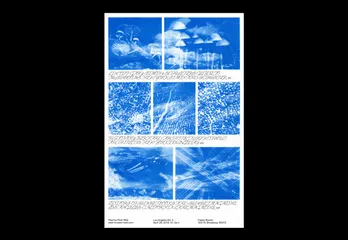
Plot is an exhibition/event space in Los Angeles that Alice, my now dear friend, started and operates. She saw Connections and said, “We should do this in real life at Plot.” She used the word “mixer,” a word I hate, in that it sounds like random people mixing, and I can get quite socially fatigued very quickly. I’ve never attended a mixer. Despite this, I loved the idea, because the thought of being on Are.na introduces quite a social filter beyond simply “people who want to connect.” It’s a specific person.
There is a need for smallness in a world chasing bigness. The default mode is to grow or to scale. A room is only so big. Are.na represents a certain “if you know, you know.” But I think a better phrase is “if you care, you care.”
If you care enough to dig, to discover, to overcome the friction, you’re welcome here.
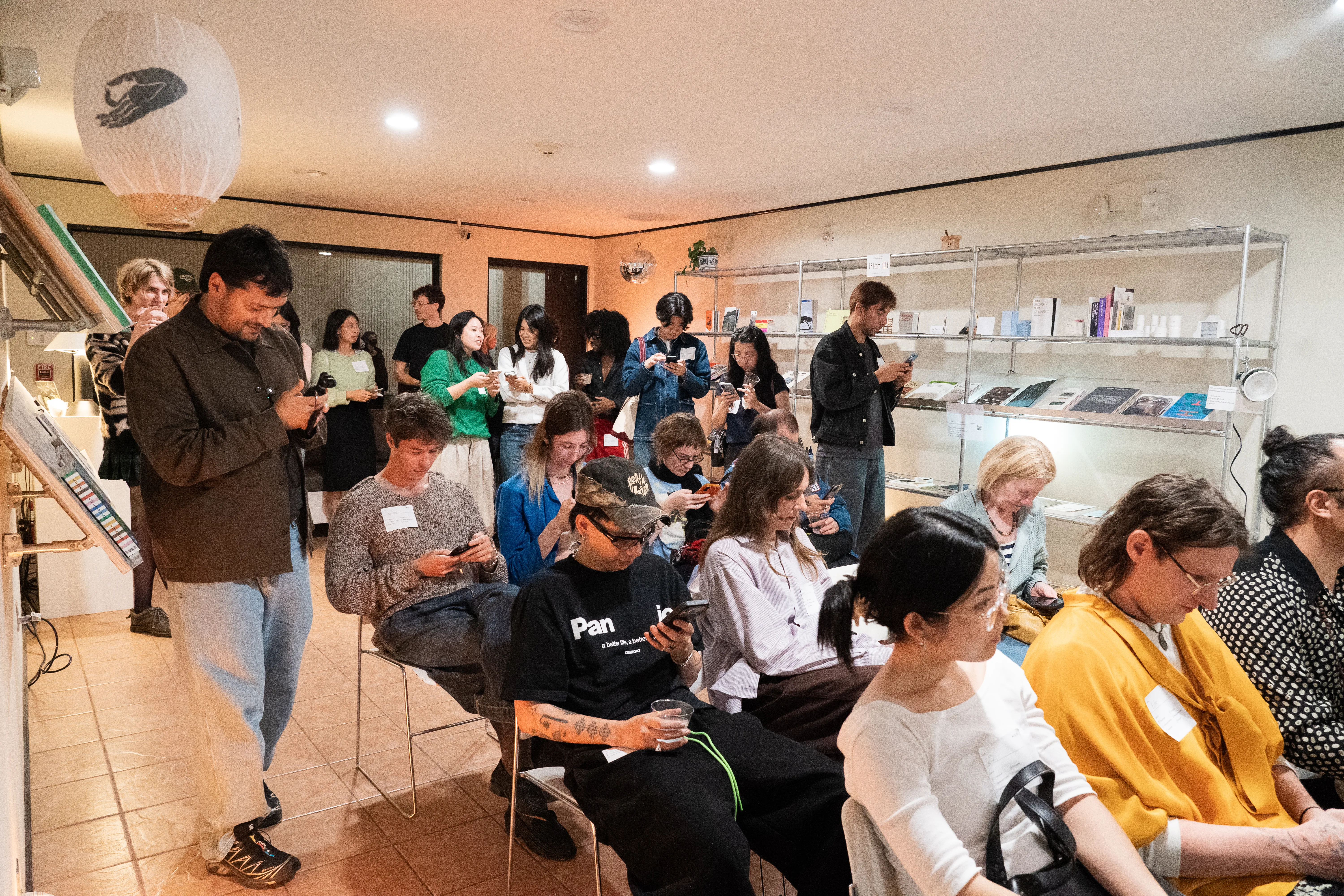
So Alice and I put a very subtle word out, and 150 people RSVP’d. Fortunately, Los Angeles is notoriously flakey, or “laid-back,” so about 50 people actually attended. Thank god, because Plot is not that big, and there was a real risk of shit hitting the fan.
A few days before the event, Alice and I realized we did not know how people were actually going to be paired. Maybe if I had attended a mixer before, it would have been clear to me. But what’s the fun in that? So we devised an idea.
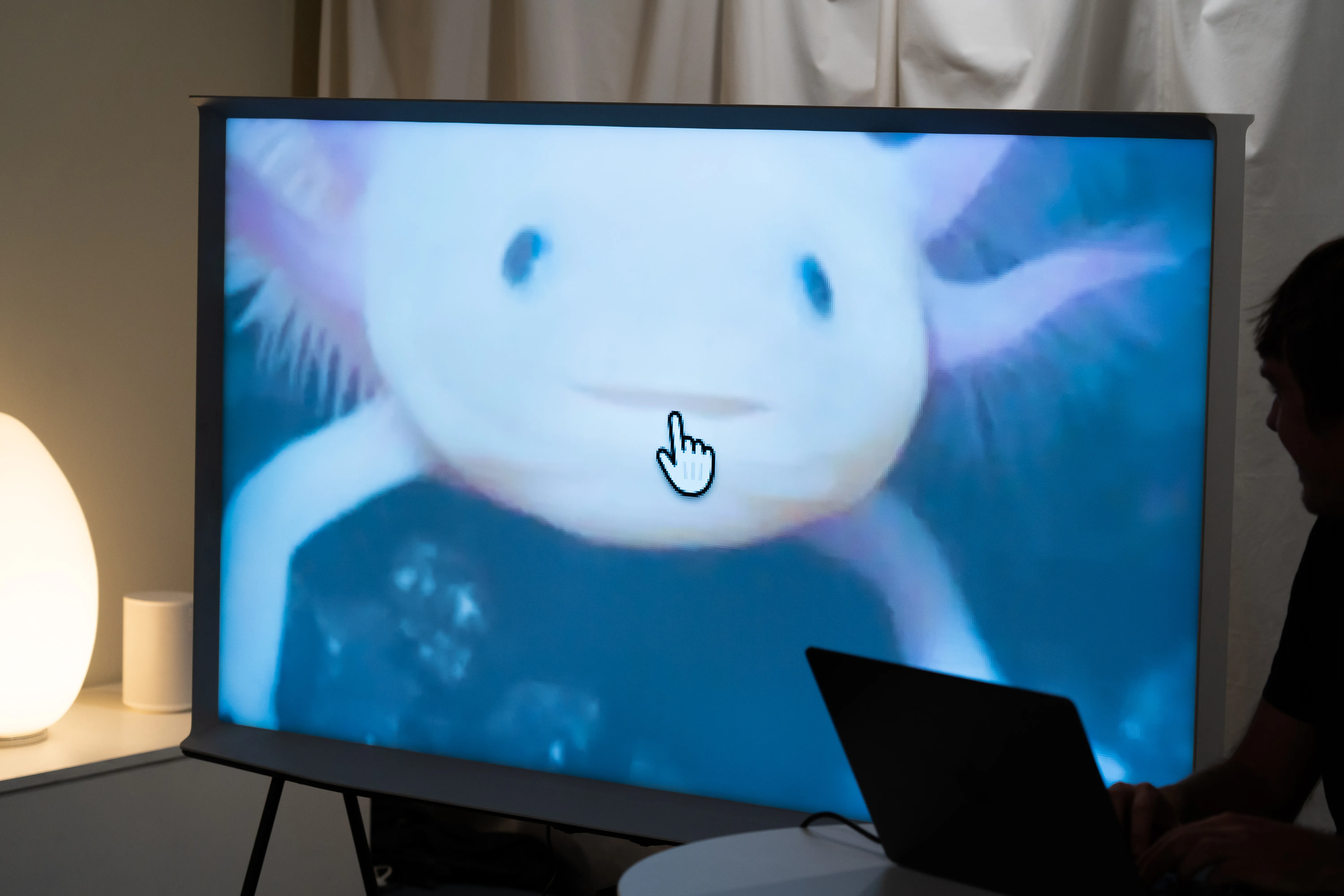
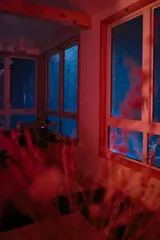
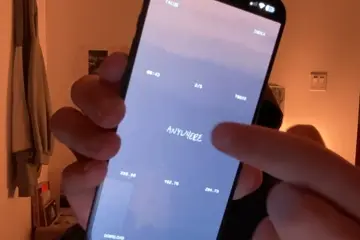
After everyone has ensured they’re on Connections, a prompt appears on a screen. Everyone in the room answers the prompt on their phone by connecting an Are.na block as their answer. Afterward, when looking at photos, I realized how funny it was to have everyone staring at their phones. As blocks became connected, they’d appear on screen, and Alice and I did some live commentary, Terrace House style.
Everyone would then be paired up—you’d find your name on the screen, and there would be a number. We had printed out numbers on 50 sheets of paper beforehand and stuck them all around. Your pair would also head to that number. What you connected as your answer to the prompt was a sort of icebreaker, in theory. I think it worked. It was all a little confusing.
Which is to say, reality is pretty complex. What if someone shows up halfway through? What if they aren’t on Connections? Or even Are.na? This started to stress me out a little. But Alice reminded me the point is connections occurring and spontaneous encounters in a room of people who have commonality. “I’m confused” was a reason to talk to someone.
Everyone piled into Plot, and Alice and I introduced the intention by discussing smallness. We think of software as “consuming the planet,” as something often scaling, driven by capital in some way or another. Creating software has required a lot of resources and specialized knowledge, but this is quickly changing, and like any substantial change, there is some contentiousness to it.
However, in the past, I couldn’t have committed the time required to create Connections, although I could’ve described exactly how it looked and functioned in great detail over a few minutes. And it turns out that’s now enough to produce software of some form. We then discussed “community software,” small social software for small groups of people. Alice created the Plot App for members and attendees of Plot. It directly uses Stripe for event ticketing instead of another vendor, and Alice can truly make it whatever she wants. The Connections app is another example of this. In the past, it would’ve taken far too much time and too many resources to create.
Anyway, the night was a real success, in that people talked, mingled, lingered, all of that. Connections were made. I genuinely had a great time after getting over the stress and accepting that people simply being in the room and potentially talking about being confused was, in a sense, a success. Which is to say, the software could’ve not worked at all, and that risk makes it kind of fun. Something was at stake. It all could’ve gone off the rails. A good time.
Anyway, I want to encourage people who feel a little socially awkward, who might have an idea of a night they’d like to swing through, to just give it a shot and do it. It worked out here.
I’m very grateful to Cab and the Are.na team for the support, and to Alice for instigating, collaborating, and co-clowning around over the course of the evening. Memorable connections.
My open practice centers on perception, environment, interaction, and interface. It requires design and engineering, and often leads to creating tools for publishing and connection.
I was the founding design engineer at Cargo Collective, a personal publishing platform for creative work. I was then Co-founder and Head of Product at Mirror, a long-form publishing platform enabling new ways of funding and sustaining writing practices.
With the support of Collaborative Fund, I researched assembling pages of work contextually around visitors using language models. In addition to my ongoing studio practice, I’m engaged in durational creative collaboration with an author creating specific publishing software, interactive platforms, and books in support of his practice.
I’m furnishing a new apartment. This is a process I love. Walking into an empty room and staring, moving to another position, staring, going to another room, staring. Imagining. Seeing myself inhabit the space. It’s less thinking, more observing a future me living here, and watching that person move. Dreaming about a way of living, and how decisions may spatially support that. This way of seeing and being is fundamental to good design, from my perspective. And when shaping my personal domestic program I find it comes most naturally. When I design interface, or anything graphical, there is more of a struggle. Of really trying to solve something in a way that resolves.
But with an apartment, you live with it, and in it, and over time there is adaptation in response to the slippage between anticipation and reality. This happens when living alongside something. Cohabiting or inhabiting, or both, or something. I really love this.
Dream, build, learn, adapt. There is no end to the loop.
A lot of furniture exists as rigid, fixed things that are browsed, purchased, and consumed. It arrives to you complete. Even Ikea, just unassembled. A state of completion breaks the loop, and in these cases it’s dead on arrival. Static and not a dynamic, changing thing. It’s not alive, and you can feel it, and so you don’t really live with it in the same way.
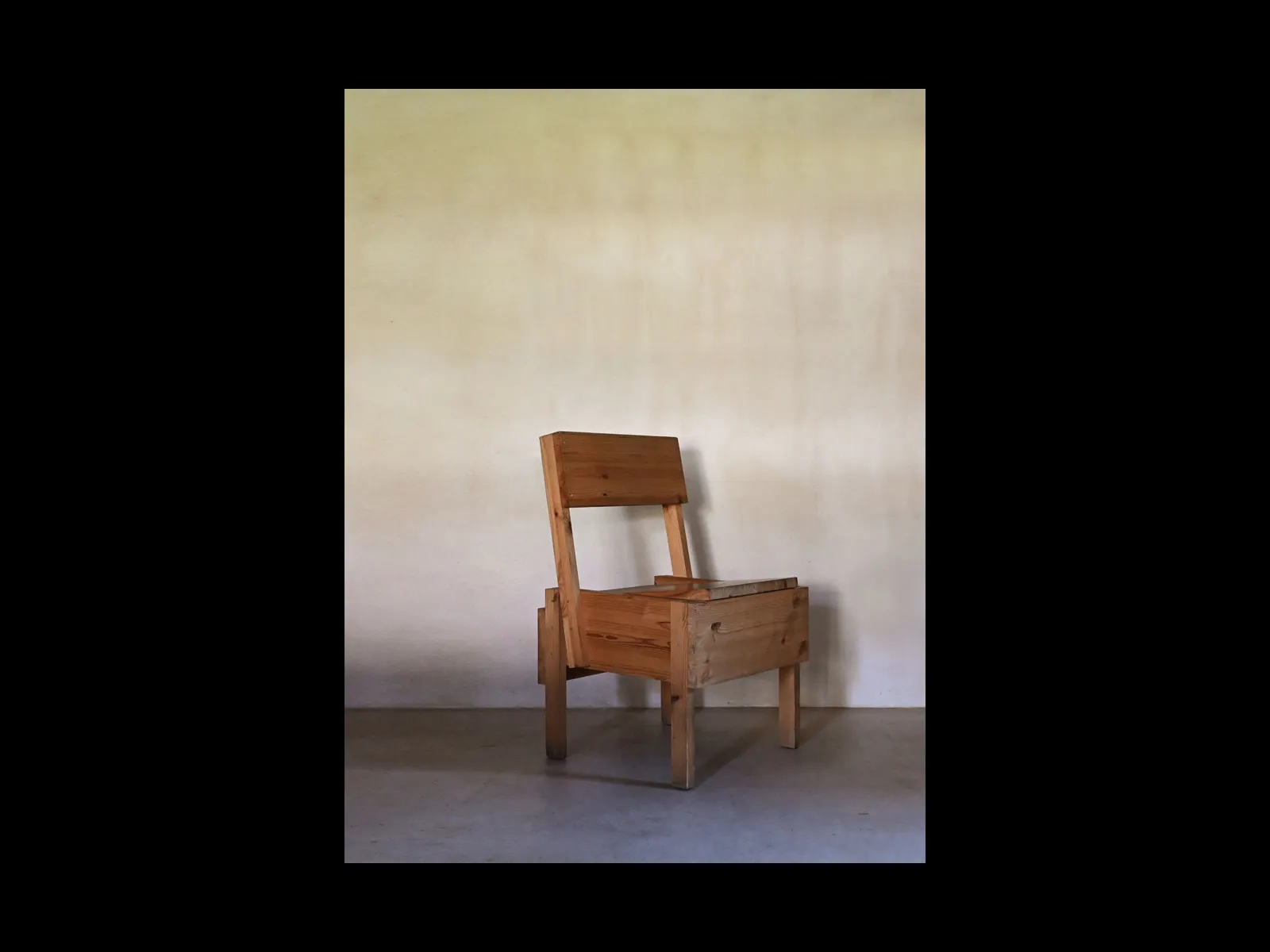
So in each apartment I’ve moved into over the past twelve or thirteen years, I’ve built at least one or two pieces out of the booklet Autoprogettazione (self-design in Italian). Enzo Mari designed and authored it and generously distributed it for free, minus postage. When I build pieces, I adapt the dimensions to the space, and the material to what’s easily acquired or already on hand. The works are contextual to who, where, when, and all that. You don’t just have a table or shelf, but a living thing, and that’s an affordance of being involved in the making of the thing.
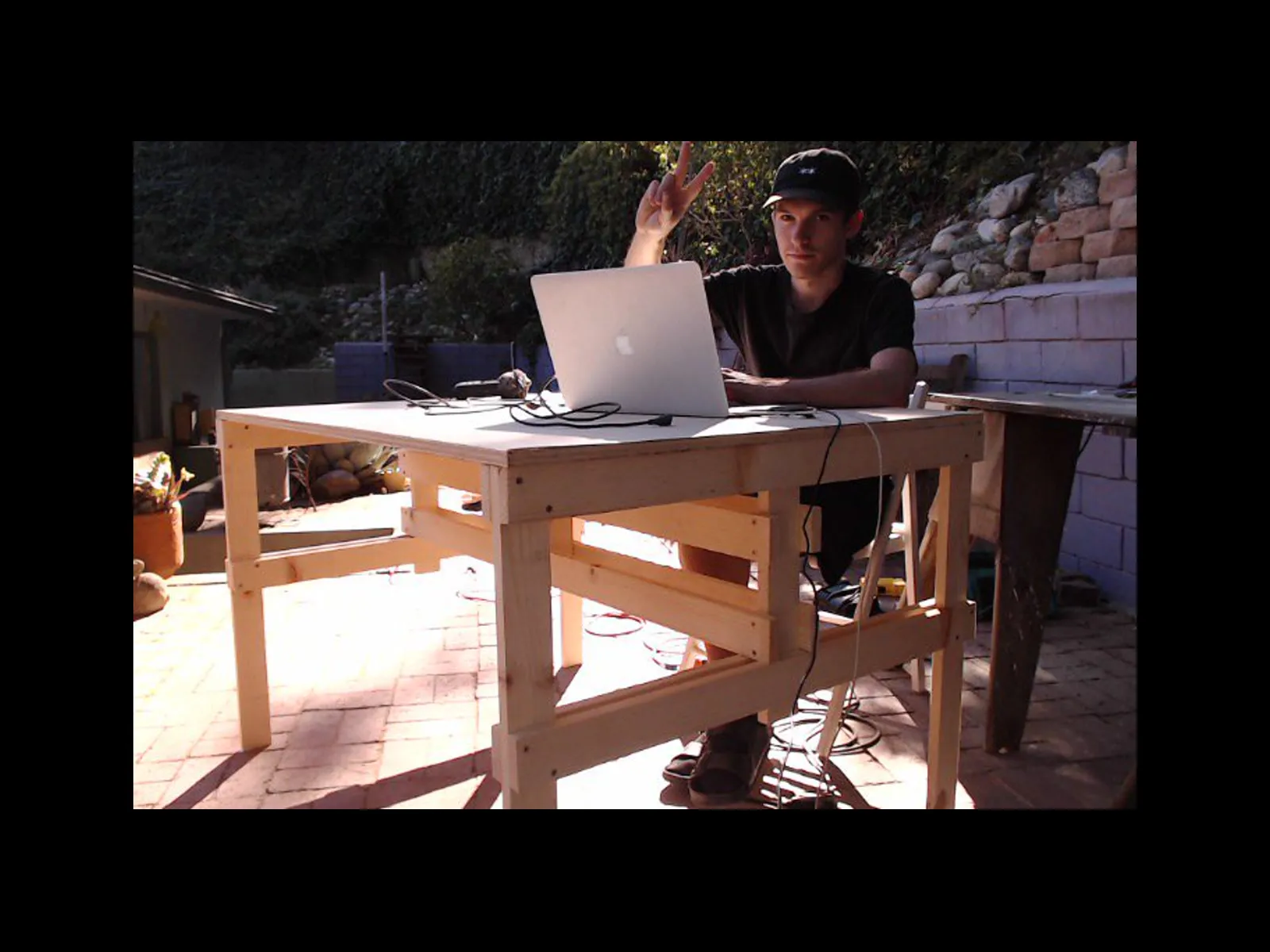
Building an Enzo Mari Autoprogettazione table in the backyard during a livestreamed hang in 2018, as published in Paprika!, the Yale School of Architecture’s broadsheet.
I’m very lazy.
When moving out of an apartment, I want to move as few things as possible. So I take the Enzo Mari pieces I make and list them on Facebook Marketplace as “Mid-century Modern Italian Furniture.” For free, of course! The convenience is the point. The furniture, to my eye, is beautiful, imperfections and all, and is usually gone within the day. The fluffy design language is intentional. You must know how to market to the place.
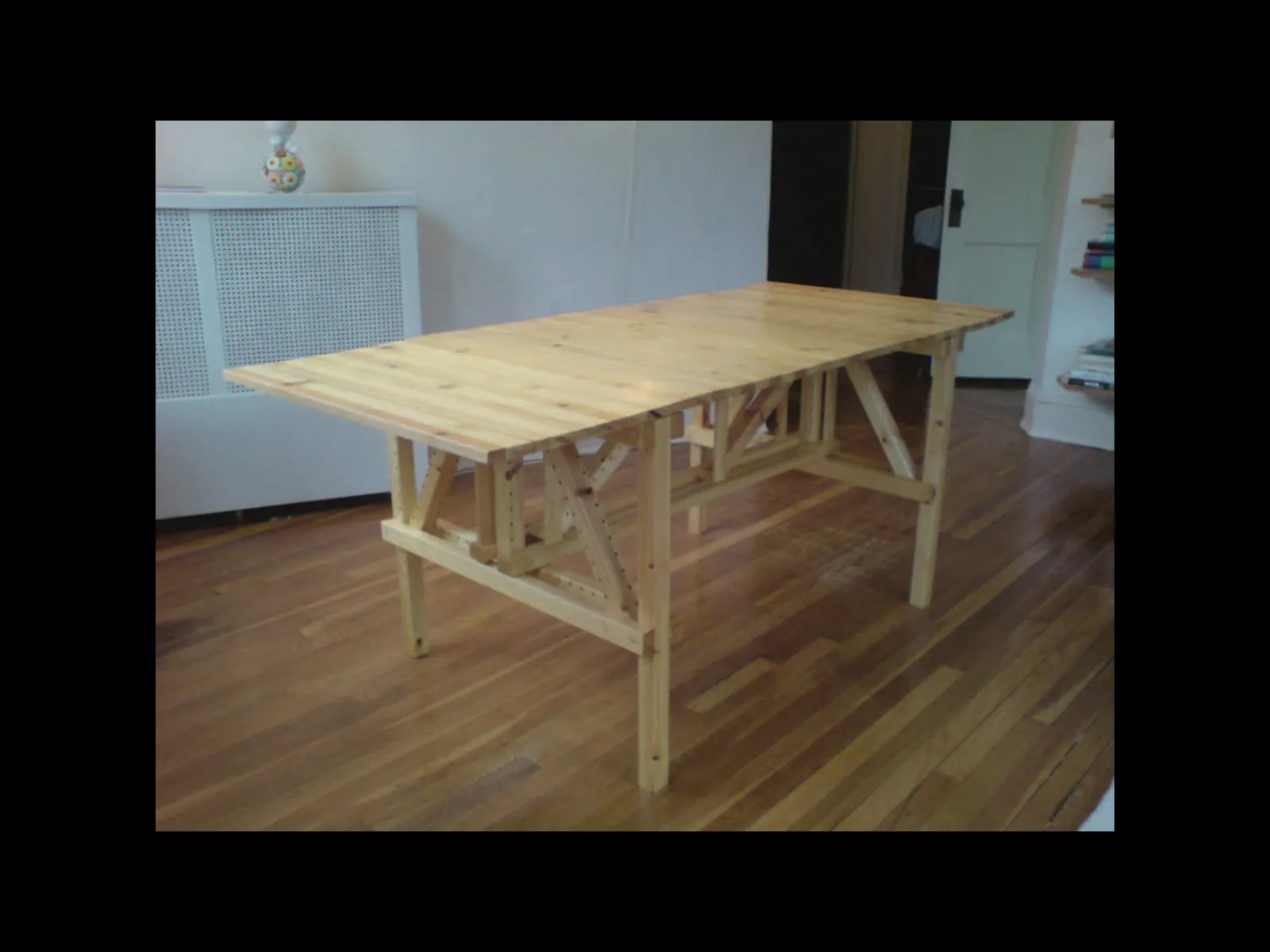
I once attended a dinner party hosted by a stranger by way of a friend. Walking into the kitchen, I saw an Enzo Mari truss table in the center of the room. This was a rare sighting then compared to now, so it came as a surprise. It became clear the person who built it had a few loose screws, as did the table. The design of the furniture allows asymmetry, but this build was quite askew. Looking closer at those screws, I noticed they were the same screws I used several years back.
Then I clocked it: I built this table.
It wasn’t immediately recognizable as the surface was weathered after years of wear and layers of polyurethane. The legs had been shortened at some point as the table passed from friend to acquaintance to stranger.
This table was (and maybe still is) truly alive.
Kyle Chayka recently wrote about how the Instagram feed repeatedly serves him imagery that is of “taste,” but through repetition and ubiquity it begins feeling tasteless. That “good taste becomes bad taste when processed through the engine of the internet.”
It’s not slop, but is subsumed into the slop machine, and starts to taste like slop. The idea that how something arrives to you can shift the spirit and aliveness of a thing is familiar. The feed is a machine of reproduction, and reproduction affects the perception of a thing. But how the feed reflects evolves as the loop repeats over time. The feed feeding back into the world, the world feeding back into the feed.
This got me thinking about why certain work stands out to me. Why it feels alive, or is of quality. This isn’t a hard rule of “what universally makes work good” but more like going on a walk through ideas related to the question.
For instance, Artek sells the Enzo Mari chair as a fixed object you can purchase and consume for $2700. A clear change of spirit. Taking a thing meant to create a sense of connection, of involvement, and stripping it of that experience, killing the aliveness. It’s dead on arrival.
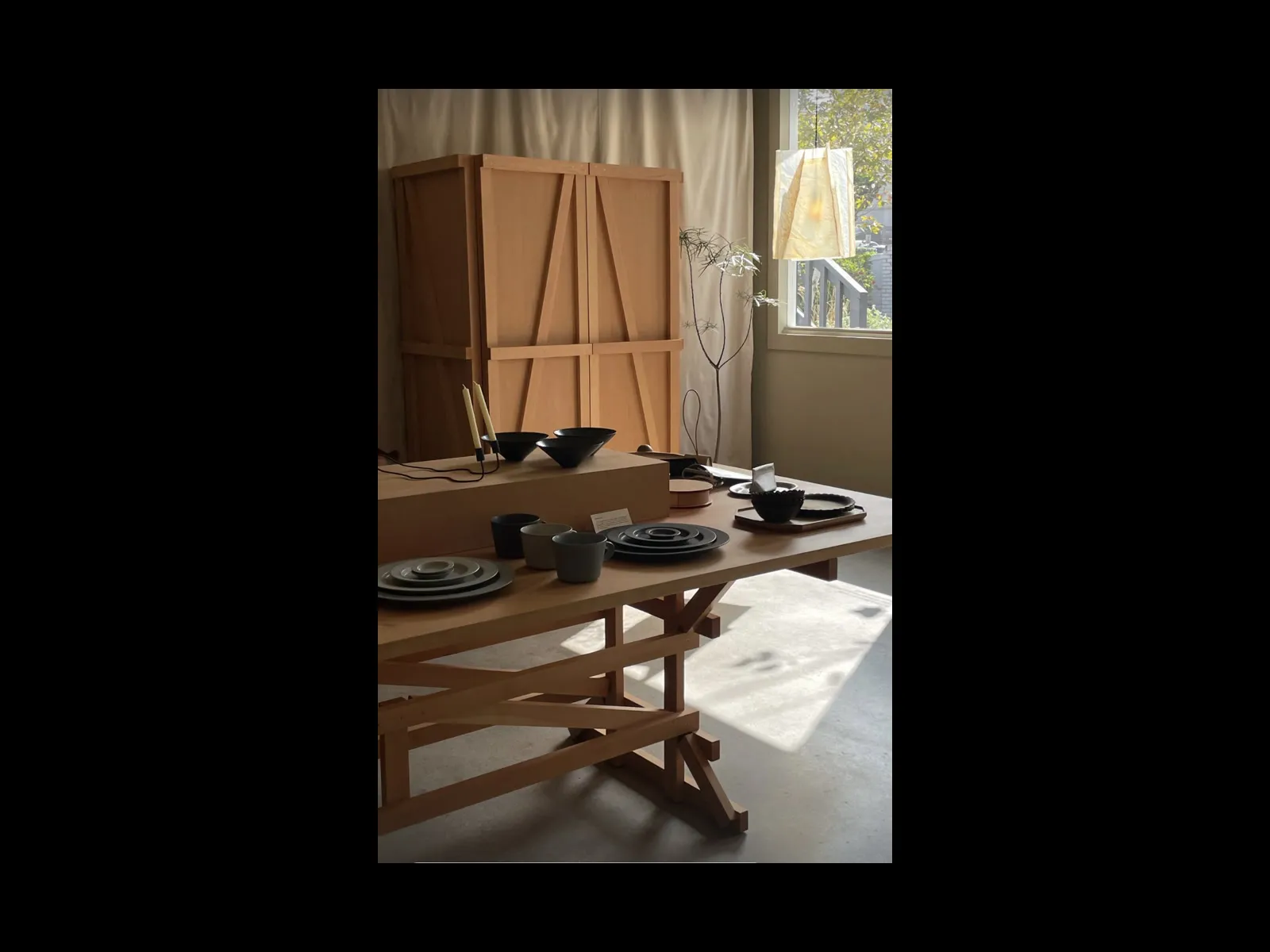
A shop I greatly admire here in Los Angeles, Building Block, furnished its retail storefront with Enzo Mari pieces constructed by an expert craftsman with perfectly squared corners and smoothly planed surfaces. I love the shop, but the furniture caught me off guard, although it looks beautiful. This feels less like slop, but certainly does not feel true to the spirit of Autoprogettazione, and starts feeling like something else. They are complete, made to look good in the feed, not to be adaptive living things.
In his writing, Kyle Chayka proposes:
A key function of taste is to be a differentiator. Taste discerns between the common and the uncommon, the unique and the homogenized. If basic markers of good taste become banal, then taste must find other targets. In other words, we must consider which qualities escape the trap of digital amplification that I’ve described here. (Otherwise, how can you be sure what you think looks good isn’t exactly what hundreds of other creatives are also being spoonfed by technology?) Is the only good taste then bad taste?
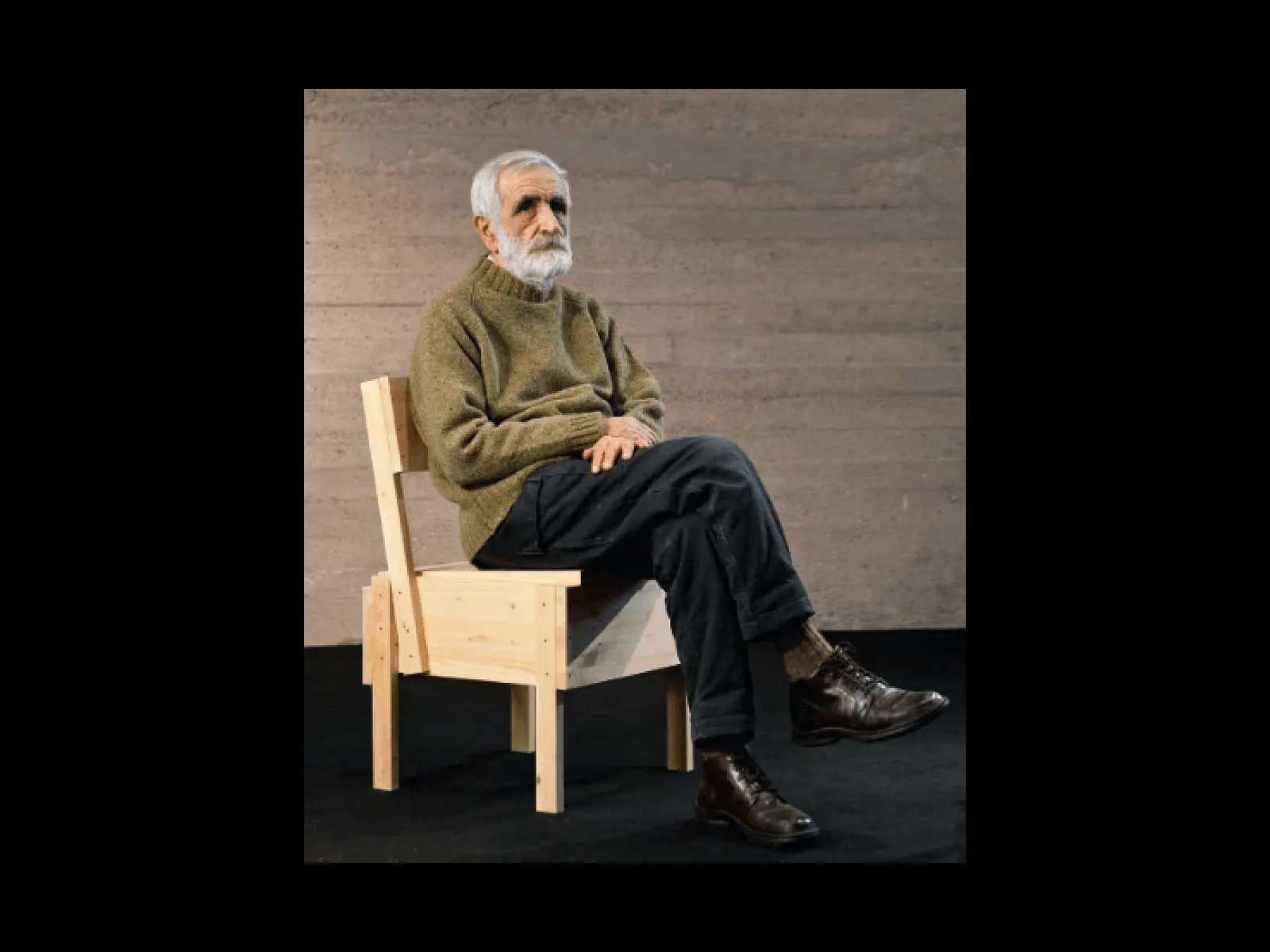
My explore feed is often dotted with photos of Autoprogettazione, frequently the same black-and-white shots from the original booklet. Or one particular photo of Enzo in a green sweater on one of the Artek-produced chairs. It starts to feel like slop.
Yet when I see poorly constructed amateur builds of Enzo Mari, it doesn’t feel like slop. It feels unique. It’s not the cleanest build, or anything clever, but is a true expression of the specific personal requirements of each individual, which are noticeable if you care to pay attention.
It’s for me, right now, and right here. It’s improvisational. And it’s a little fucked up. And it’s fun. I wouldn’t call this bad taste, as Kyle proposes in his writing. When I’m dreaming, building, improvising, I’m not considering taste at all. It’s the absence of taste. If you’re aware of how the dream relates to taste while you’re dreaming, you’ve already lost it.
In my eyes, things of great taste are often those which have no concern for it. And this elusive or withdrawn state generates a feeling of attraction and intrigue. There is something to uncover, as the work was produced through a process of uncovering. This work tends to care a great deal about care, and when I see the loop of dream, build, learn, adapt in someone’s work, it feels electric. It’s actually alive.
I recently revisited Donald Judd’s essay Specific Objects. When critiquing shortcomings of painting and sculpture, and describing the motivation for his work, he states:
The objections to painting and sculpture are going to sound more intolerant than they are. There are qualifications. The disinterest in painting and sculpture is a disinterest in doing it again, not in it as it is being done by those who developed the last advanced versions. New work always involves objections to the old, but these objections are really relevant only to the new. They are part of it. If the earlier work is first-rate it is complete.
Attempting to create something new of good taste often leads to cheap reproduction of the past. To do what is known to be “tasteful.” It must be predictable. This is bad taste. There is no contribution.
But not all reproduction is equal, like the work of RO/LU, which invokes Judd out of appreciation and love. The work is an amplification of the original spirit of Judd’s work, almost like furniture as writing, like a love letter. It is deeply earnest and aware, and not attempting to hide anything. It’s loudly pointing towards something.
It has no concern for Judd as an expression of taste. It exists beyond taste.
As an aside, and paradoxically, Judd does not construct or build his own work. And if dreaming was all it took to produce good work we’d be in a very different scenario. It’s important to acknowledge here that the only rule is no rules. Things are quite complex when you give them attention. (Despite there being no guarantees, you’re much more likely to have fun by dreaming and caring, and it’s also important to be having fun.)
On this topic, while Enzo Mari assembled plenty of his own work, most of the pieces were built by others by way of open-sourcing the design of his furniture with Autoprogettazione for anyone to build. The derivatives which are true to the spirit of the project are of quality, while those that are expertly crafted are of less quality.
Greg of greg.org created a version of the truss table using only Ikea parts, and freely published a booklet on how to do it. The build is deeply true to the spirit of using what material is on hand. Together, the build and booklet made a great contribution to Autoprogettazione as a living body of work in a way that the expertly crafted Building Block furniture did not.
You could look at it and say “it looks bad,” but you’d be missing the point. It exists beyond taste.
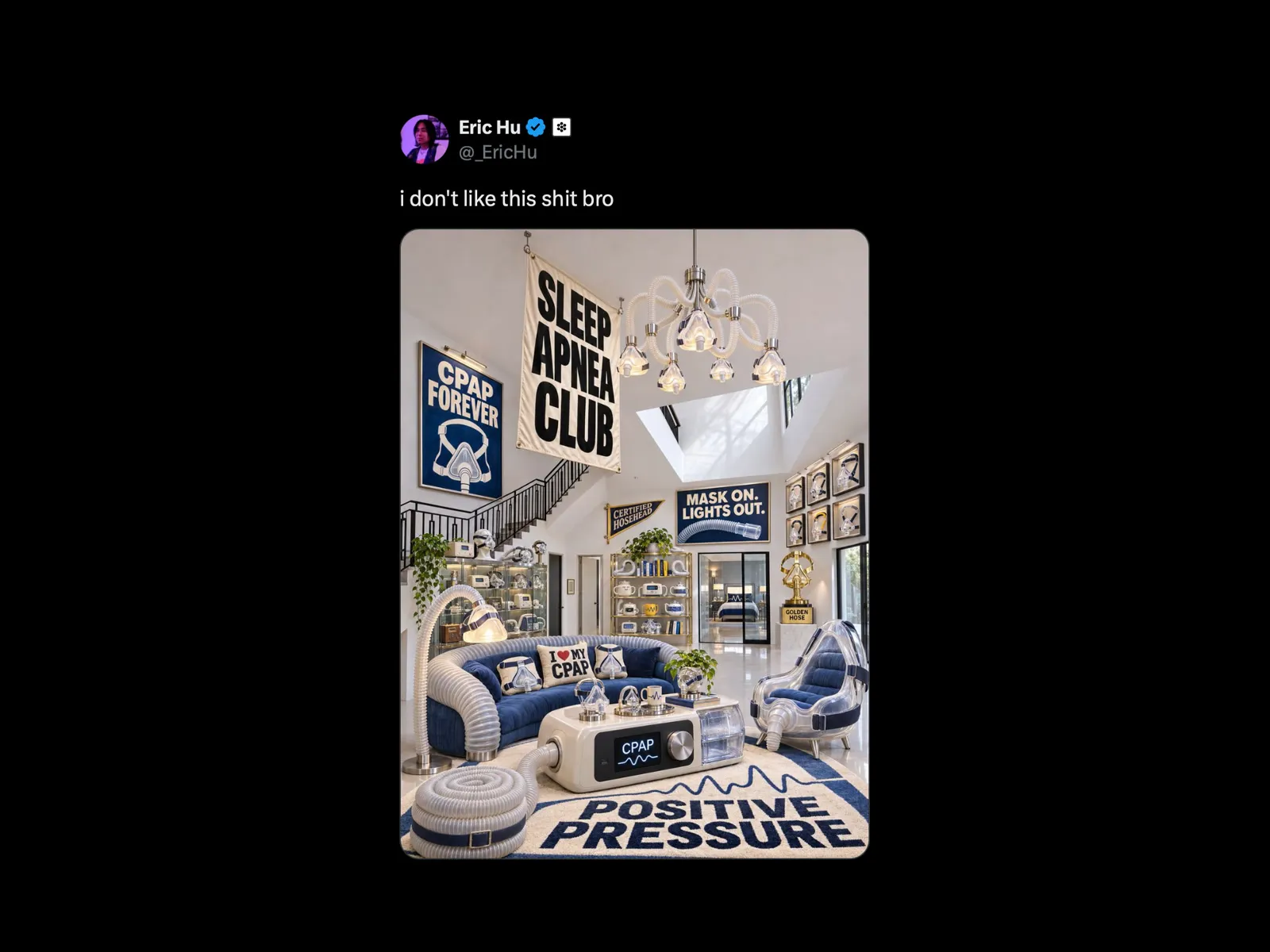
This afternoon an image generated by Eric Hu scrolled into my viewport. It showed a room decorated with sleep apnea equipment.
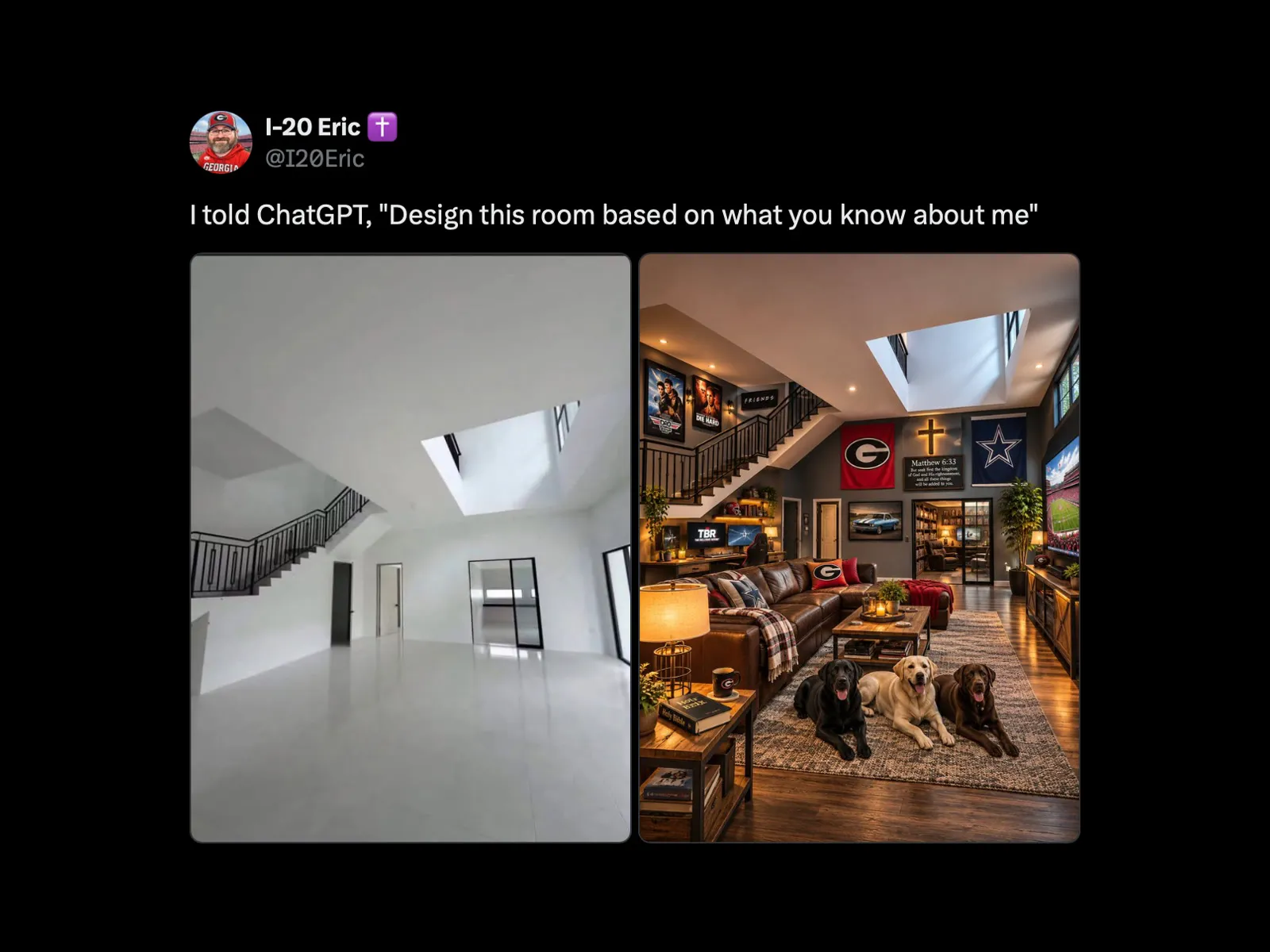
It was a play on a Twitter trend where the original poster fed an image of a tabula rasa McMansion Hell interior into ChatGPT, asking it to design the interior based on ChatGPT’s aggregate memory of the user’s chat history. It spit out man cave slop, decorating the room with a poster from Top Gun, a brown leather couch, and football memorabilia.
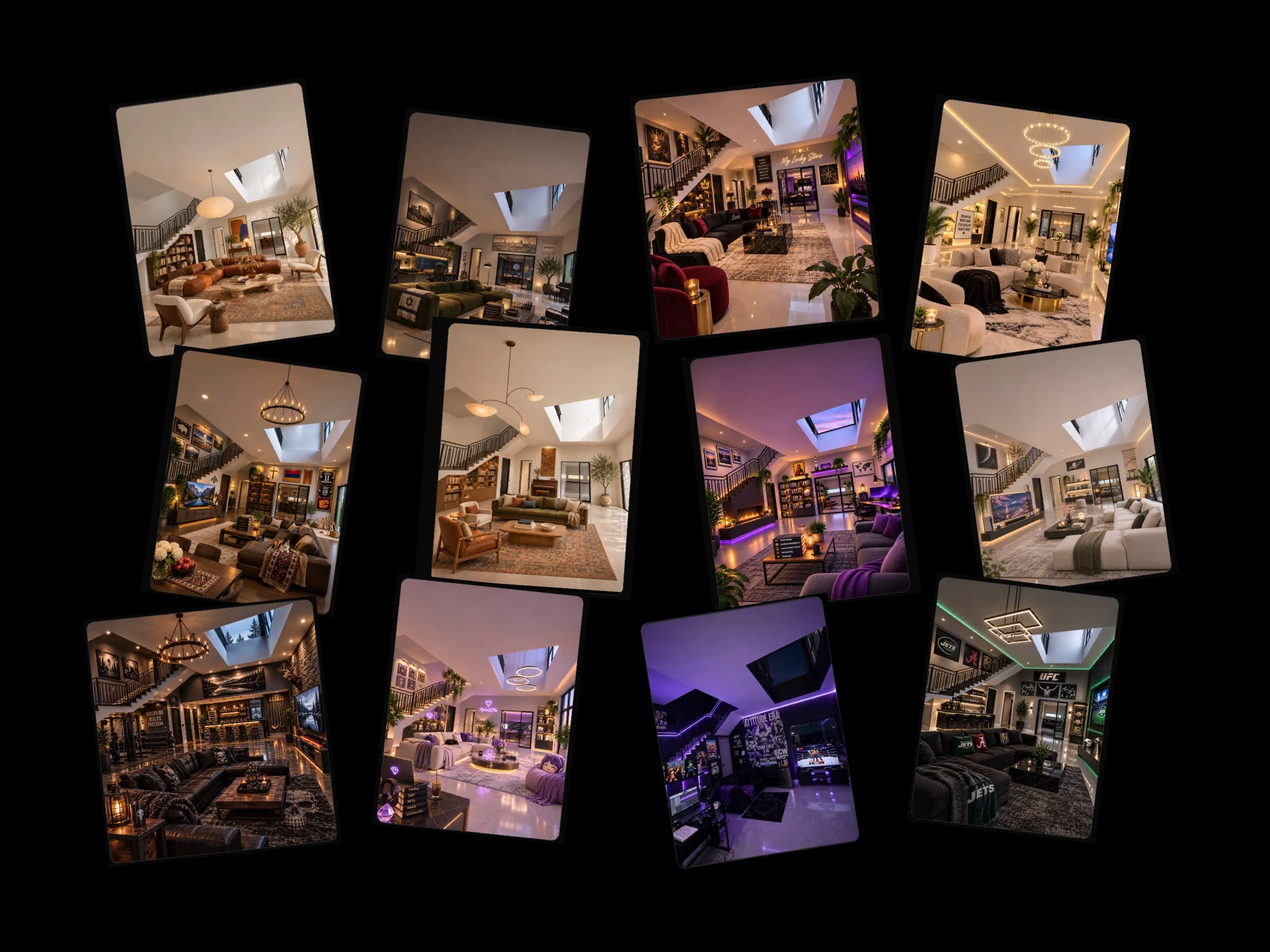
Other users took this prompt and performed the same process of feeding it their unique ChatGPT memory. The machine churned out more garbage. It’s hard to say if people were in on the joke or not. Some people certainly weren’t, and suggested how to “make the rooms more tasteful.” Predictably, it generated Architectural Digest slop.
This is a very logical and intelligent way of designing a room. Take the sum total of someone’s chat history and ChatGPT memory as a proxy for who they are to arrive at an output based on predicted latent desire. But there is a disconnect between who is expressing the desire (human) and who is doing the dreaming (ChatGPT) to arrive at the thing, and you can feel it.
And this isn’t a knock on so-called “Artificial Intelligence.” It’s a critique of a certain disconnect, a lack of care, an ultimate convenience in pursuit of desire. I don’t think producing great work requires performing the work, but you have to be curious, and you have to care deeply about it. You can’t outsource the care.
This convenience has been going on for all of history, but the care and dreaming are being outsourced at a much larger scale than ever before with the help of AI trained on infinite feeds. Instead of careless desire being fulfilled only for those with the capital resources, we have democratized a form of carelessness for all.
I believe you can use AI with great care. But you must bring that care and intention: it is not provided for you. In another case of complexity, perhaps AI will liberate users from being consumers to creators of software. To live alongside software as something which is alive as part of an environment you both shape and inhabit. But it requires the curiosity and care, same as it does for anything.
So who expresses the desire, and who does the dreaming, and who realizes it? From my vantage, there must be a loop of aliveness here. There must be improvisation.
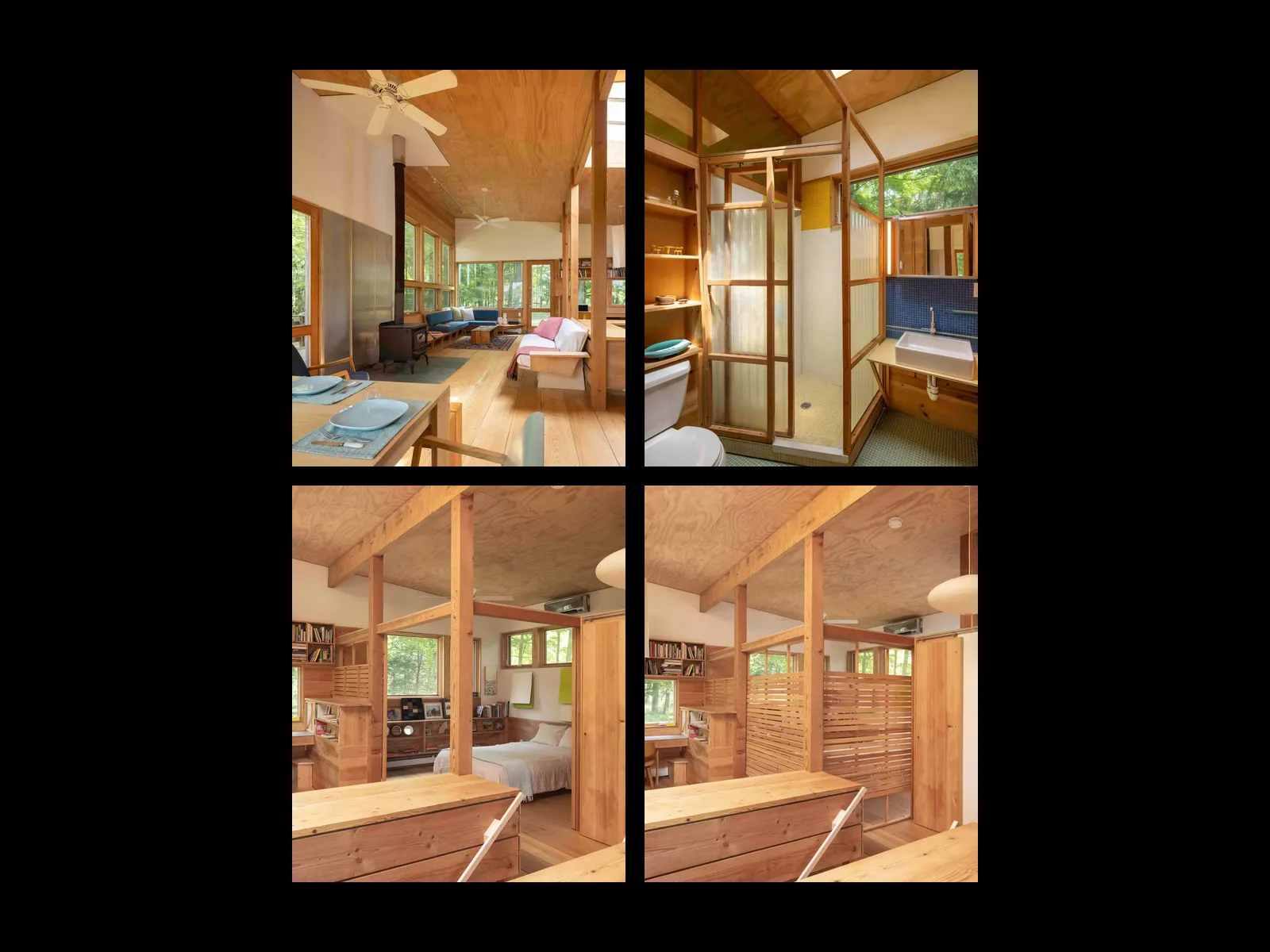
In daydreaming about my apartment, a memory floated to the surface: a tour the architectural documentarian Kirsten Dirksen shot of Tim Seggerman. He built his house over time by placing some material, observing, and responding to it after years of building an improvisational practice. He began with a loose vision for the house, but the design and build were largely the same process.
Walking around the rooms, he points out aspects of the house and remarks, “Anyone could do it in a day… if they know how.” This is less of “if you know, you know” and more “if you care, you’ll know.” Tim emphasizes working with what’s on hand, and doing it fast. Building the knowledge slowly over time to act fast in the moment through practice. I really admire the use of common material and simple technique to produce something unique and special.
Tim really embodies the spirit of what I’m getting after here, and you can see it expressed in the work. It’s singular.
I recently saw Michael Rotondi speak at SCI-Arc. He concluded the talk by saying to “live a life of principle over convenience.” In the end there are no tricks, only care, and what “makes it out alive” is what’s alive in the first place.
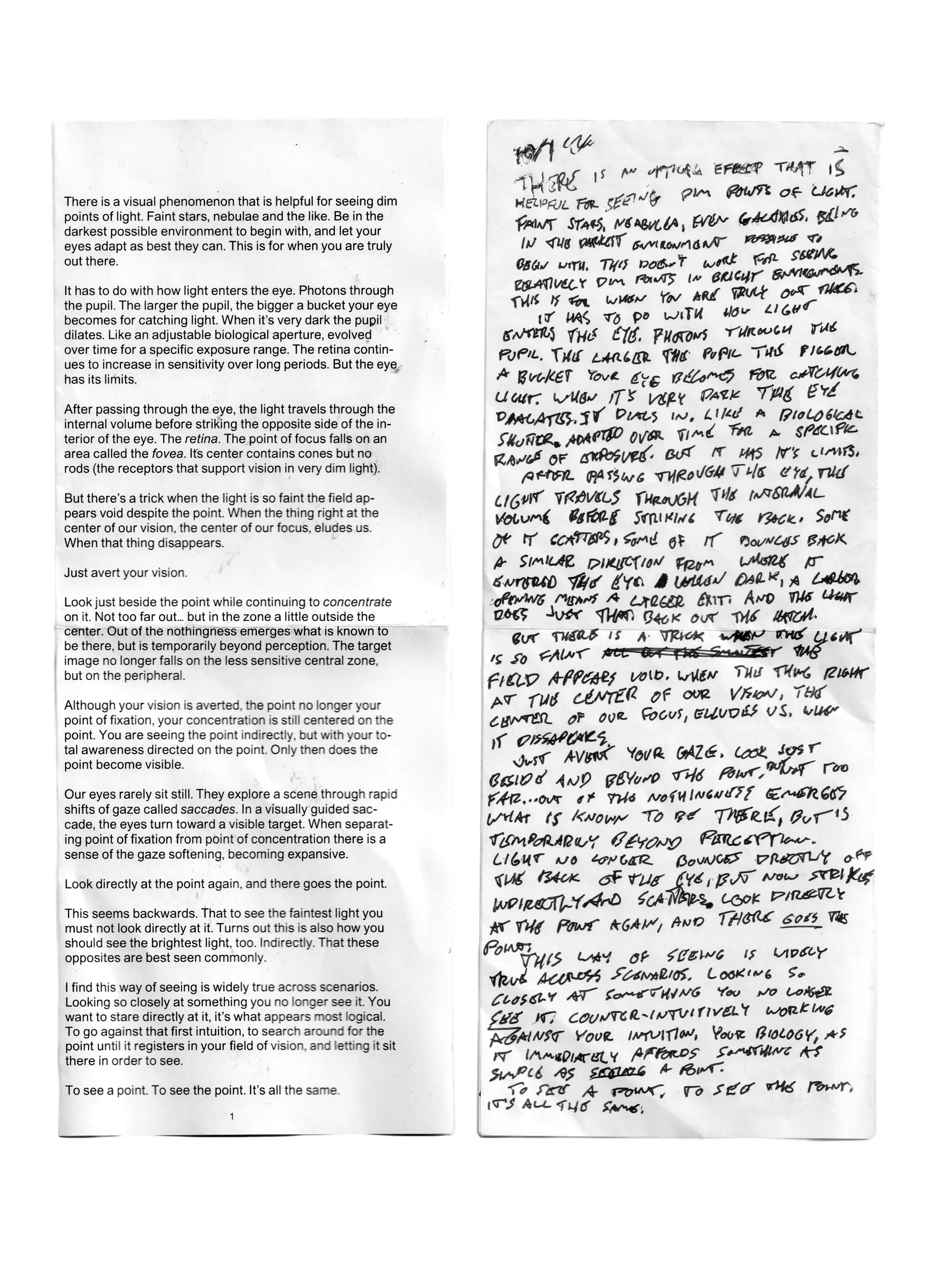
There is a visual phenomenon that is helpful for seeing dim points of light. Faint stars, nebulae and the like. Be in the darkest possible environment to begin with, and let your eyes adapt as best they can. This is for when you are truly out there.
It has to do with how light enters the eye. Photons through the pupil. The larger the pupil, the bigger a bucket your eye becomes for catching light. When it’s very dark the pupil dilates. Like an adjustable biological aperture, evolved over time for a specific exposure range. The retina continues to increase in sensitivity over long periods. But the eye has its limits.
After passing through the eye, the light travels through the internal volume before striking the opposite side of the interior of the eye. The retina. The point of focus falls on an area called the fovea. Its center contains cones but no rods (the receptors that support vision in very dim light).
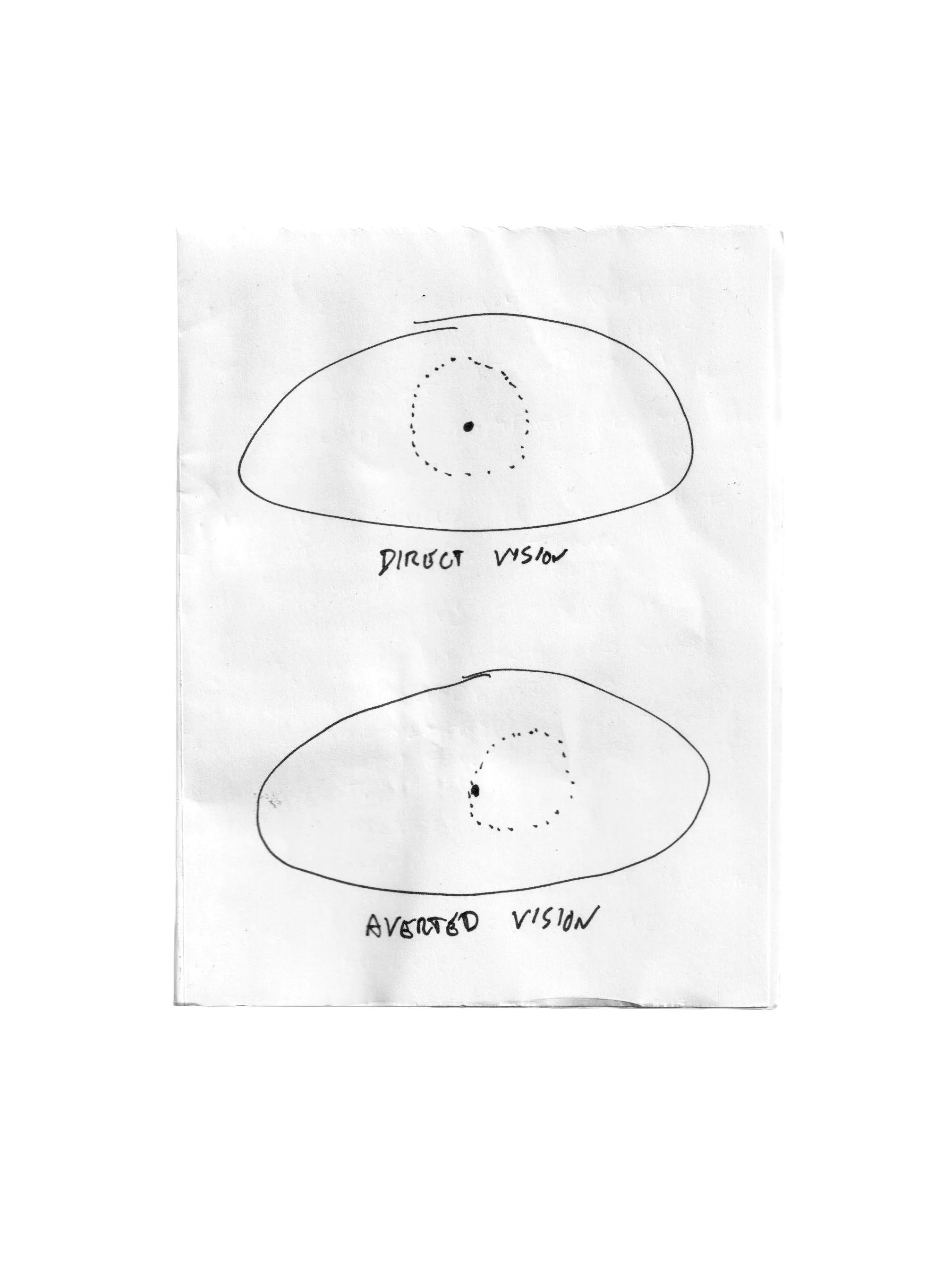
But there’s a trick when the light is so faint the field appears void despite the point. When the thing right at the center of our vision, the center of our focus, eludes us. When that thing disappears.
Just avert your vision.
Look just beside the point while continuing to concentrate on it. Not too far out… but in the zone a little outside the center. Out of the nothingness emerges what is known to be there, but is temporarily beyond perception. The target image no longer falls on the less sensitive central zone, but on the peripheral.
Although your vision is averted, the point no longer your point of fixation, your concentration is still centered on the point. You are seeing the point indirectly, but with your total awareness directed on the point. Only then does the point become visible.
Our eyes rarely sit still. They explore a scene through rapid shifts of gaze called saccades. In a visually guided saccade, the eyes turn toward a visible target. When separating point of fixation from point of concentration there is a sense of the gaze softening, becoming expansive.
Look directly at the point again, and there goes the point.
This seems backwards. That to see the faintest light you must not look directly at it. Turns out this is also how you should see the brightest light, too. Indirectly. That these opposites are best seen commonly.
I find this way of seeing is widely true across scenarios. Looking so closely at something you no longer see it. You want to stare directly at it, it’s what appears most logical. To go against that first intuition, to search around for the point until it registers in your field of vision, and letting it sit there in order to see.
To see a point. To see the point. It’s all the same.
Connections is a personals list for people on Are.na. Meet through what you collect and create, whether you’re looking for conversation, friendship, creative partnership, romance, or just someone new to meet.
If you know Are.na, you know. It’s where I go to do visual research, find good books and hot sites, sometimes solo and sometimes with friends. The people who use Are.na are what really make it what it is. Are.na is a very core group of people.
“Big apps” play attention games. This was built on Are.na. The point is not many people are here. There isn’t any algorithm. There are no upgrades. There don’t need to be any because this took six hours to make and runs on Are.na itself.
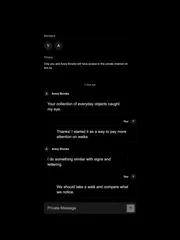
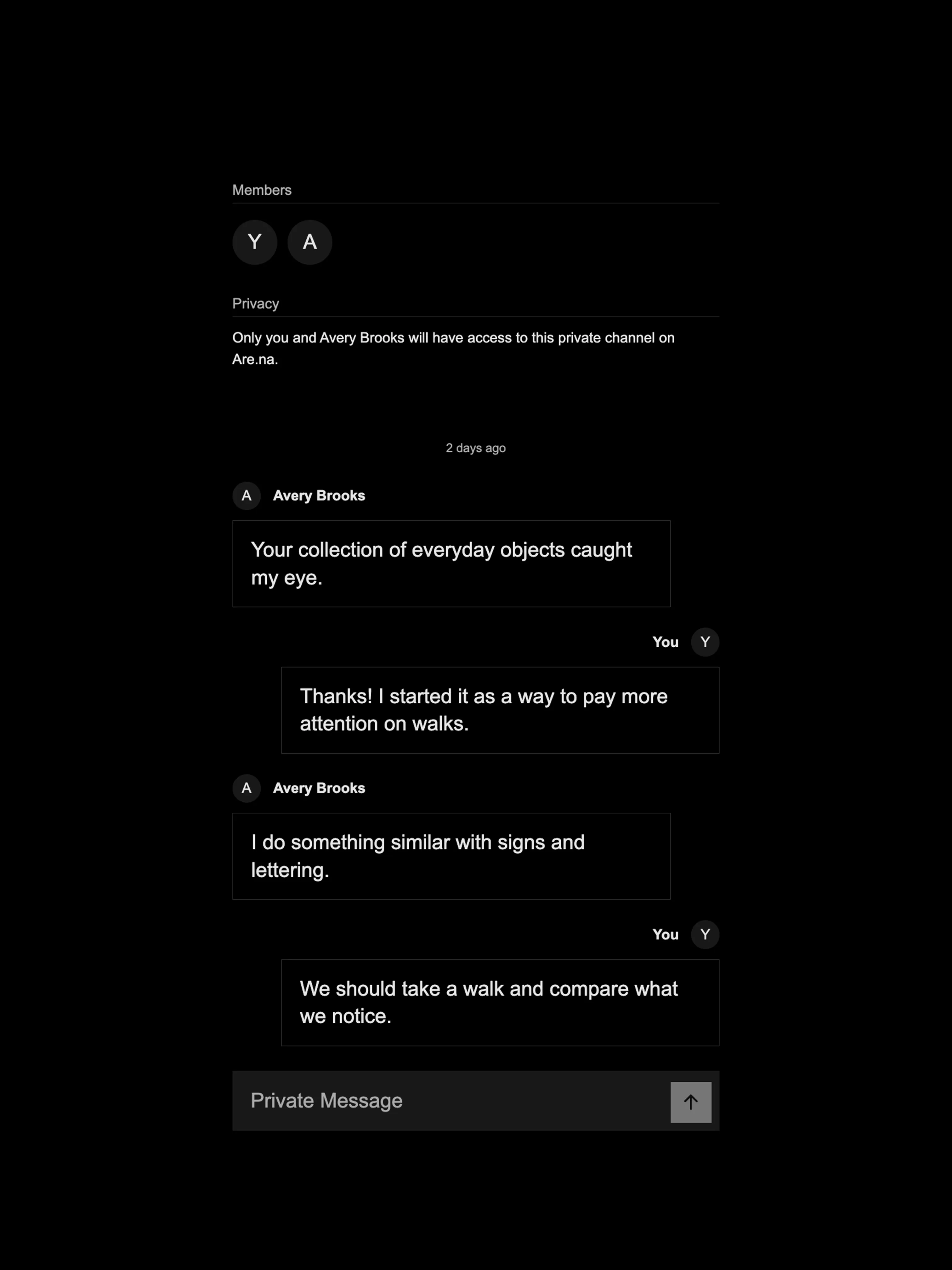
To use it, you have to be on Are.na. You connect your Are.na account. There’s a series of prompts you respond to by connecting blocks and channels. You can make a connection with someone and send a message. It creates a private channel only you two have access to. Connections stores no data. It’s all just Are.na blocks and channels.
There had been a longstanding joke about how there should be a dating app for Are.na. This is that, but also for friendship, for collaboration, maybe even for work. Sort of like a window into someone’s mind.
At the end of the day, it’s about connection, and approaching other people with openness to what might develop.
I hope you have fun with it.
Small social
Laurel Schwulst created Pairings, a hand-picked matching service for those on Are.na. You paid $25, answered a brief questionnaire, and stated what you were open to. Laurel then provided two pairings. I loved this idea so deeply, specifically the hand-picked nature, but thought to myself: wouldn’t it be nice to have something like this more generally available? I believe this makes it a different thing altogether. How Laurel uses her discernment to pair people and the sensitivity she brings are entirely unique. But a simple “this is who I am, and this is what I’m open to” sounded pleasant.
A few months later, the astrology app Co-Star announced it had created a dating app. It’s centered on books and reading, cleverly called Readme, and draws on the philosophy of Lacan for its onboarding and matching. The onboarding process itself took me about half an hour. Certain types of friction are bars to clear and social filters.
Looking at Readme, I find the most interesting aspect is not the functionality of the app itself, but how the room is defined and who then occupies it. It got me thinking: this should exist for all sorts of things that have social filters. Home Depot should have a dating app.
There are great physical examples of this, too.
Plot, a gallery in Chinatown in Los Angeles, has created an entire social network for their gallery space from the ground up. Entirely vibe coded by Alice. It recreates parts of Slack in a focused way specific to the needs of Plot, and feels uniquely Plot even though it rhymes with Slack. This sort of thing just wouldn’t have been feasible before, and I commend Alice and the community at Plot as a space where there can be conversation around synthetic intelligence, culture, care, optimism, criticism: things that feel contradictory but are actually reflective of reality. It’s not biased towards the intellect or the emotional aspects of these topics but able to contain it all. These are the special things.
Alice calls this Small Social, and I have been adopting the term when discussing projects like this. Connections is absolutely not viable as a platform, but it’s operating on an entirely different set of principles. If perhaps ten really great connections are formed because of it over the next ten years, I see it as a total success.
One of the moats around software was the difficulty in producing it. The amount of resources grows as the complexity and/or quality of the software increases. This prevented many ideas from becoming software. But this is no longer the case. I plan to write more on this soon.
Background
Platforms for social connection, like social media, dating apps, etc… have very specific incentives built into them to capture attention and value. We’ve known this forever yet not much has changed. While I believe there is a usefulness to spending time in places where attention aggregates, it is nice to spend time elsewhere too, even if only briefly. Are.na and Connections are two of those other places.
Looking at this through a nutritional lens is very helpful. It’s the best analogy I’ve found. I first heard the following from Alan Kay: for millennia, we lived in small groups, and survival depends on social connection. So fundamentally, social connection is a scarcity. A scarce resource. And similar to the advent of agriculture and sugary food, the planet collectively lost its mind at the advent of it and went wild. Sugar in everything, it hits the taste buds and you get a reaction shaped by deep evolutionary time scales coming into moments of pure abundance, and our internal regulation systems have no idea how to handle how good it is to the point of it impacting health.
This is where I personally feel I’m at with social media. I grew up in rural areas. I stopped going to school when I was 10. I always felt like I was an outsider. And I found connection online, and it took me to places in the world (both on the screen and IRL) where I never would’ve otherwise arrived. This on top of the instinctual desire to connect. For survival. And that’s a very sugary taste, right? So no wonder this shit is addicting!
So this points to a feedback loop between people and social platforms, and while I don’t believe anyone is being terribly nefarious at the core, there is an exchange that occurs between attention and value that kicks off reinforcement of unsustainable behavior. Of blowing time scrolling through things you have a latent desire to see, in a way that is not representative of how you mean to spend your time.
Like anything, the answer (if there is one) is not to cut social media out of life. To fall off to an edge of legibility. But it’s to build discernment and train your mind and body to recognize what is nutritional. It’s hard, but it’s good, and then it gets a little easier. But it’s a continuous set of making the decision.
Time and resource
It didn’t take long to create Connections. Several hours, but likely a thousand or so prompts in a continuous state of honing it in. This let me build something that would’ve been far too time intensive before programming agents, in a couple days as a break between other projects.
In the past, before starting work on Connections, I likely would’ve sent off an email to Laurel, who created the deeply inspiring Are.na Pairing service. That would’ve led to a different type of connection. One not contingent on the likelihood of a work being produced, but simply a shared spark of inspiration.
However, I’m sensitive to someone’s time, and hesitant to share an idea and build excitement about it if I may not have the time to follow through on it. It’s a bit of a letdown, or feels like being flaky. So now I’m noticing that before making contact, I try to make a big dent. That has a tendency to create momentum that I then ride out until I realize, “Oh, I actually believe this is now complete.”
However, perhaps something fundamental to life is the room to bug people and perhaps be a little flaky. These are sort of human behaviors. And to what extent are we “making things efficient” to the point of optimizing out the humanness?
In actuality, I don’t think it’s zero sum. I think you can make things efficiently, and bug your friends about them. It’s easy to fall to either side of legibility. The extremes are the most understandable, and within a lot of uncertainty that’s the easy path to take. So next time, perhaps I put the first couple hours in, then send off a note.
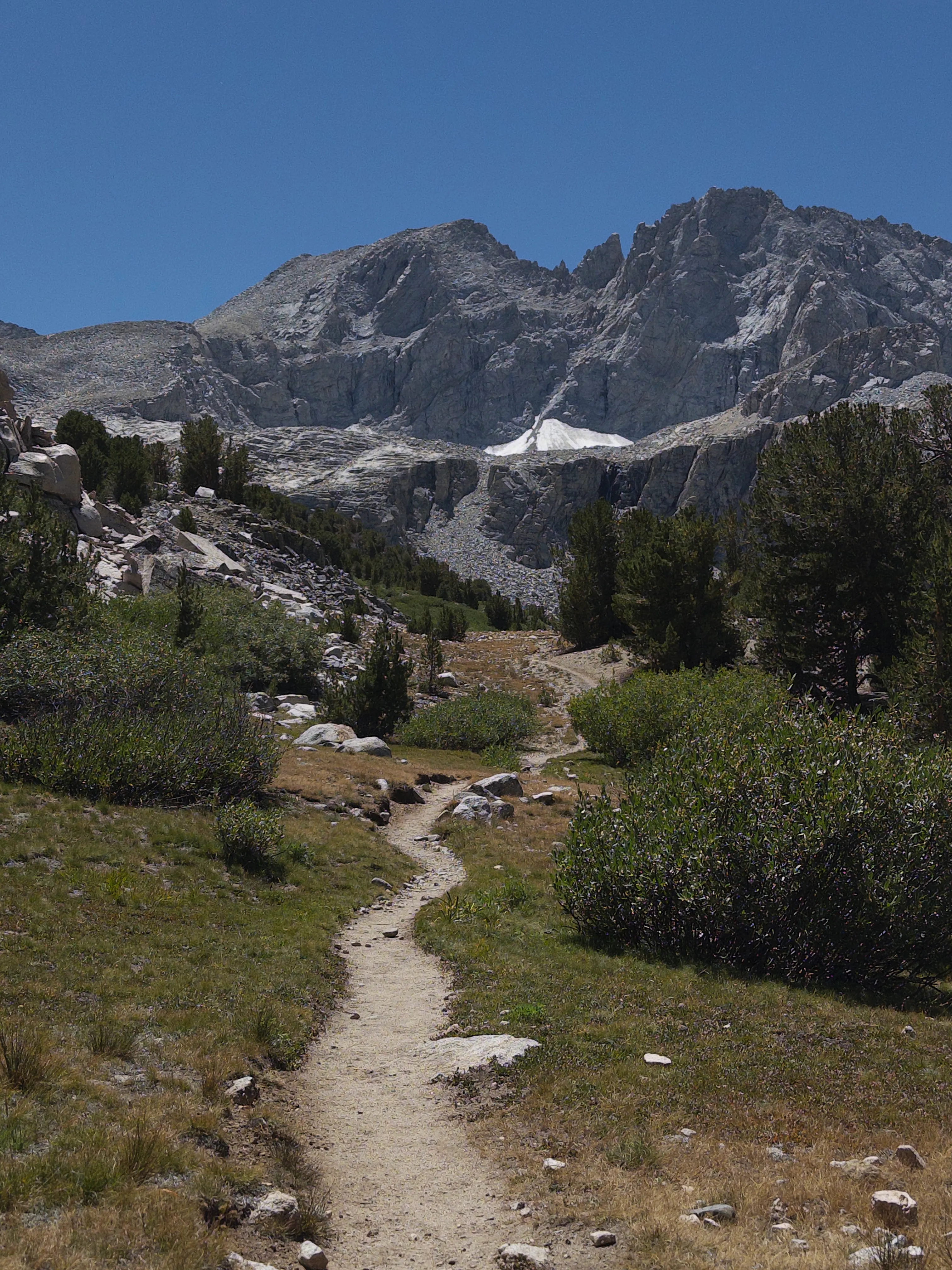
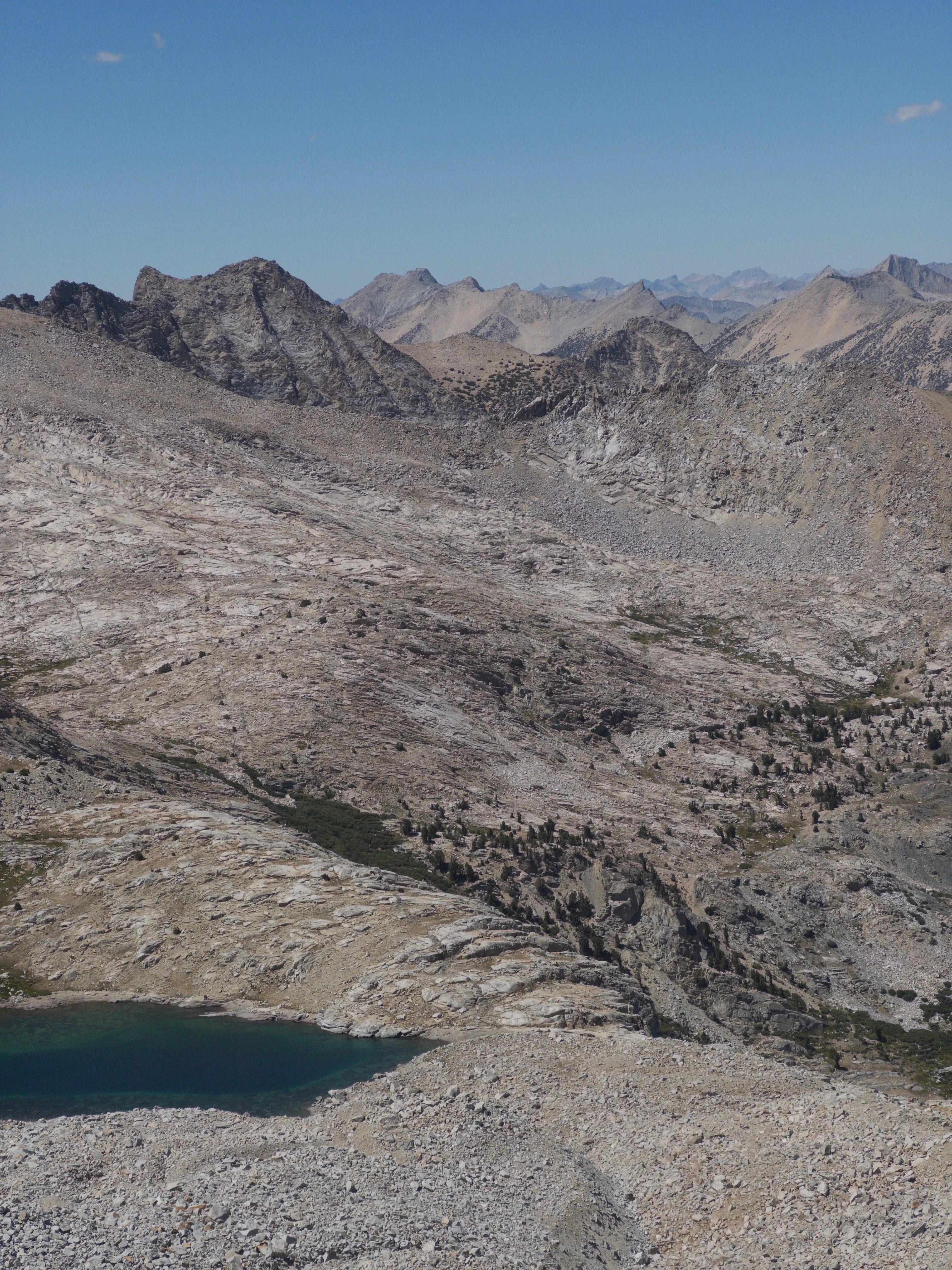
Plans can have an elastic quality. Sometimes they start big, contract, then expand to fill the space. Driving up the switchbacks to Onion Valley my plan is quite logistically complex. Arrive at 10 p.m. after the 5 hour drive from Los Angeles, drop my bicycle at the top, then drive down the grade and north a ways up to Baxter Pass, one of the notorious big passes. It sounds like a memorable time: climb up 7,600 feet and into the Sixty Lakes Basin for an overnighter. The next morning, up and out Kearsarge Pass, hop the bike, descend the grade, then ride back up to the car.
The plan is big, but sound. However, the week was overflowing with work. Pulling up to the Onion Valley trailhead, I’m fried. Split-second decision. Scrap the plan, get some sleep, then have a light, relaxed day with the e-book reader by the lake. Move around a bit. A recovery trip. I settle into the back of the car on my mattress, tucked into the quilt, and doze off.
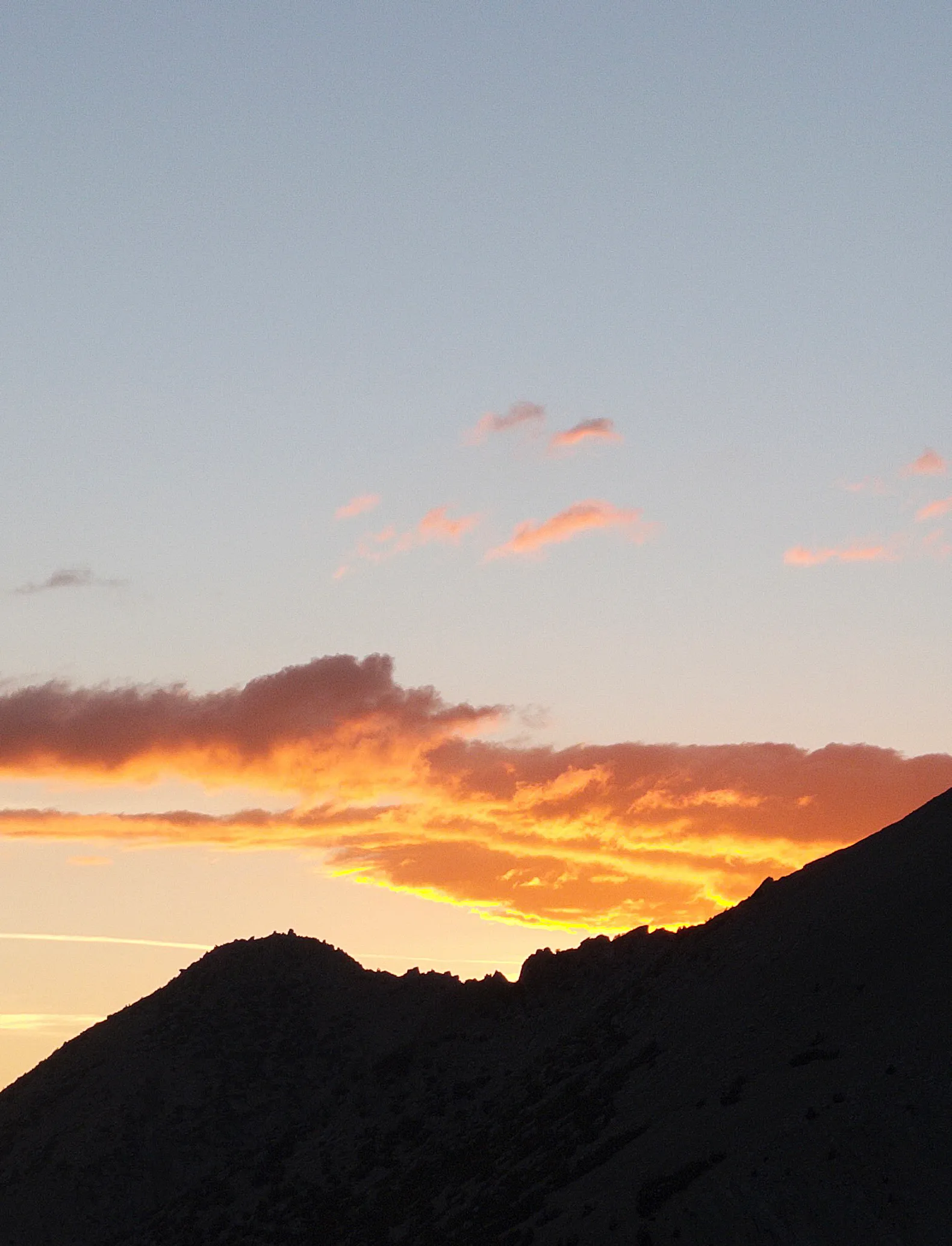
A sliver of glowing orange above the Inyo Mountains on the other side of the Owens Valley wakes me up. I’ve had early mornings the past few weeks. The sound of the nearby stream and warmth of the quilt in the chill alpine air… I’m sleeping in.
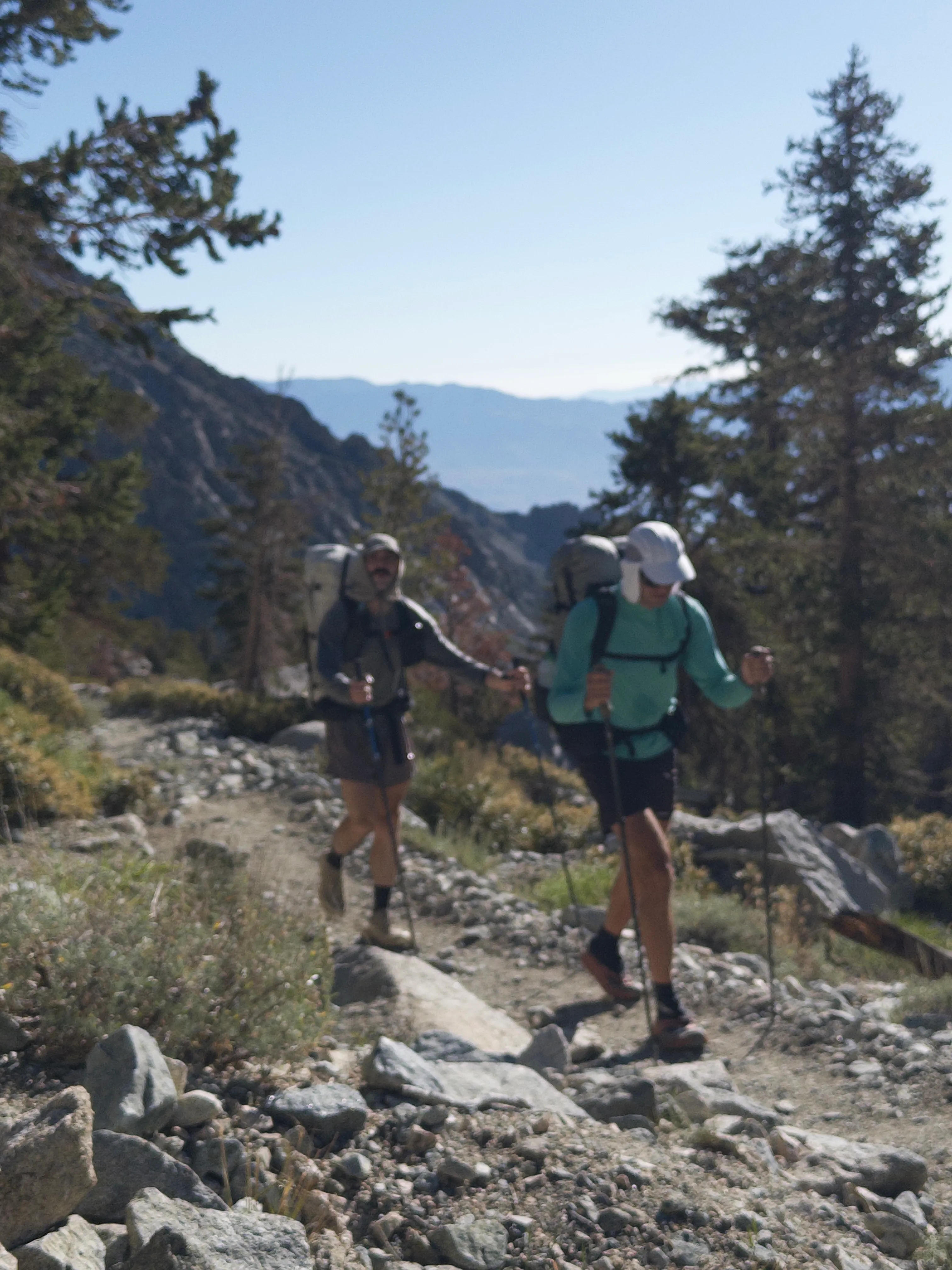
I finally get around at 7:30 and hear someone say my name. It’s Gill! We’re both surprised to see each other. “What are you doing out here?” I ask. “Starting a week on the Sierra High Route with a friend.” Amazing. I feel a little guilt for sleeping in, but this serendipity is too good.
We decide to start out together. I’m still uncertain where the day will take me. We talked about my time having a house for a few years in the Sierra. “Part of having time away from the mountains is you make room to dream about them.” That’s been me the past several weeks, and now that I’m out here, what a contrast.
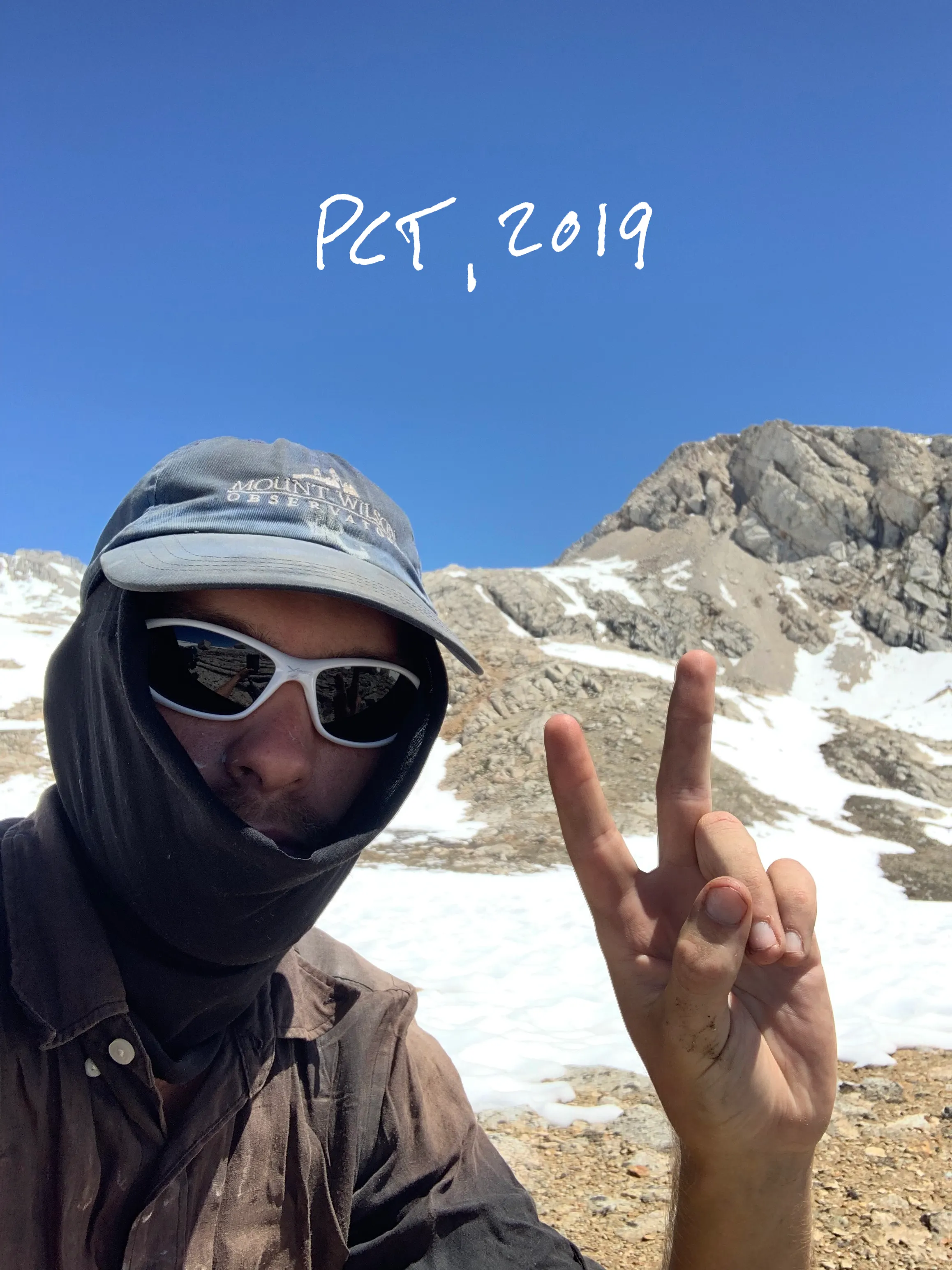
I’ve only been to Onion Valley once, to ski around Gould two winters ago. Very memorable. When doing the PCT in 2019, I skipped exiting here in favor of pushing to Red’s Meadow. This was my first summer Kearsarge.
Gill and I chat as we reach the top of Kearsarge Pass. “You know, you could hit Forester Pass if you wanted,” he suggests. Forester is the high point of the PCT at 13,200 feet, and I haven’t been up there since doing it as part of the PCT. It sounds perfect.
We cruise past Bullfrog Lakes and soon hit the JMT/PCT junction. We part ways as Gill and his friend head towards Land’s End to start the High Route, and I head south towards Forester.
I begin to run a bit, with my fastpack setup on the shoulder. I slow on a climb and hear footsteps behind me. He’s running fast, and as he approaches I recognize the face. “Bentley?” We’ve run East Side Trail Runners’ Wednesday group run several times together. What an insanely small world. We chat and, over the next several miles, hikers ask if I saw that runner. “Oh yeah, Bentley.”
The weather is perfect: cool temperatures after a few days of monsoonal rain, perfect blue sky. The grade picks up towards Forester. Elevation beginsto become noticeable.
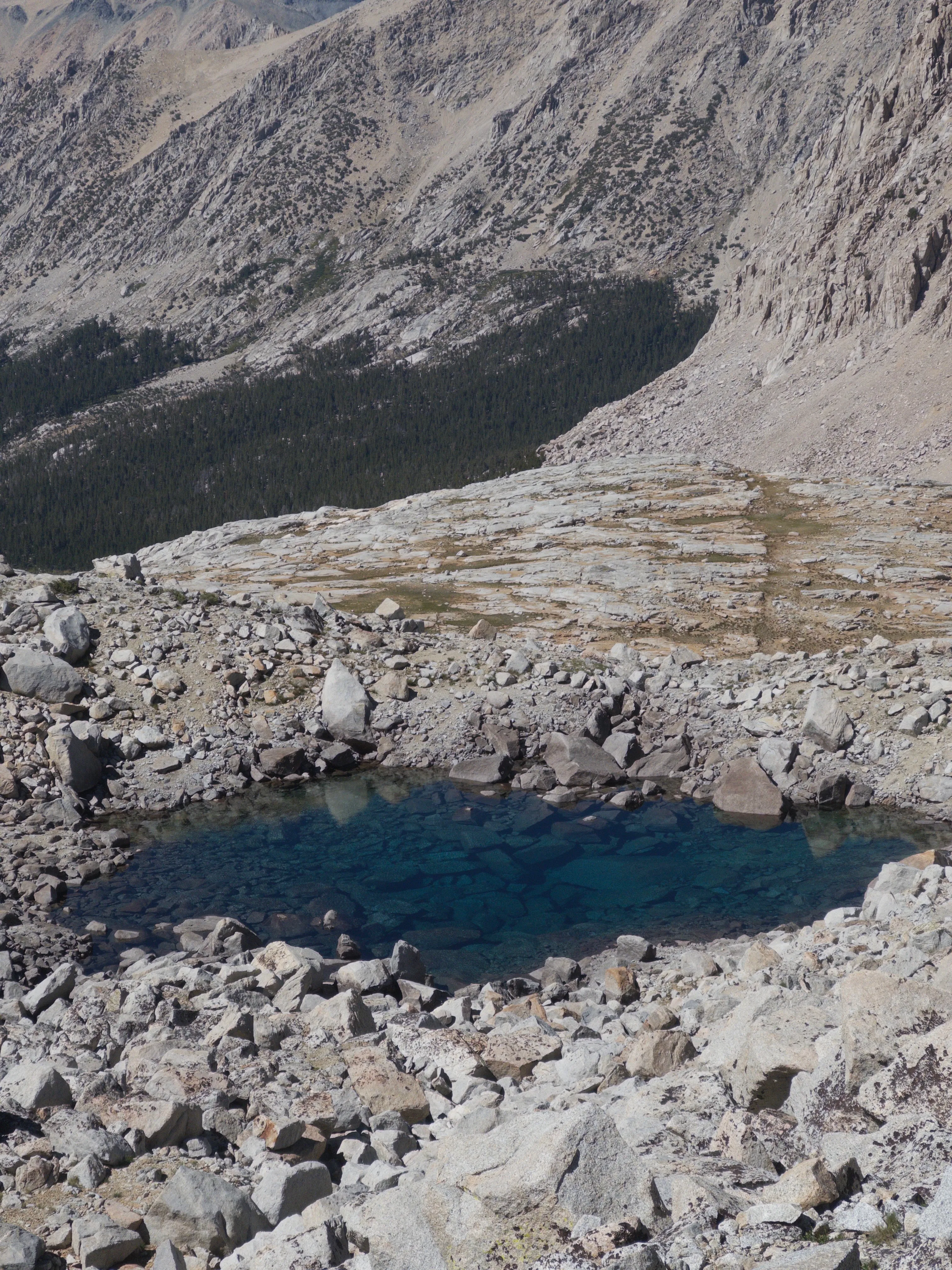
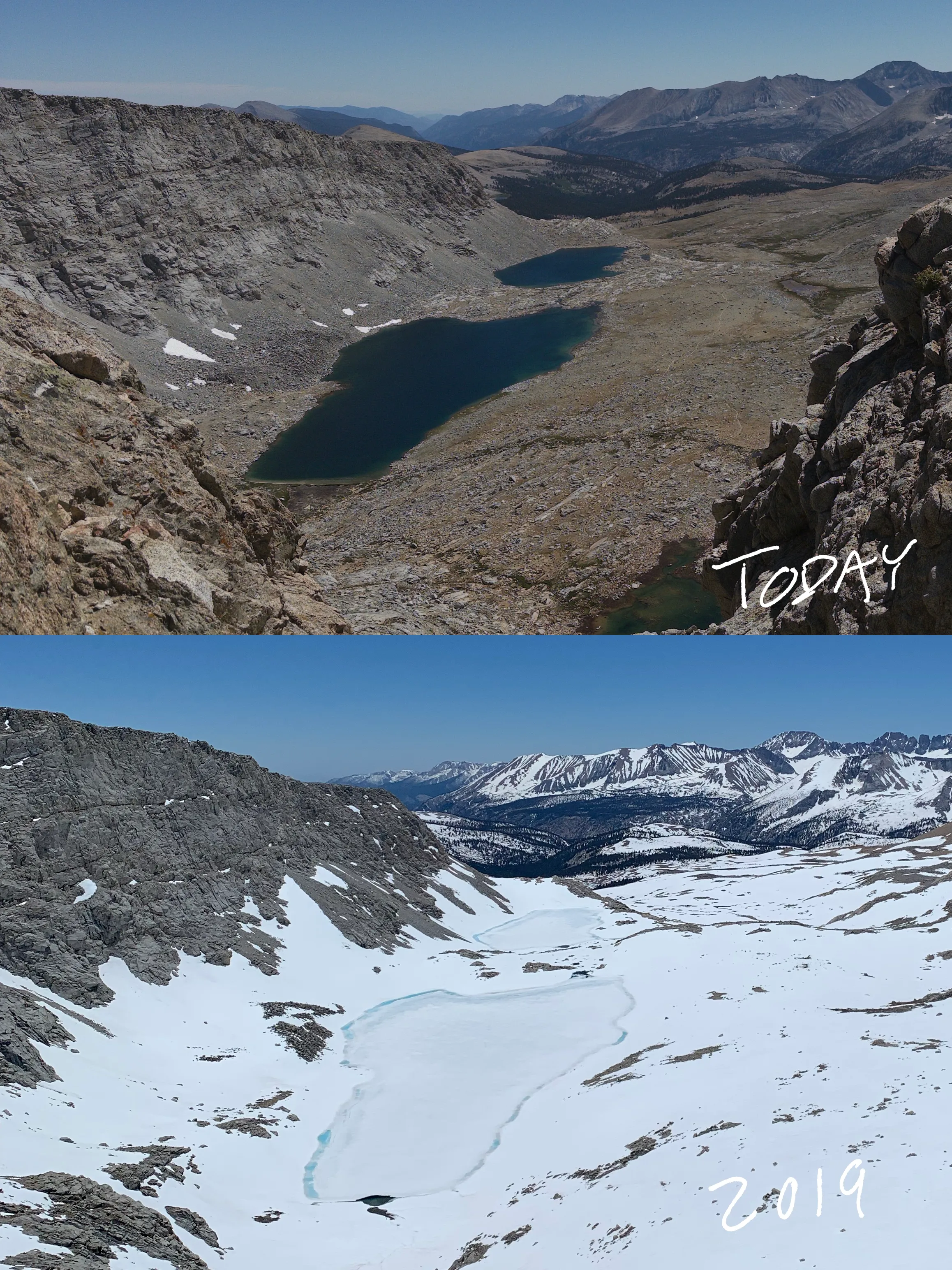
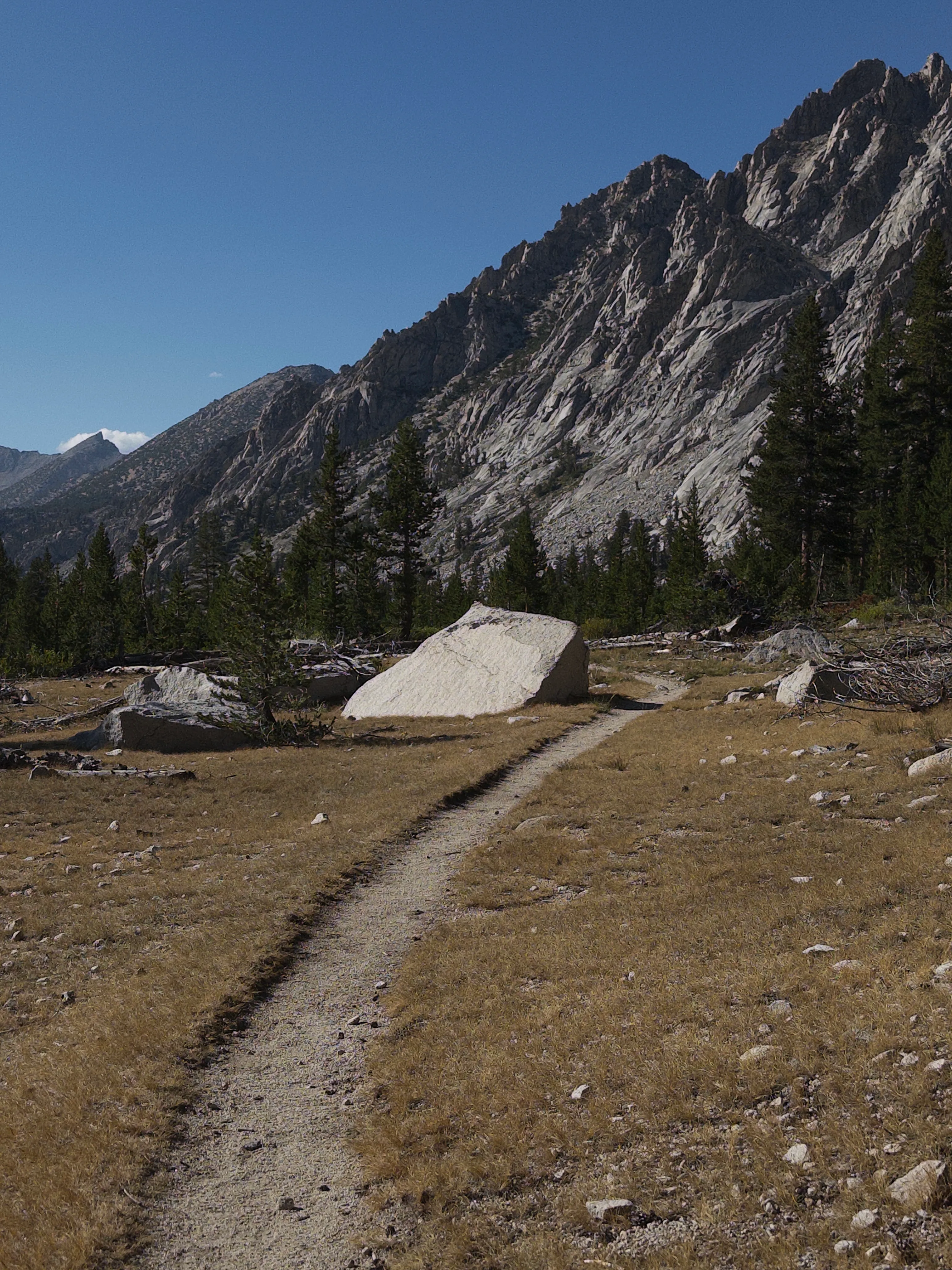
Climbing through treeline, it starts really opening up. Huge views down Bubbs Creek towards Vidette Meadow. In 2019 all of this was covered in snow; the trail now made visible. The cool wind picks up nearing the narrow gap at the top of the pass. A lone sloping rock becomes the perfect backrest beside the SEKI sign.
This was quite memorable on the PCT. The night before, I fell asleep soaked to the core after crossing Tyndall Creek, feeling and running ultra-high with the start of the Big Melt—the point of fear when temperatures stop consistently freezing overnight.
That morning I began moving over the snow towards the pass, a staircase of steps had been kicked in, leading straight up at the base. I caught up to two others, one wearing what looked like a wildland-service firefighter outfit from the ’60s, the other a sleeveless hoodie covered in a print of a tiger’s face.
We introduced ourselves and got talking. Turns out Jeff, in the tiger hoodie, goes by Legend. He had just finished the fastest time doing the Triple Crown—the PCT, CDT, and AT—in one calendar year: 7,900 miles. John, who goes by Airborne, had just set the FKT for the PCT yo-yo, Mexico to Canada to Mexico, and here I was doing my first winter ascent of a pass.
I hadn’t ever seen anyone move in the alpine like this before. The style it was massively motivating. We sure-footed down Bubbs Creek through the valley. The snow coverage was immense. Jon and Jeff decided to glissade, and I hopped on my ass and followed.
Running along here now, I think of the slippage in time. So much life has occurred between then and now. As I move the miles come easy until they don’t. Reaching the base of the climb back up to Bullfrog Lakes, the sun gets lower.
The junction to Glen Pass soon follows. On the PCT you tend to exit Kearsarge and resupplying in Bishop decide to push north to Mount Whitney, hitting all the major Sierra passes in one go. I ended up running out of food at the base of the pass. By the time I arrived at Mammoth, I was quite hungry, and a little crazed.
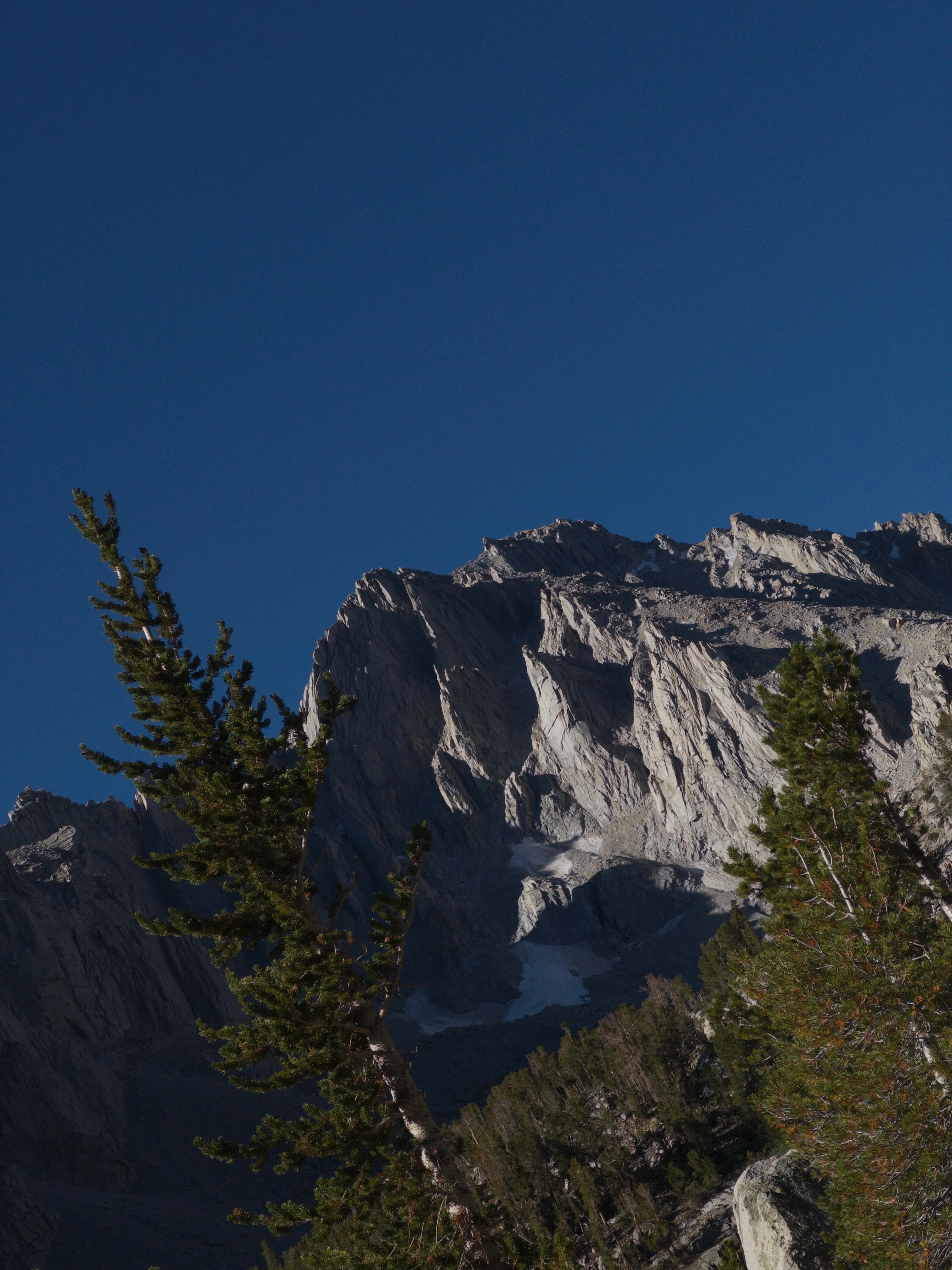
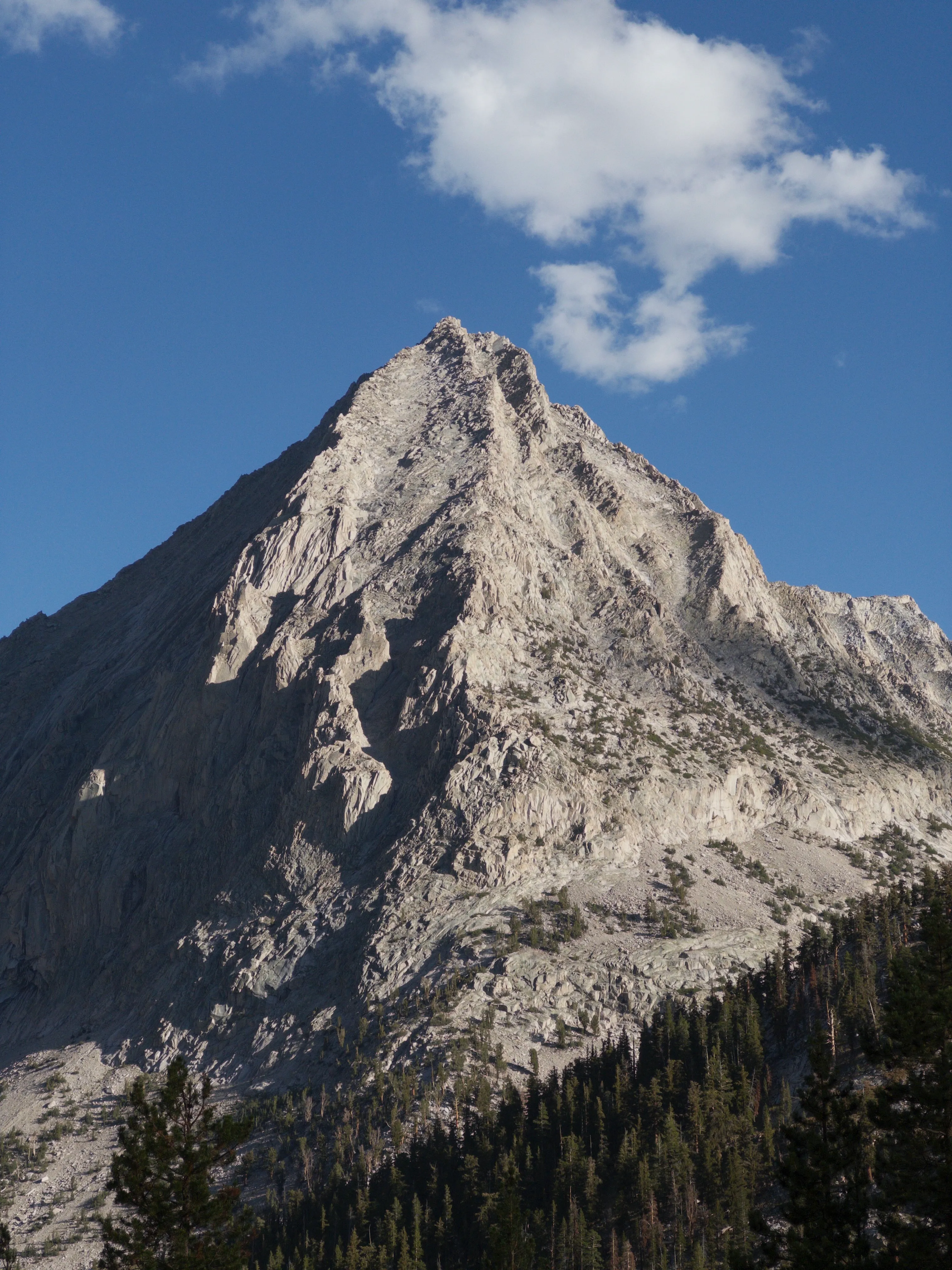
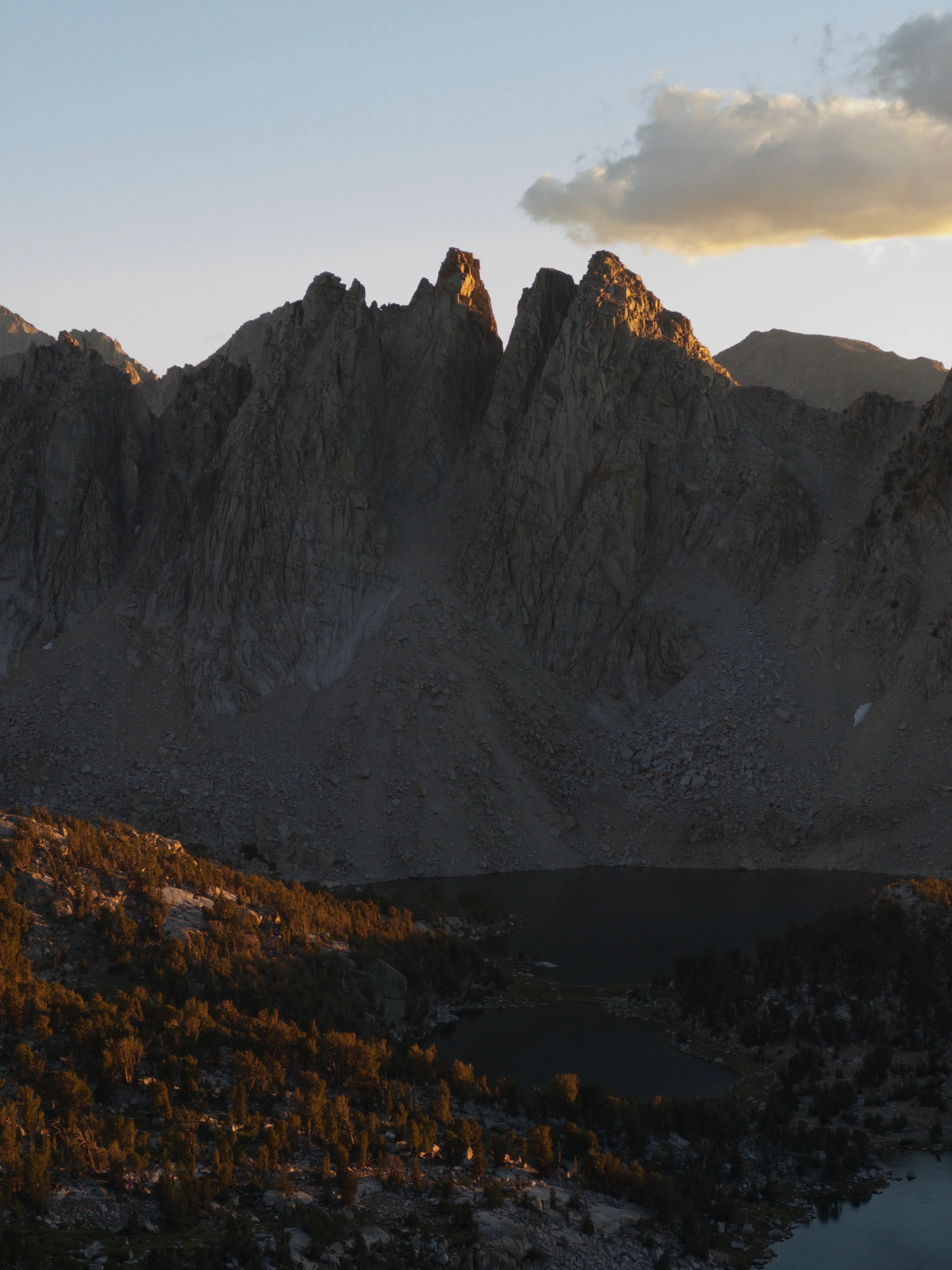
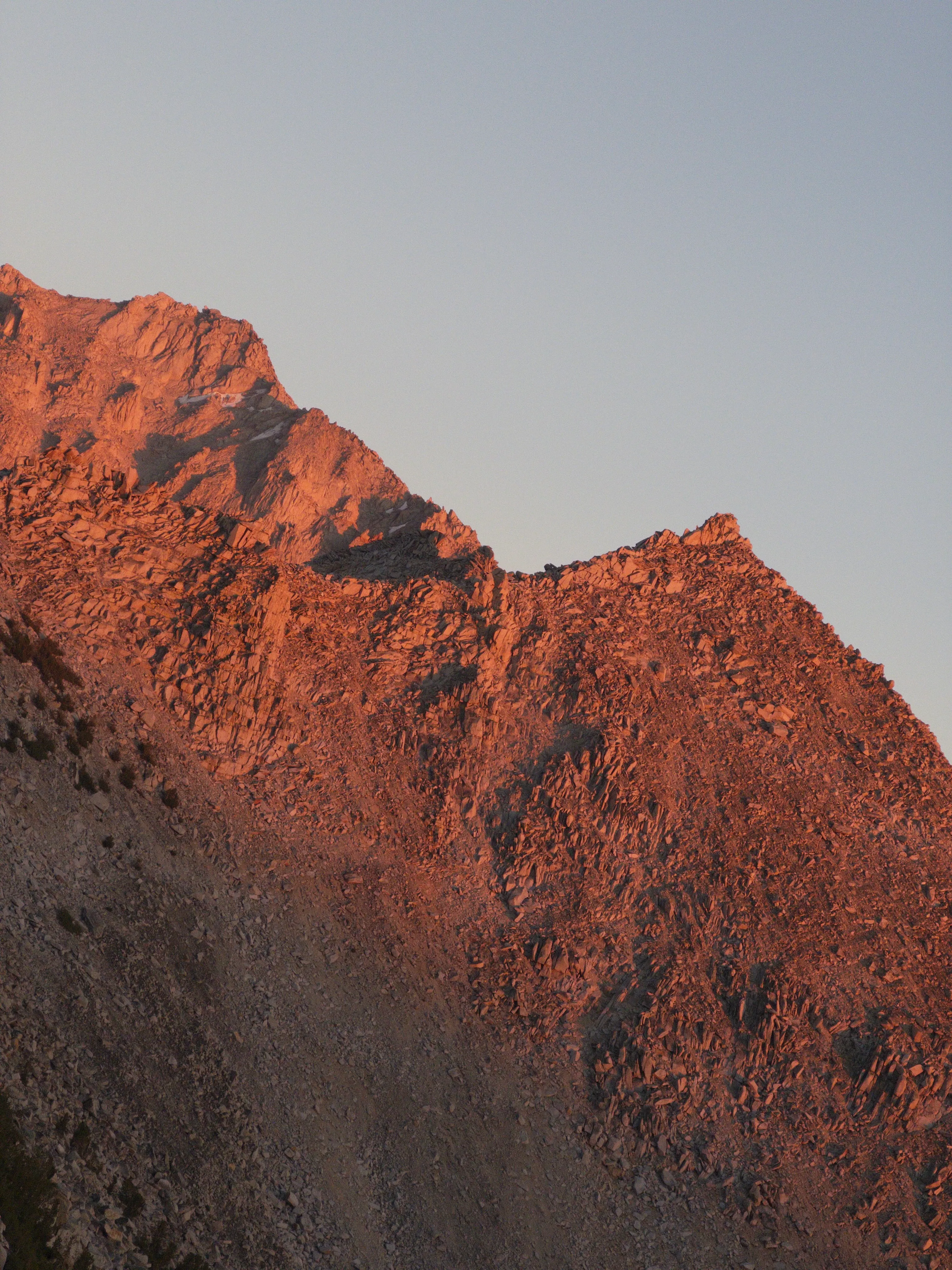
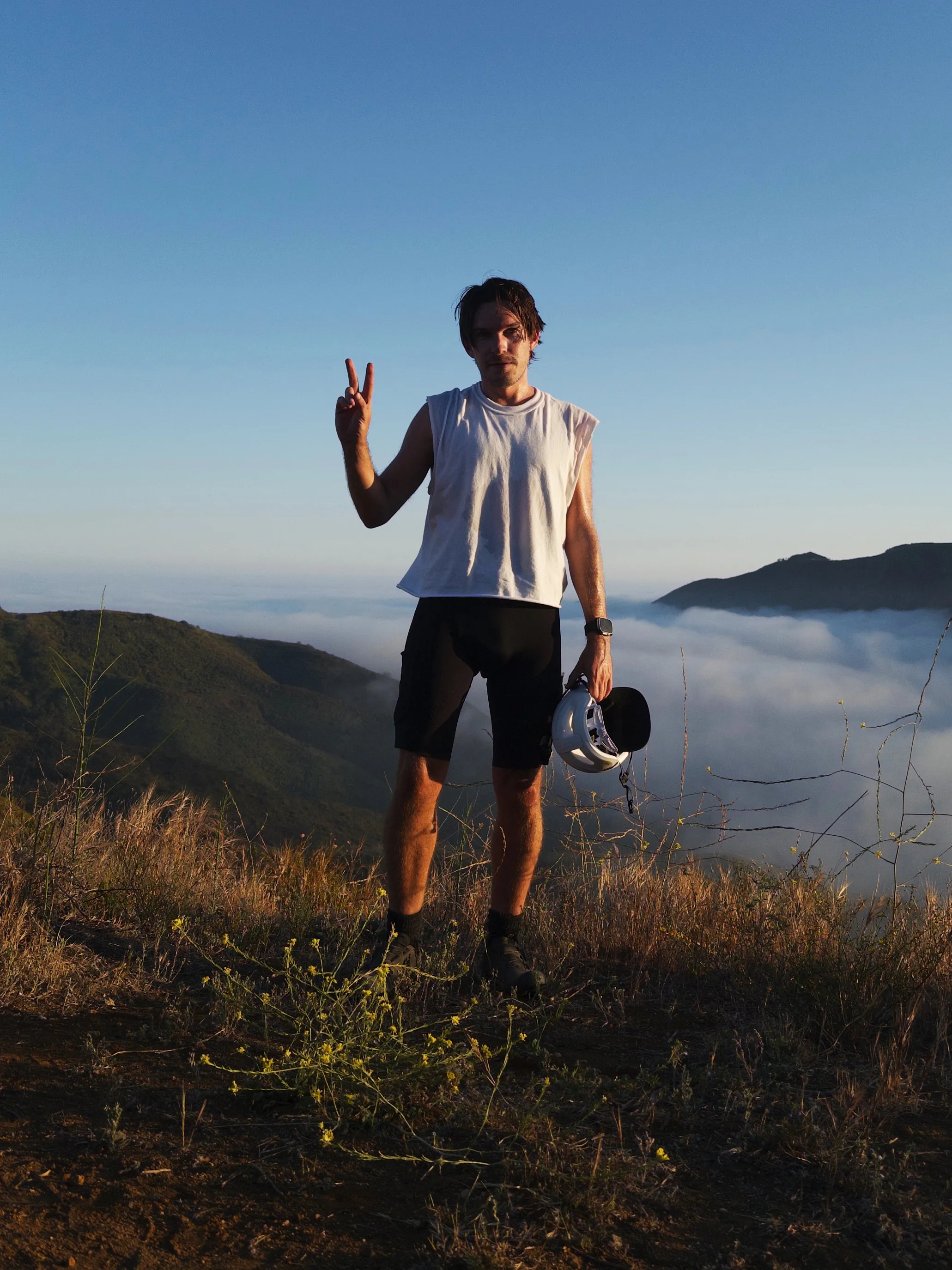
Now ascending the final climb up Kearsarge Pass, the pinnacles are glowing in the last light of the day. I’m feeling tired. About 12 hours and 35 miles of continuous motion, I realize how my heart rate seems stuck at 170 despite how I slow the steps. After a mile or two of this, I notice how shallow my breathing is. Big, intentional, deep breaths now. Almost instantly I feel better, like a fresh start to the day. It’s an incredible surge of energy as I crest the pass just as quickly as the sun dips.
Yesterday a total solar eclipse blocked out the sun, now making it one day past the new moon. It’s dark—very dark. The Milky Way above is so clearly defined that dark bands clearly weave through it. The show overhead is so distracting I almost trip several times. Insane, in these moments—big miles, big skies, big mountains, big time. You really find awe of scale—physical, time, everything. Nothing beats this awareness. You really feel it more than think it.
The elevation almost depleted, the fires at the campground come into view. I make my way to the car, fall on the mattress, dunk several Milanos in a jar of peanut butter, and the sudden stop to the continuous motion creates a sensation of momentarily leaving my body.
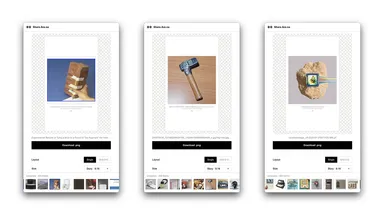
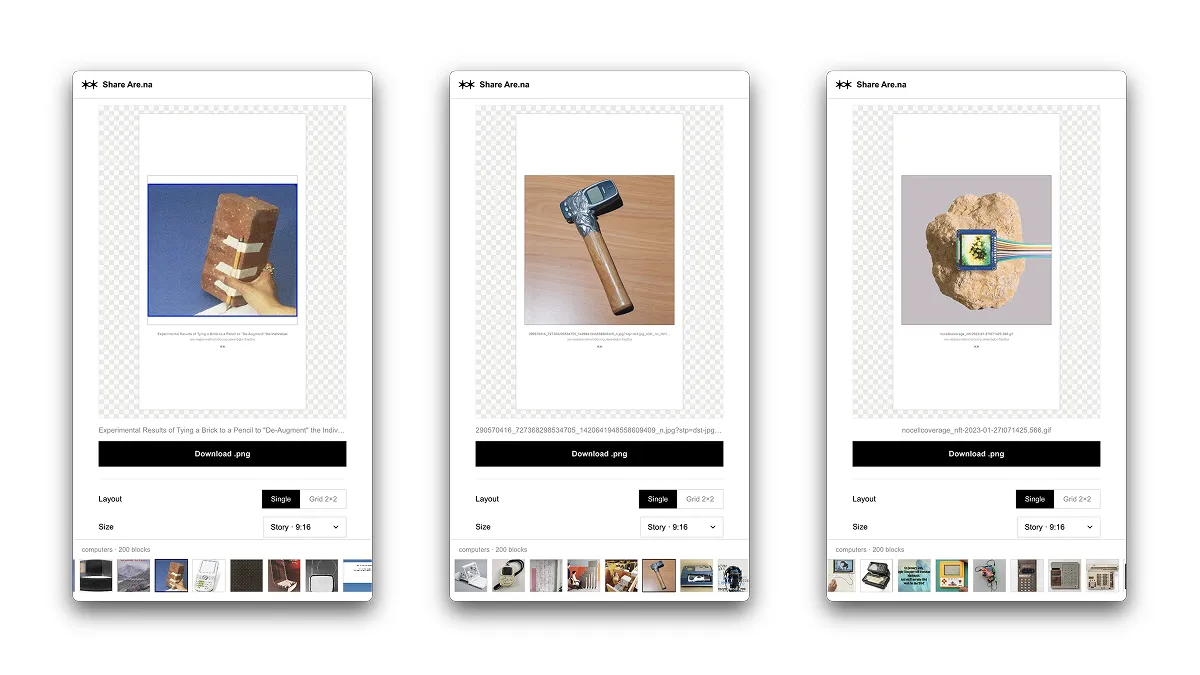
Share Are.na turns an Are.na channel or block into shareable images.
I wanted this for myself for creating images rendered in Are.na’s block style. Paste a link, slug, or ID and the block is composed onto three social formats. This should be a share sheet in the native app, or a modal in the web app. My approach here is inspired by Yihui, who created an extremely great Are.na native iOS app when the official app was struggling. He then created the new, and extremely great official Are.na iOS app.
Instead of making a feature request, make a feature demo. Describe what you want in detail, connect it to the Are.na GraphQL endpoint, then prompt your way to a functional app. Scratch your itch in the near term, make it available for others, and if there is demand there is a chance it lands officially.
In terms of build, it’s a fully static self contained app. It uses the read-only public API and generates assets client side. You can download it and hack away. Cheers!
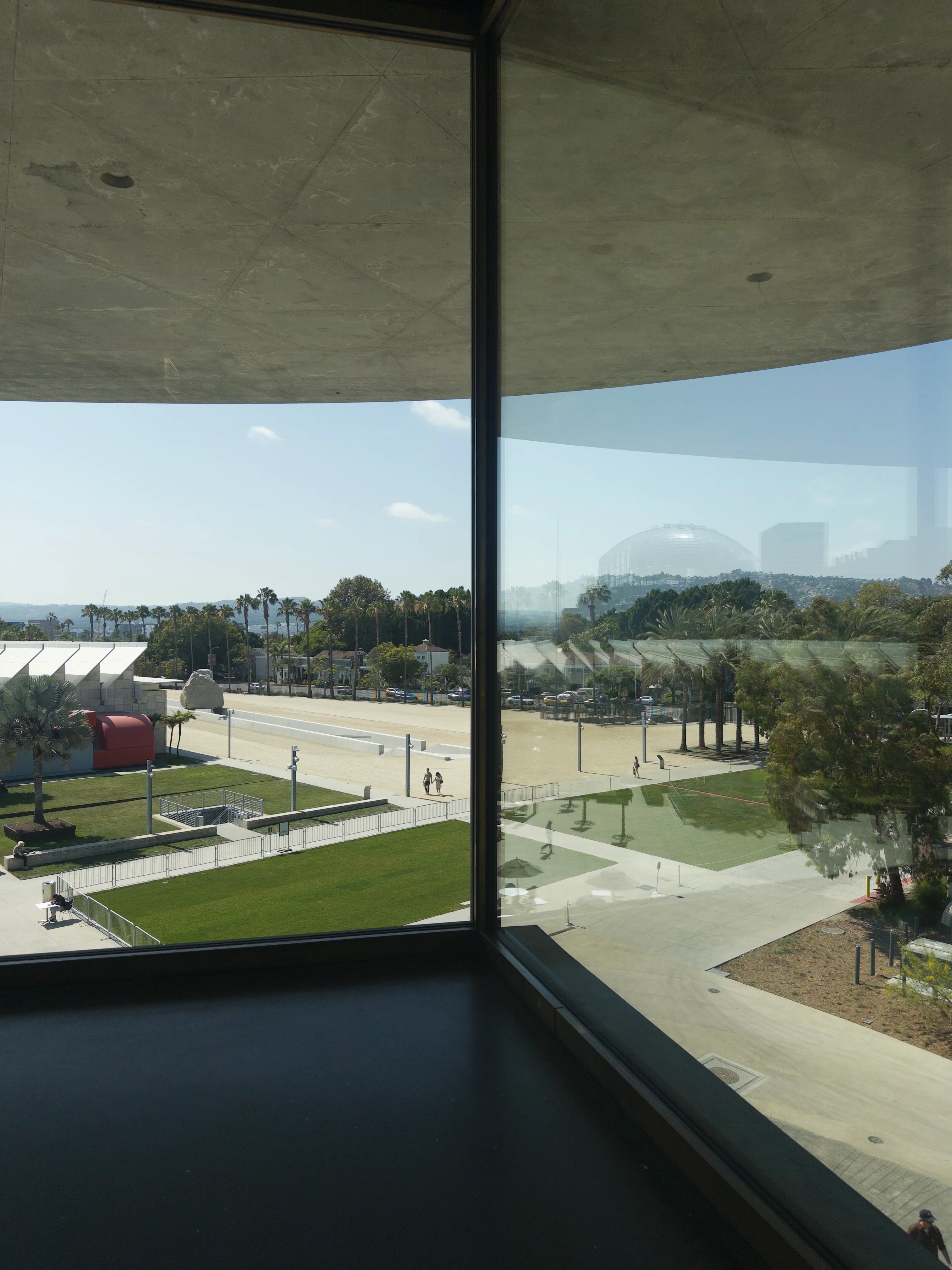
You first see it from a distance. A concrete slab spanning the boulevard, across the flow of traffic below, drawing the eye above. I like the building. Its simple forms and material use. You can often reveal more by doing less.
This sense ends once entering the space and looking at the work. The building overpowers it all. Viewing work against the unfinished concrete walls strains the eye. Robert Irwin, when producing large abstract canvases nine miles to the west and sixty years in the past, fell into an obsession with cracks in the wall. The effect it had on the perceptual quality of the work. This building would be his nightmare.
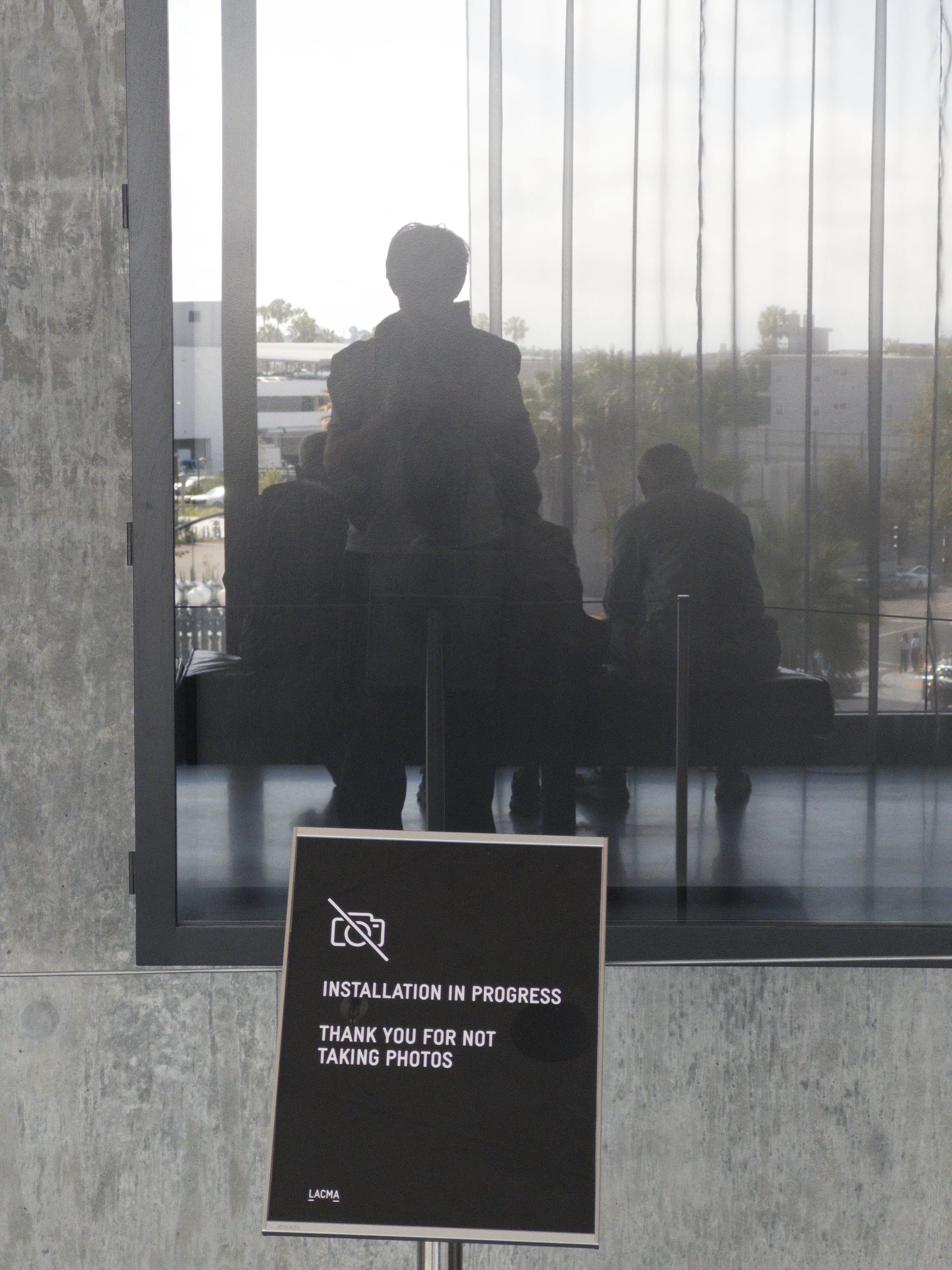
Glass envelops the volume, natural light spills in from all angles. I prefer natural light when viewing work, but only when diffused from above. The Dia Beacon sets the gold standard. But from the side? No thanks. Oil canvases become unviewable due to glare. LACMA tries addressing this with fine drapes, strategically missing in areas as to not obscure the view of the surrounding hills. A complex and distracting moire pattern appears when drapes overlap.
Wandering the floor leads to disjointed confusion. One moment you’re looking at Egyptian artifacts, one unguided turn and, surprise, a Monet. It becomes evident that the openness of the space has been designed around the view outside, not what’s on view inside. Line of sight for the camera takes priority over seeing the work. Los Angeles is the land of the image, no exceptions found here.
As disorienting as this is, sometimes luck finds you. A Studebaker sits in the sunlight in cherry condition. Beside it a low plinth covered in layers on layers of auburn lacquer. Flecks in the paint reflecting the horizontal rays in all directions. Outside the exterior glass, parking lots full to the brim. A room dedicated to Finish Fetish hovering above gridlock traffic on Wilshire Boulevard… I’m into it.
Continuing to meander, I hook a left. “Plastic ‘is in essence the stuff of alchemy’, wrote French cultural critic Roland Barthes in 1957, invoking the malleable material’s almost infinite transmutability.” I’m excited about this. “Plastic” is my favorite essay by Barthes, and I think of it frequently concerning material use. Specifically when designing interfaces for screens.
The room was full of plastic objects, many produced in Southern California. A breastplate cast in plastic by Issey Miyake. A naturally unnatural object to exhibit in Los Angeles, the land of plastic tits. The air conditioning gently excites a dangling tapestry. Nylon monofilament, multi-layered nylon micro-slit film, aluminum vacuum-coated polyester, titanium-oxide vacuum coated micro-slit film. Now that’s the stuff.
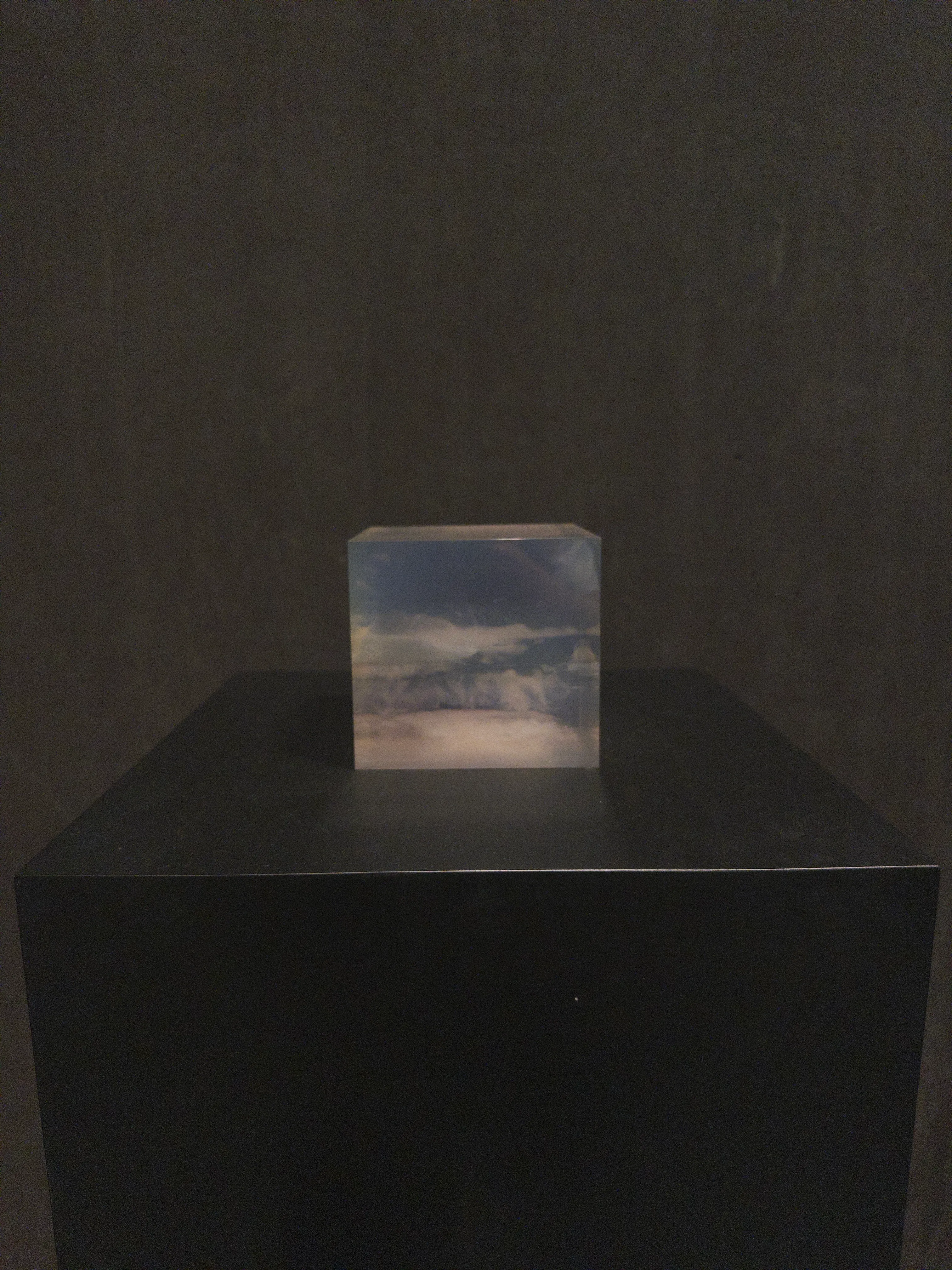
Small Cloud Box refracts the dim overhead light. A cast resin cube by Peter Alexander. June gloom, in a cube, in a room, in a museum, in June gloom.
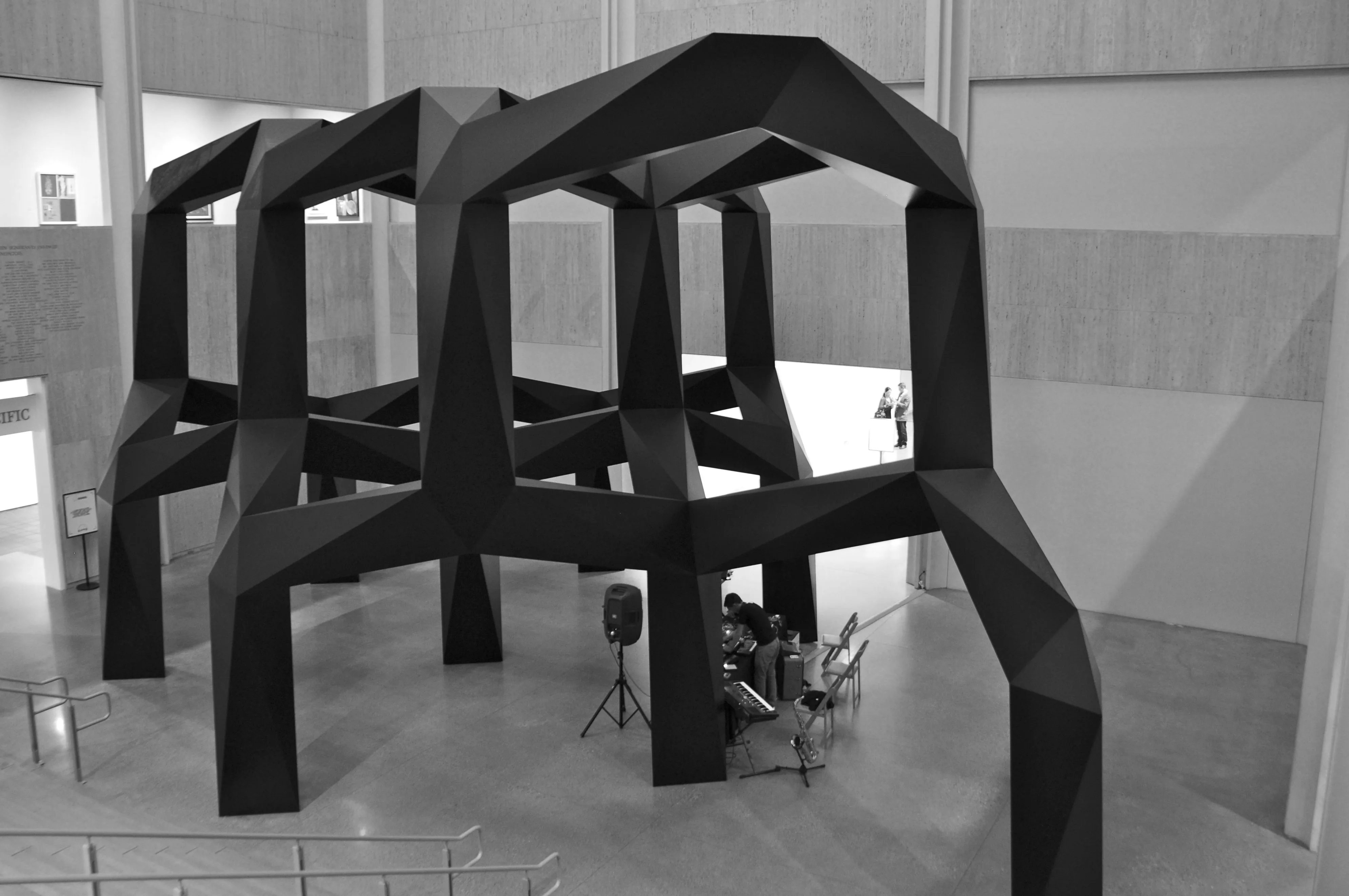
Performing beneath “Smoke” by Tony Smith
Exiting down the stairs back to street level. My last time seeing “Smoke” by Tony Smith was when performing beneath it over a decade ago during an evening of Dublab Programming. It was the focal point when entering the original William L. Pereira structure. I remember being instructed to carefully negotiate movement around it. Now installed outside, fresh bird shit bakes in the afternoon sun on the tessellated black surface. I like the increased accessibility.
I also like the building. But it’s terrible for viewing work. A building for the image.
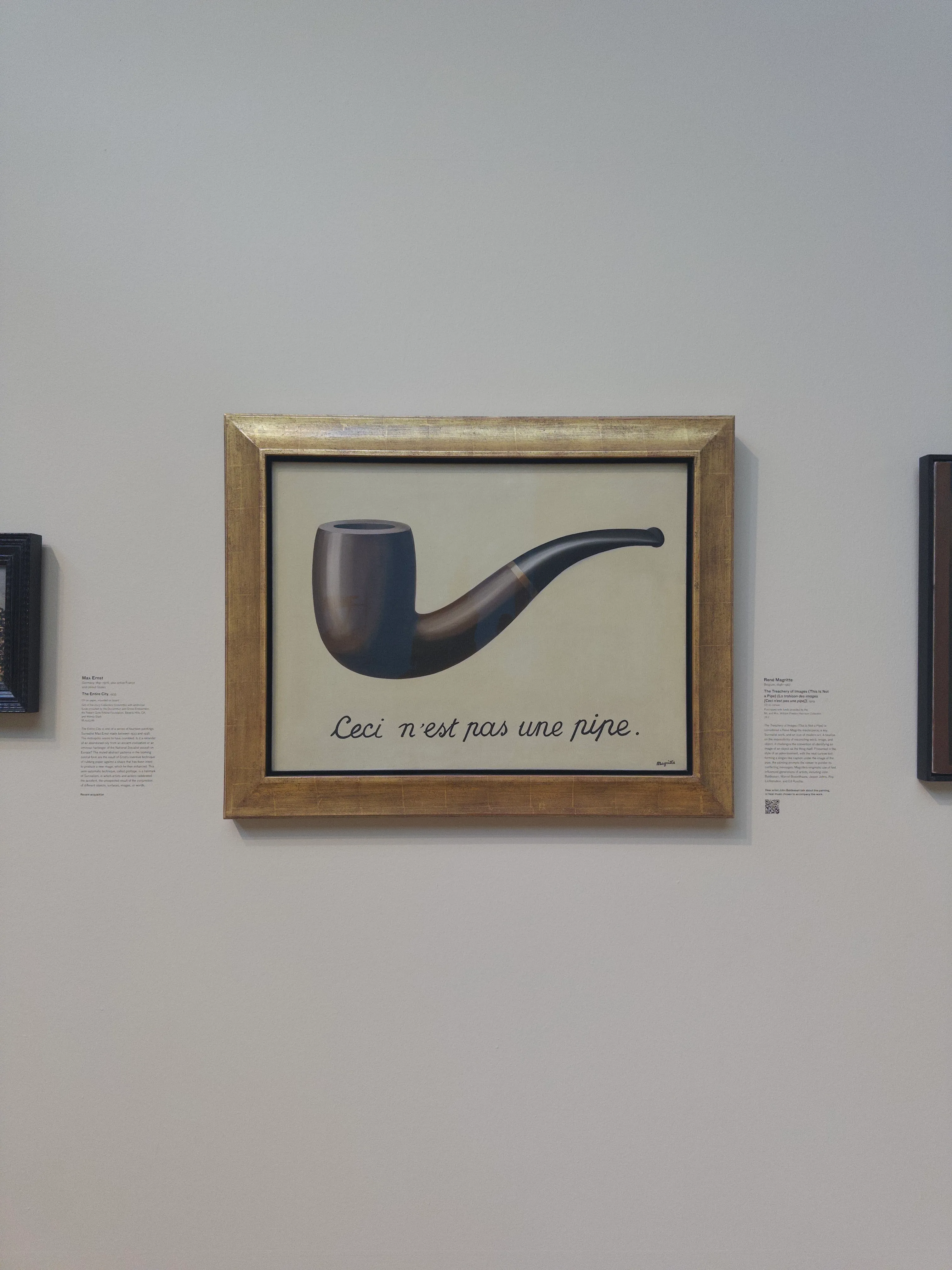
Cross the courtyard and up the escalator to the Broad contemporary. Magritte’s “The Treachery of Images (This is not a Pipe)” on the opposing wall. Part of the permanent collection, I had first seen it shortly after moving to Los Angeles. A pipe painted on a canvas, with the words “this is not a pipe.” I remember reading about it. “An image is simply a representation of an object, not the thing itself.” This was a new idea to me. Simple but true. Seeing it now, I think of how often a thing is confused for something it isn’t, and how this confusion moves and changes through history.
“The Treachery of Intelligence”
The Guston hits. Love to see Sol LeWitt. I’ve never seen a copper Judd wall box. A canvas with three horizontal lines. Two white, one yellow. Robert Irwin. “I painted a total of twenty lines over a period of two years of very, very intense activity.” The best. I hadn’t seen any Bob since some scrims at the Dia. “Seeing is Forgetting the Name of the Thing One Sees” is an all time favorite. Don’t call it a pipe? Don’t call it intelligence? Just see.
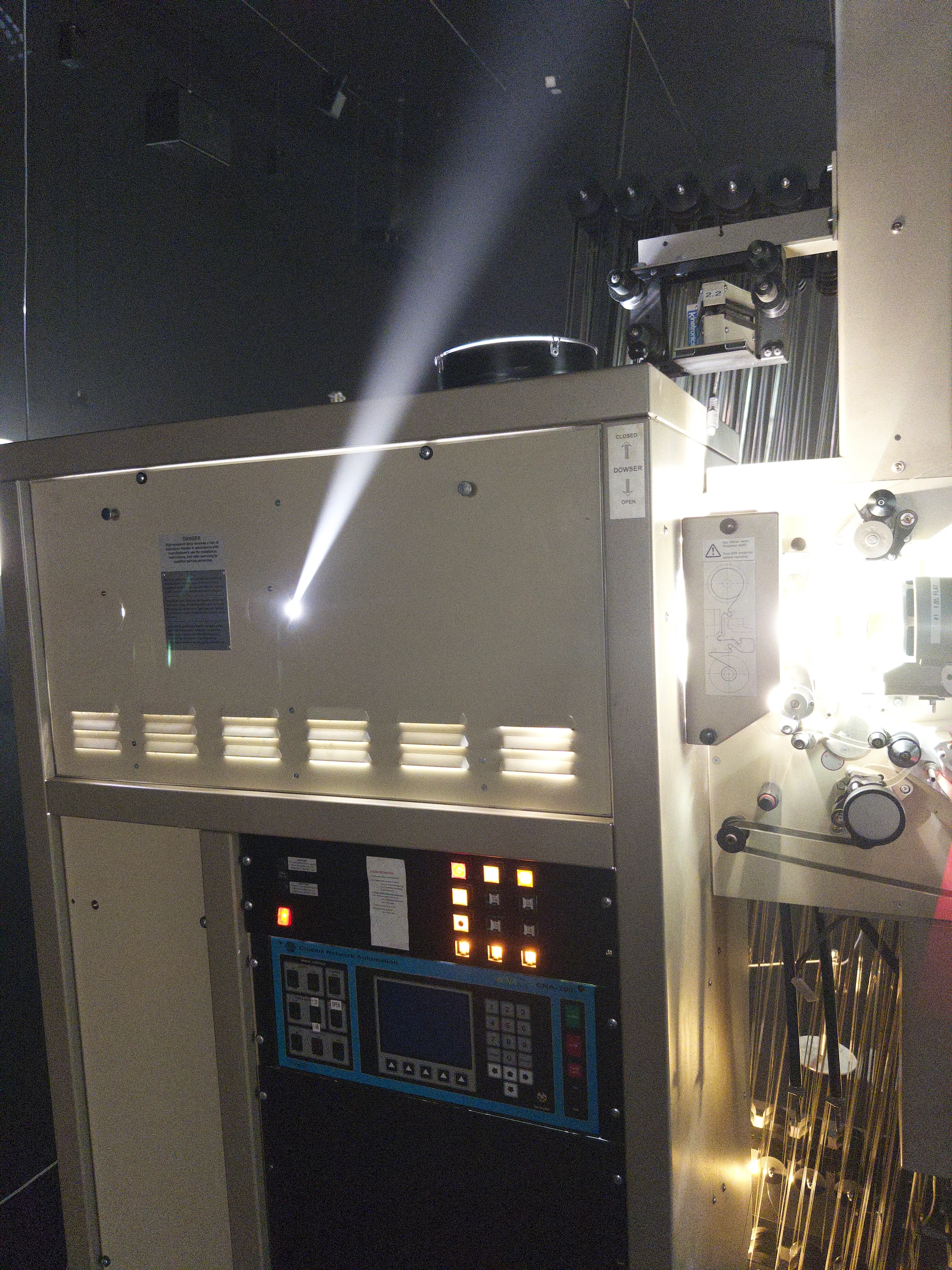
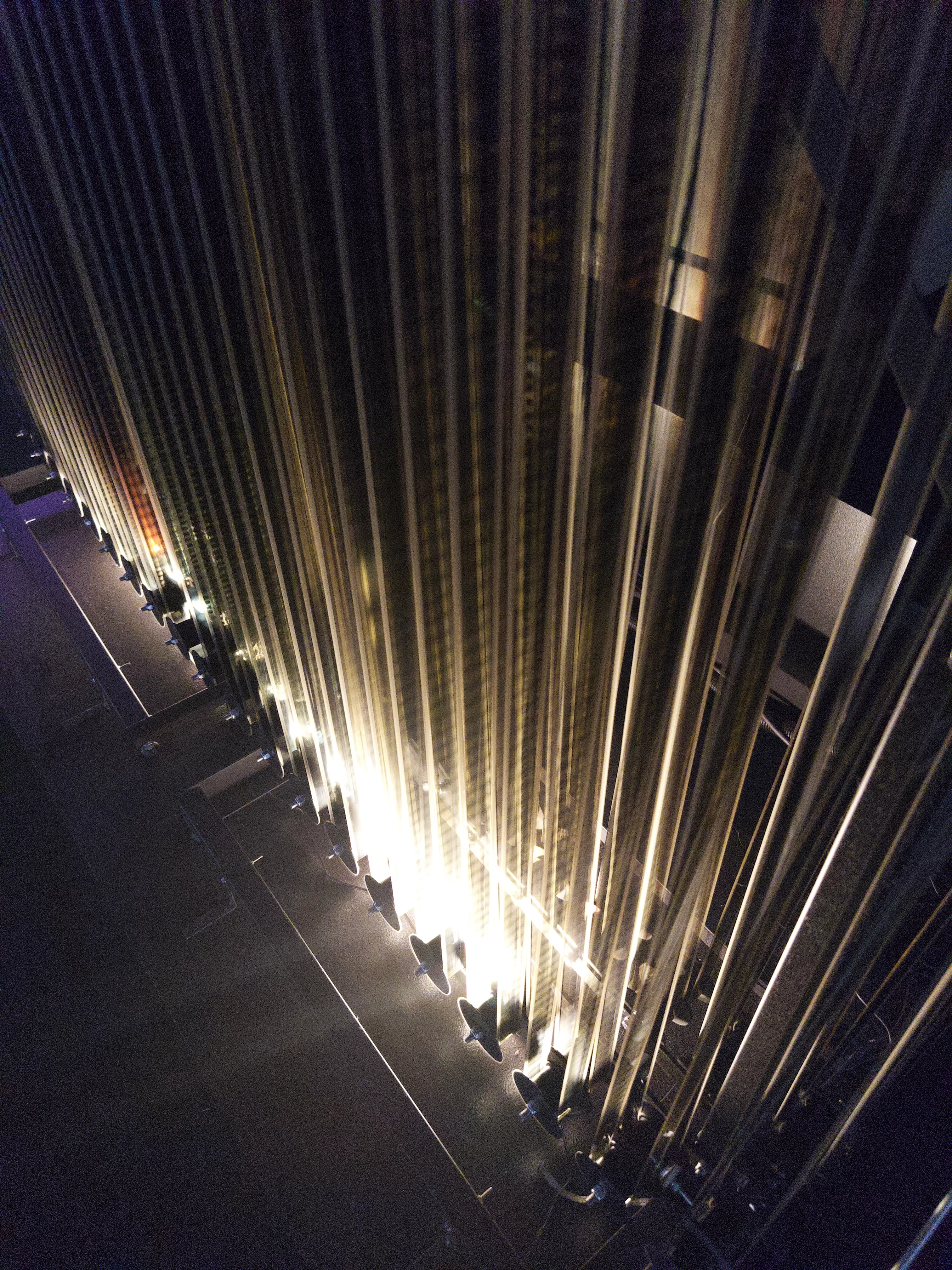
Ducking behind a black curtain, feeling my way along the edge of a hot, loud, and deeply dark room. Towering machines with light spilling out of them consume miles of film on display, zagging all over the place. The mechanical complexity and precision of these old analog machines reveal the mechanics of the image. I’ve never seen analog projectors of this scale this close. I see what inspired Paul Virilio when writing “War and Cinema: The Logistics of Perception.” How the mechanical advancements of the automatic machine gun made possible the motion film camera. Both shoot, one a round of bullets and the other a canister of film. The mechanics largely the same. One leads to the other, feedback takes hold.
War and cinema. War and image. I think back to Magritte, and how my mind continuously wanders these days to the nature of intelligence. This afternoon plays out as the government puts export controls and is revoking access to the latest foundational models like Fable, Anthropic’s flagship model. War and intelligence. How does intelligence fit into all this? We’re presently at an equivalent moment to when projectors were the size of rooms. Images no longer static, no longer paint on canvas, but put into motion. Tricking the eye into seeing something that isn’t there. Seeing a thing for what it is can be quite hard.
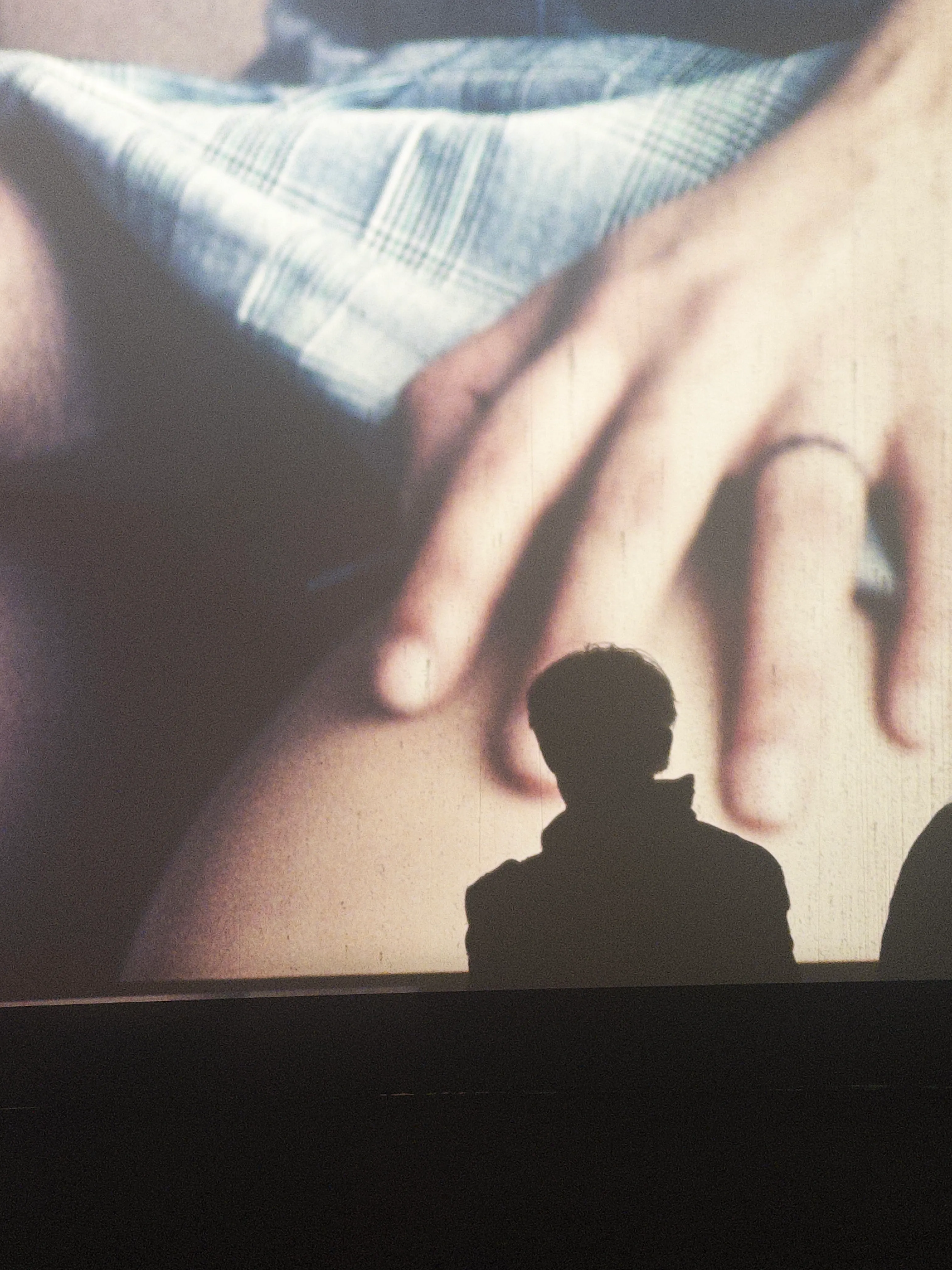
At least twenty minutes have passed since entering the room before looking at the images being projected. Violent images, none of them real. Just images. I watch the volumetric light made visible in the haze.
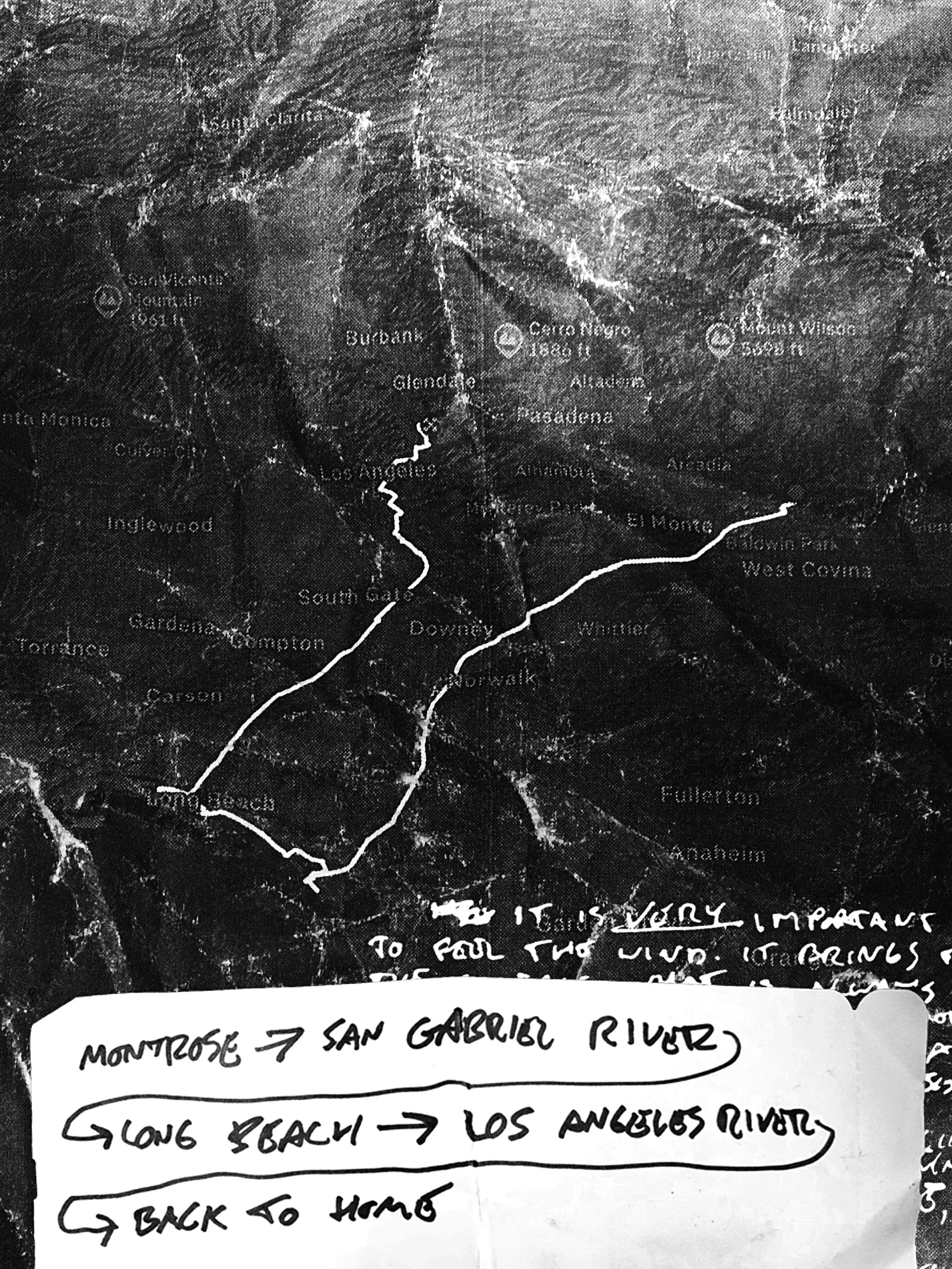
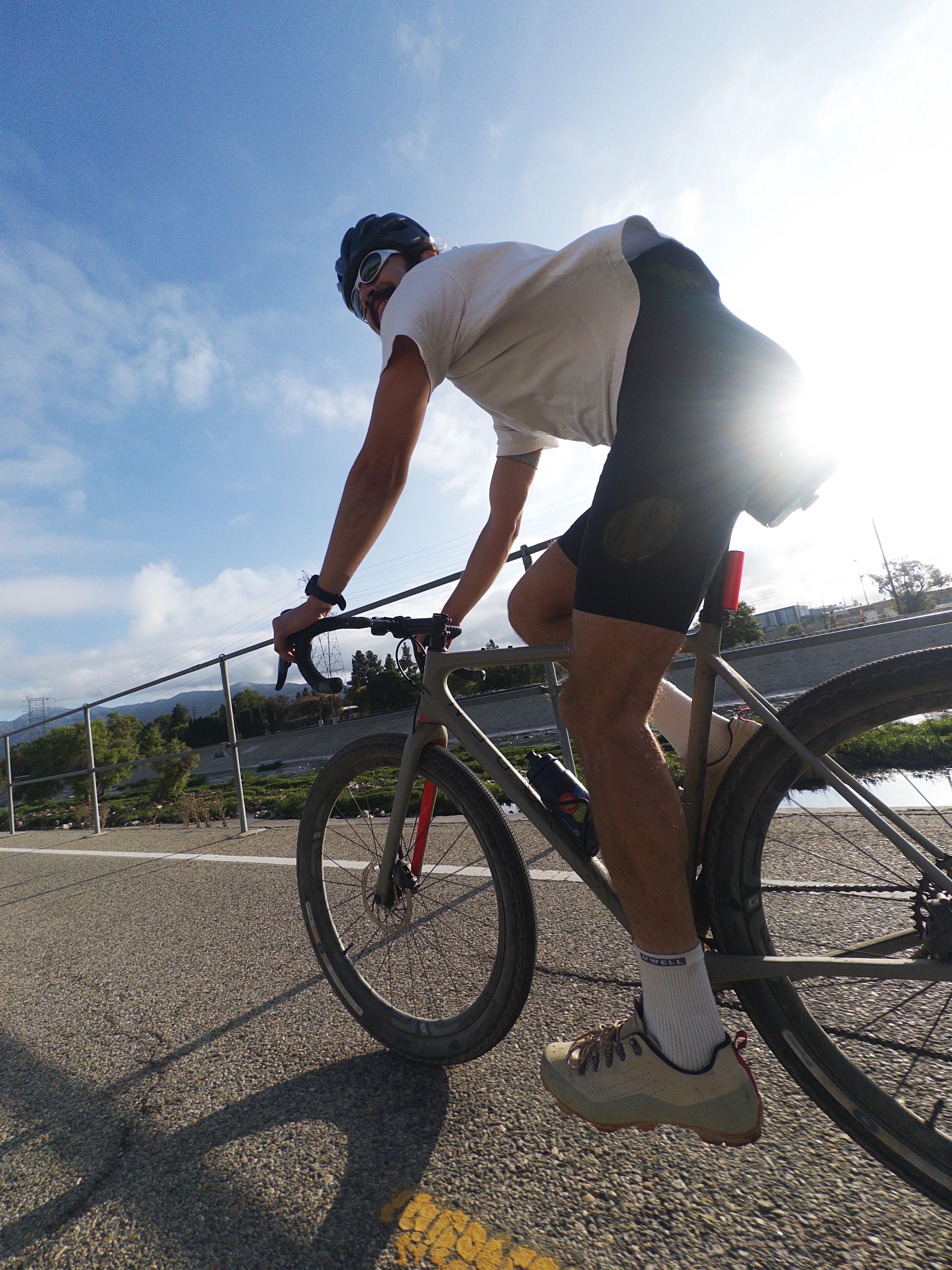
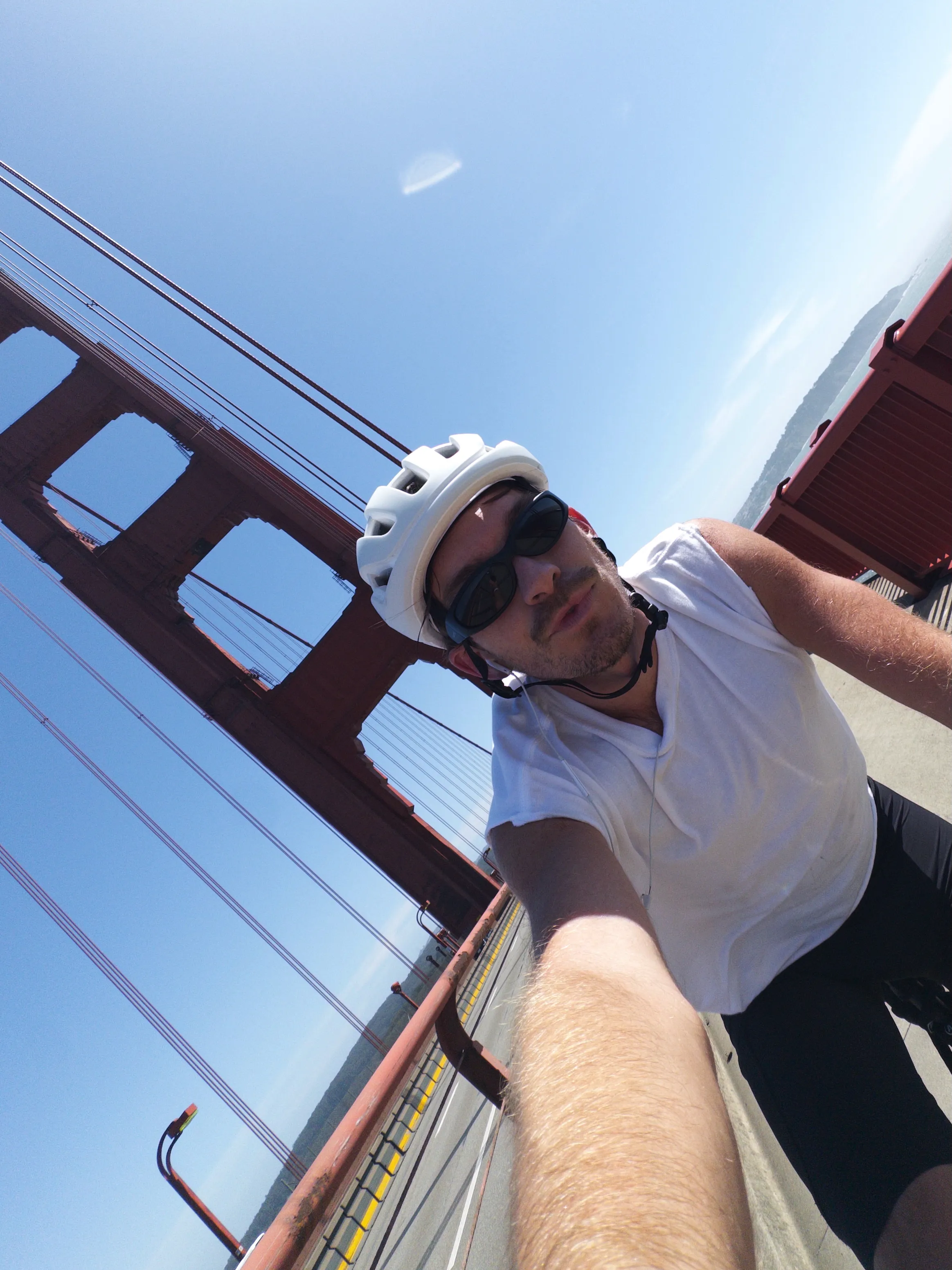
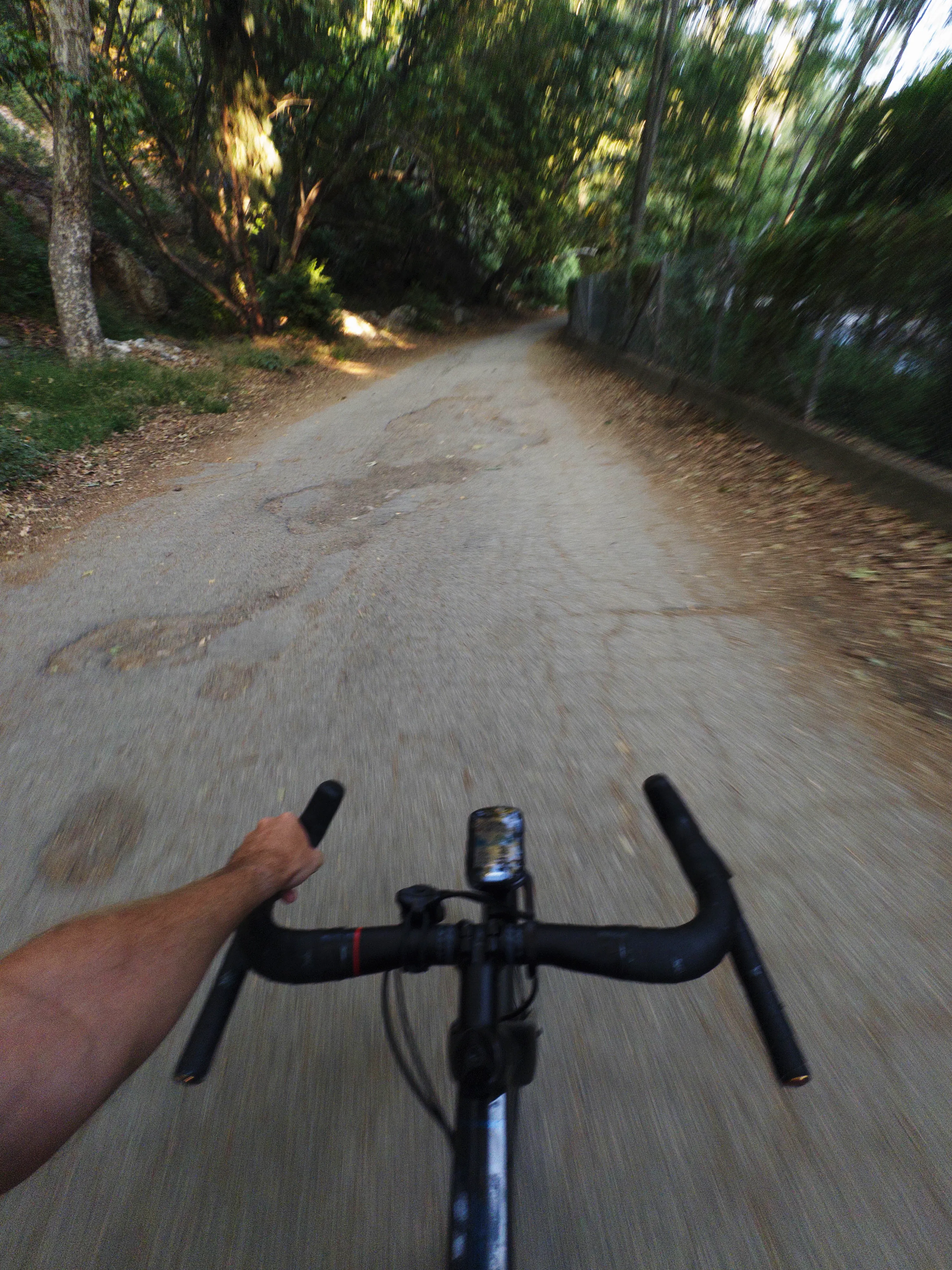
It is VERY IMPORTANT to feel the wind. It brings to the surface what is always true. A medium we all move with and through. Is it a headwind? A tailwind? An absence? A presence? Do you feel the resistance or the push?
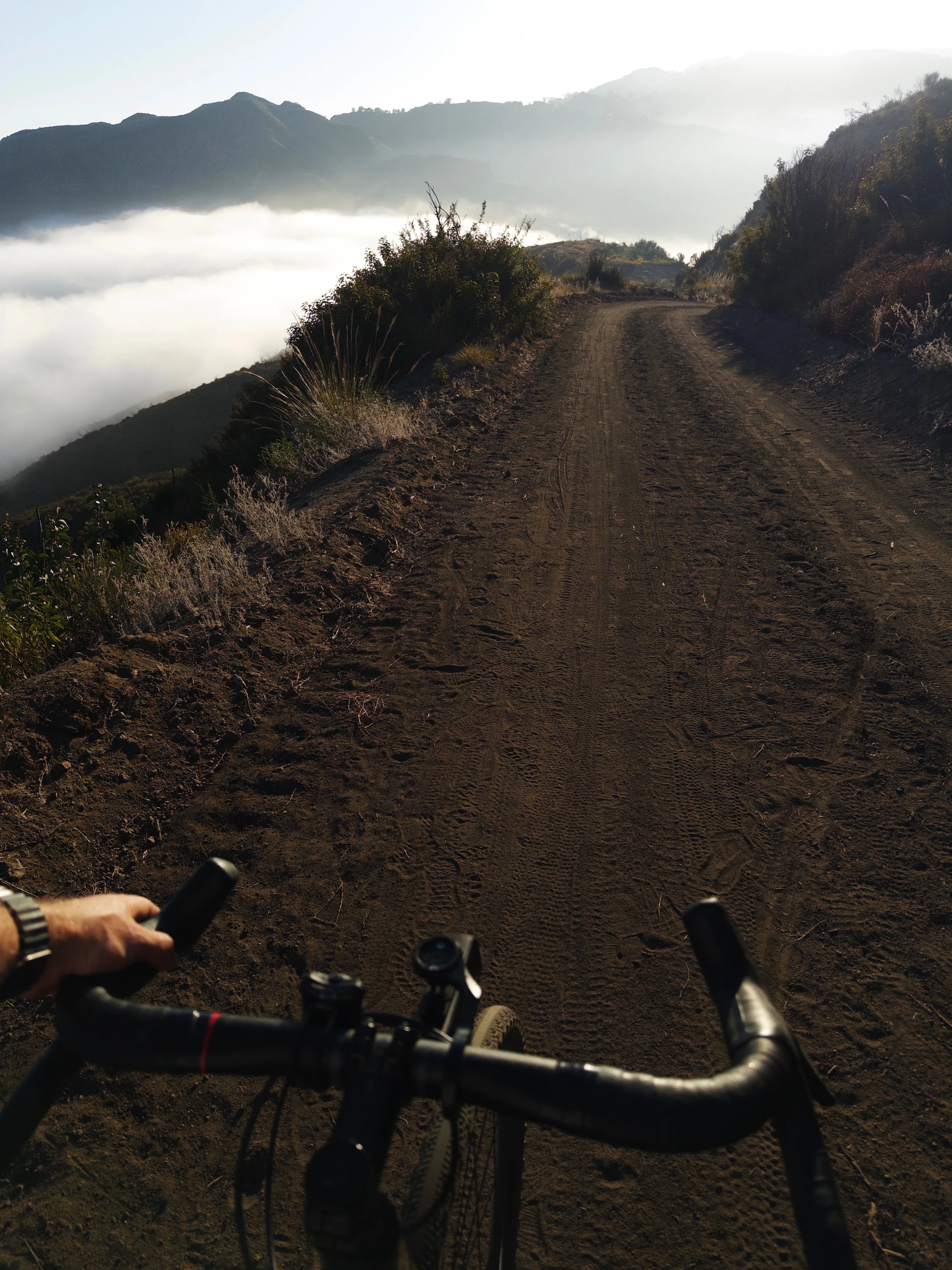
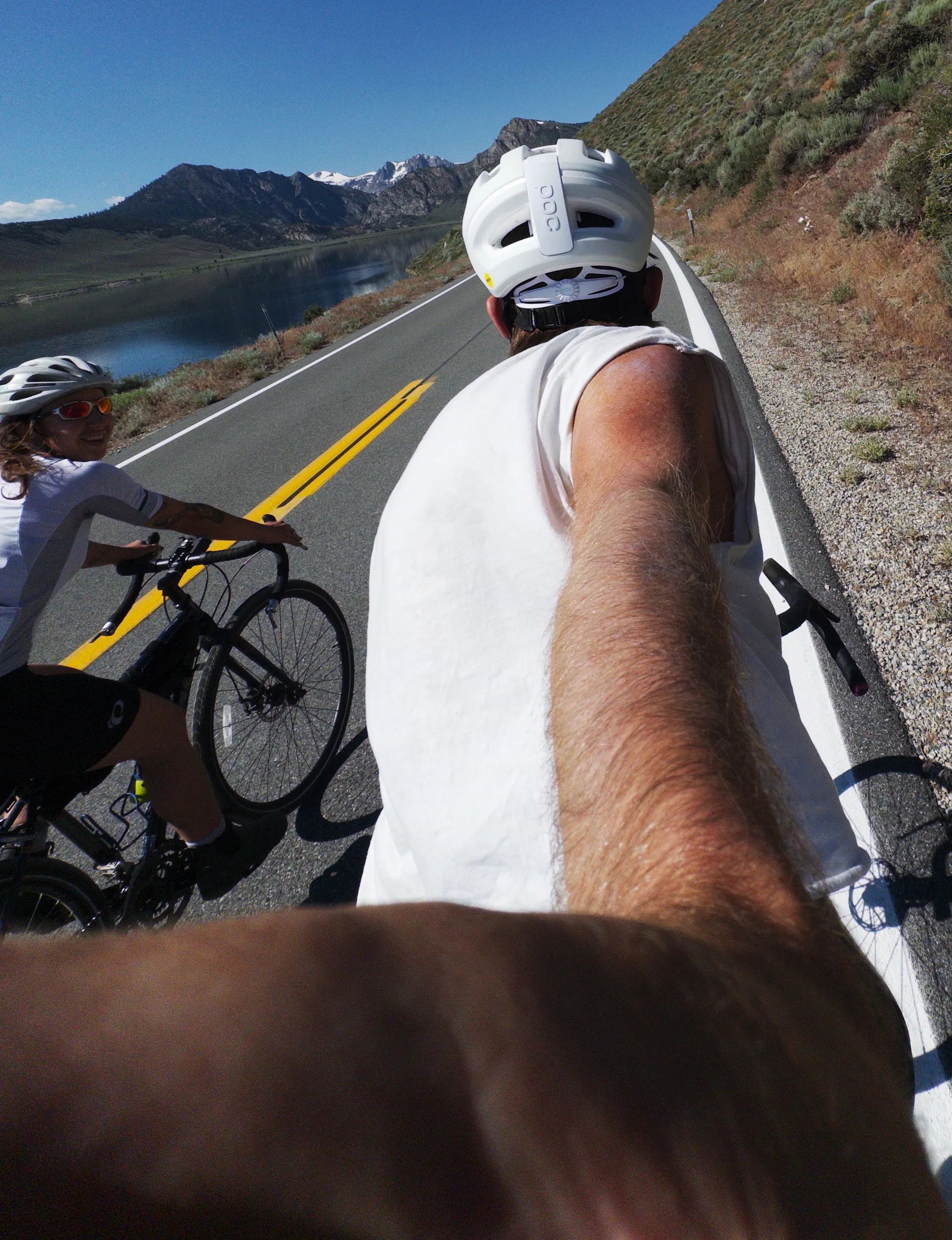
Get a bike and you increase a sensitivity to air and wind and body. At first when you’re on the bike, then increasingly when you’re off the bike. A crucial shift in distance and duration uniquely through an exchange between the biological and the mechanical.
Riding as gesture towards not being one to participate in “the forgetting of the air.” Bike as tool for awareness of the air. The wind. The arch-mediator that mixes everything together. “Air never takes place in the mode of entry into presence, except in the wind.” Movement into presence. Thanks, Frank.
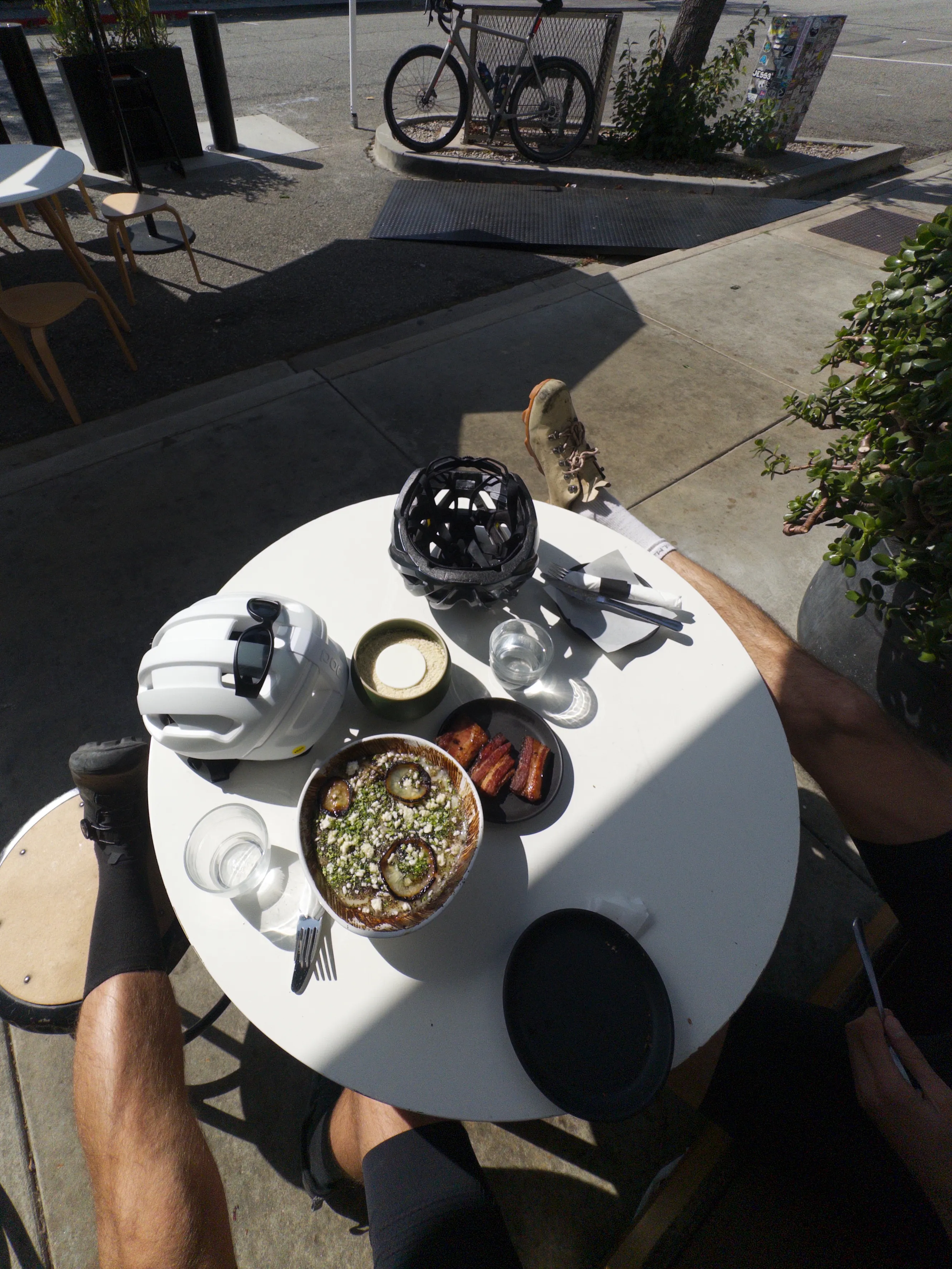
You find yourself in places you have no reason to be, other than the route affords good riding conditions. Less traffic, better surface. You may pass a 7-11 playing very loud classical music through cream-colored speakers mounted streetside. You might stand there listening for some time. A path terminating at the port, the scale leaving an impression of awe like the granite walls of Yosemite.
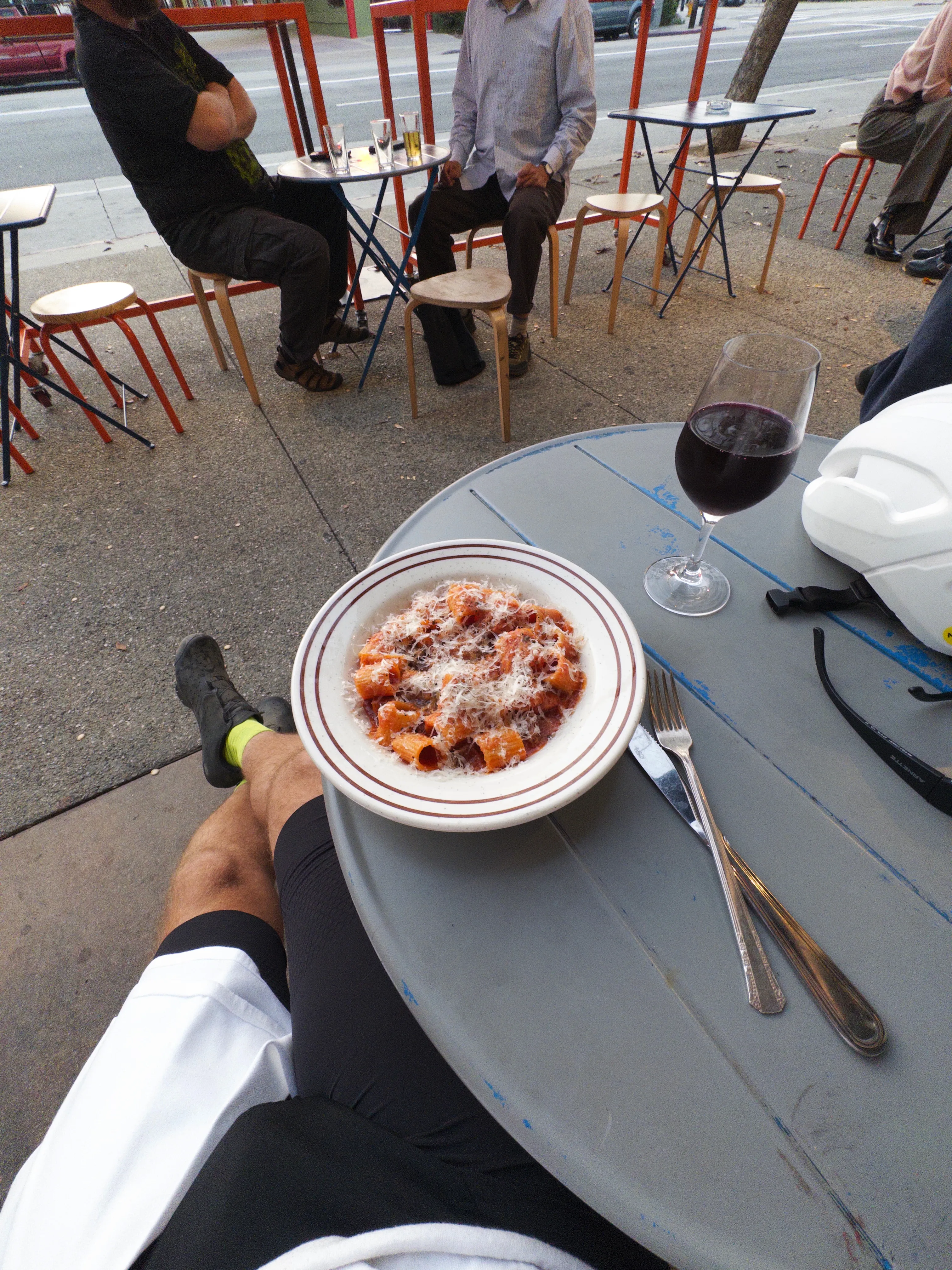
Walls of fragrance. Clouds you’d be shielded from behind the glass of the car. Blooming jacaranda. Water reclamation. It all hits. Want to pick a route? Follow the nose. Bring a friend. Bring two. Bring twenty. What’s another plate of pasta and glass of Boulay?
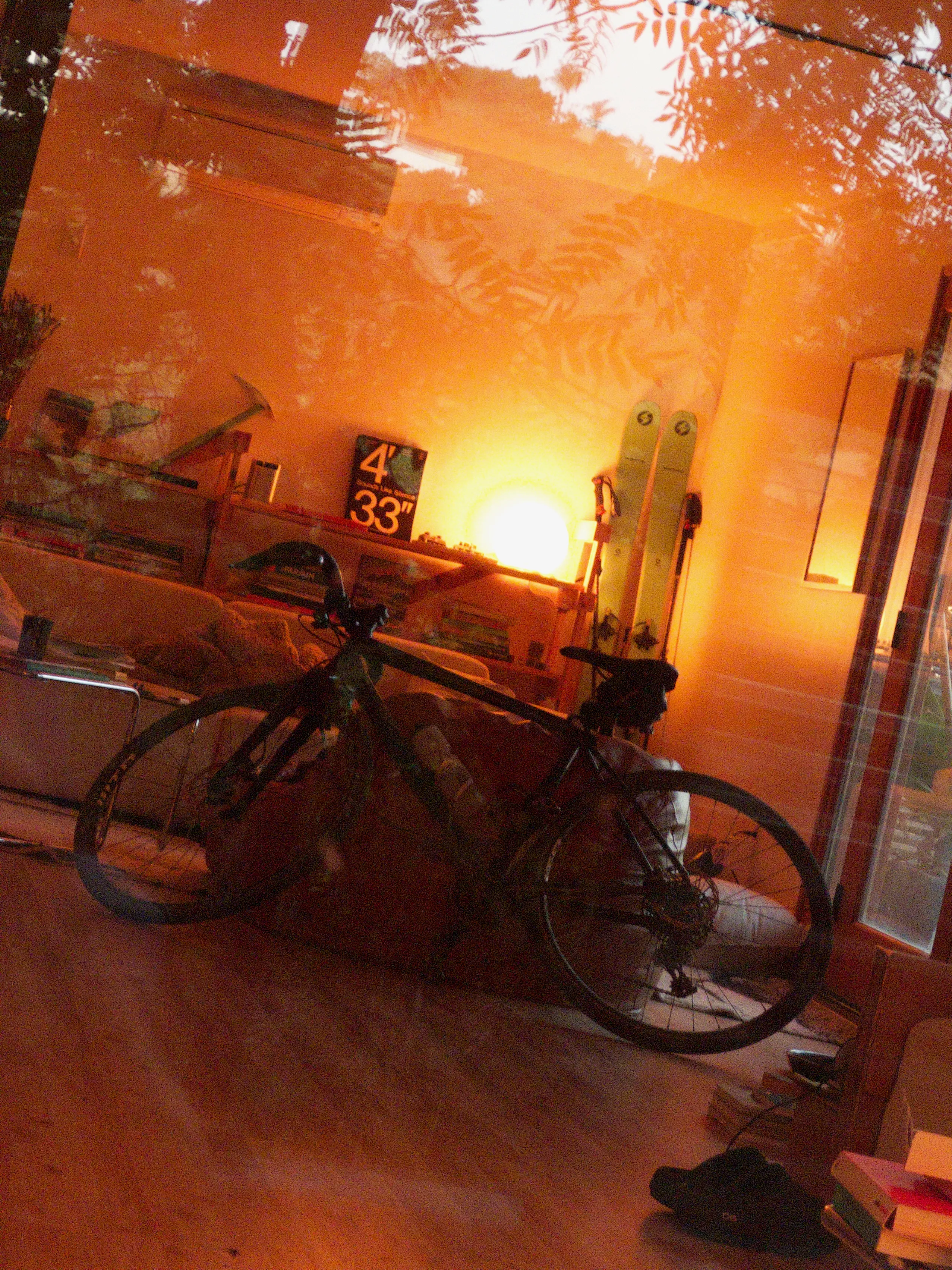
Sit atop the saddle and let the scene pass by.
Blink and the day has passed by too.
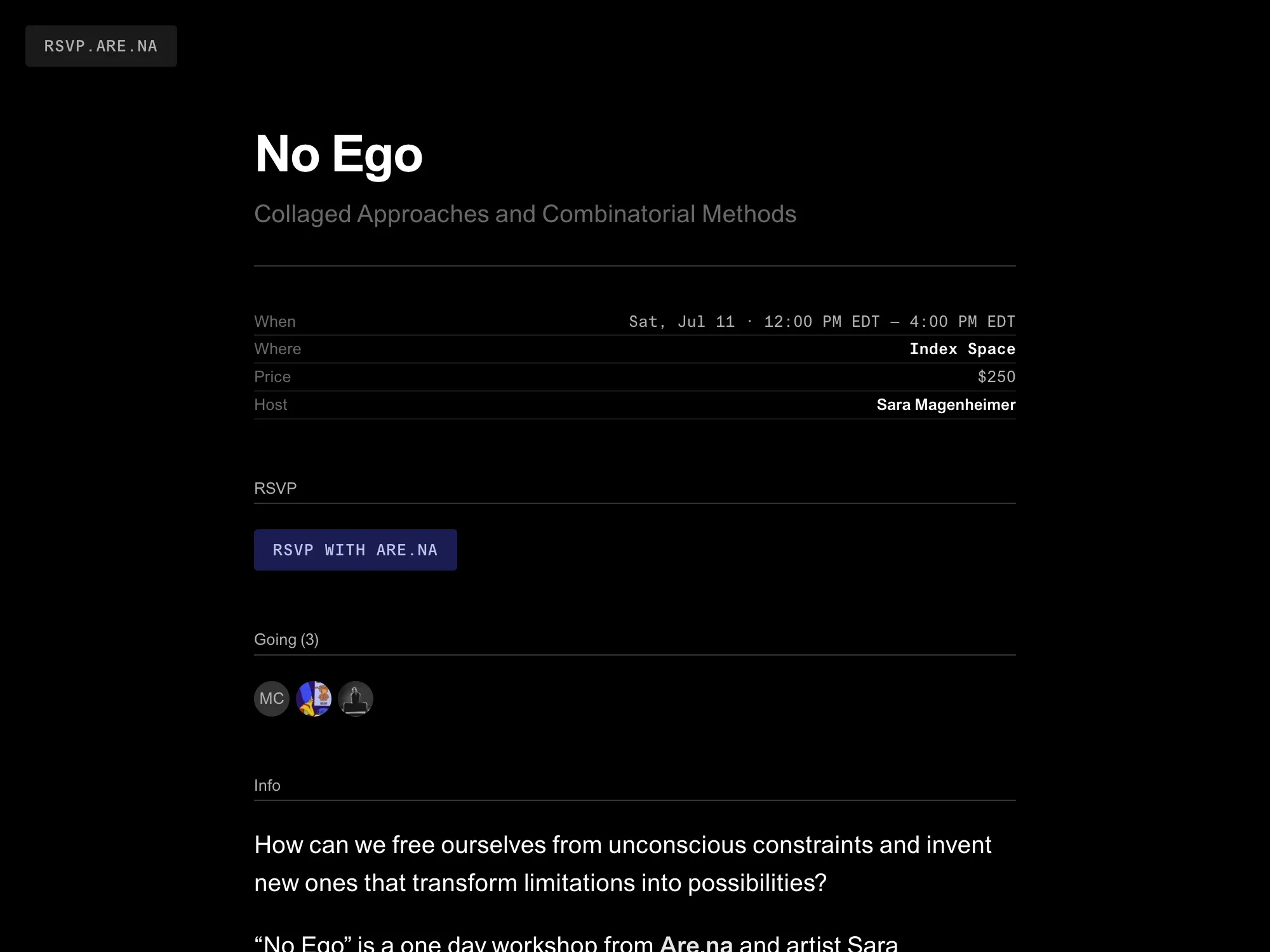
Are.na is teasing an RSVP app at rsvp.are.na, where you connect with Are.na to RSVP to events. I have thoughts on this.
rsvp.are.na
In trying to explain Are.na, I often return to an infamous channel. “How do you describe Are.na at a party.” It’s quite funny, because like most all things good, Are.na is undefinable. Particularly at a party where no one is on Are.na.
But if you asked me, I’d say Are.na is less about the interface, or the functionality. That is all necessary in support of making Are.na possible. But it is not Are.na.
It’s the set of values, principles, and the people who connect them that makes Are.na what it is. People defining and occupying a space where they draw connections between what they love and value and care for.
So if you go to a party where the only way you can attend the party is to be on Are.na, you don’t need to answer the question of how do you describe Are.na at a party. Everyone knows. It’s in the air. There’s built-in connection and shared context.
This is in stark contrast to something like Partiful, which is for absolutely everyone and no one simultaneously, like many apps and platforms. No signal. Just utility. Just an interface.
Don’t get me twisted though. The interface for Are.na and the mobile app is critical, and has recently improved drastically. I find myself using it more often as the ergonomics fit into my life better. The updated web client optimized around speed and performance set the tone. The mobile app ran away with it. But I wouldn’t say it’s the differentiator here. That’s the utility. Are.na is the people.
But of course, examples of pure utility and interface exist which feel deeply connected to the principles and values of Are.na. The attributes that give it that quality. Single-player tools like Obsidian come to mind.
So what’s the difference?
Partiful is going about it funded by venture capital, playing the blitz-scale playbook. Are.na is supported by the people who use it through subscription. There was an early equity crowdfunding campaign, but most of the contributors were already users, and it was a pittance compared to the typical venture check.
It’s impossible for Are.na to be that venture backed blitz thing. Why? Because you can’t scale the care and the love for something in a way that you can scale the pure utility of something. Love isn’t legible to capital. It’s not a resource you can extract. Obsidian feels similar. It’s pure utility, but a sense of love keeps it focused for a specific group of people on the receiving end of the tool.
We’re at this moment where “pure utility plays” can be spun up so fast. You have a thought, and the next instant you can interact with it. This can be lighthearted play, or nefarious attention-fracking. The hard thing is defining the principles and values you hold, and sticking with them long term in the way Are.na and Obsidian have.
For them, it doesn’t matter if the user-base scales beyond a very reasonable place where sustainability is achieved. You actually don’t want everyone becoming a user. You want a narrow group of people who get it.
One of the biggest challenges for Are.na is how not to scale at a certain point. I could see Are.na getting flooded with people trying to RSVP for certain things, but it’s not very likely, as RSVP isn’t core to the utility Are.na provides.
I’d be interested in seeing how the Are.na context could be used to shape the RSVP process. Allowing only those who’ve had an account longer than a certain period of time. Or a certain number of channels and blocks. Perhaps a certain number of connections from others. You can only RSVP if you attach a channel to your request, and it is reviewed to inform approval. I can see how these requirements could lead to certain social traps, too.
I’m curious to see how this may or may not continue to be developed, released, and used. The tool itself is simple. You can connect the Stripe API to a vibe-slopped version in minutes. Or simply use Partiful. So why use it at all? For that same indescribable quality that makes answering how do you describe Are.na at a party an impossible thing.
I personally want to use this for a writing/reading group I’ve wanted to begin for years and years. The focus is Trip Reports. Time spent in movement. On foot, on skis, on bikes, whatever. Looking at it with deep perceptual awareness and appreciation for environment. Often trip reports live as carousels on Instagram with a brief caption. I want to know what actually happened, and I want to be able to riff with you and ask questions. Maybe eat some snacks, too.
Make it a picnic. Some picnics are writing-oriented. Other picnics are reading-oriented. They can switch. Long live Are.na.
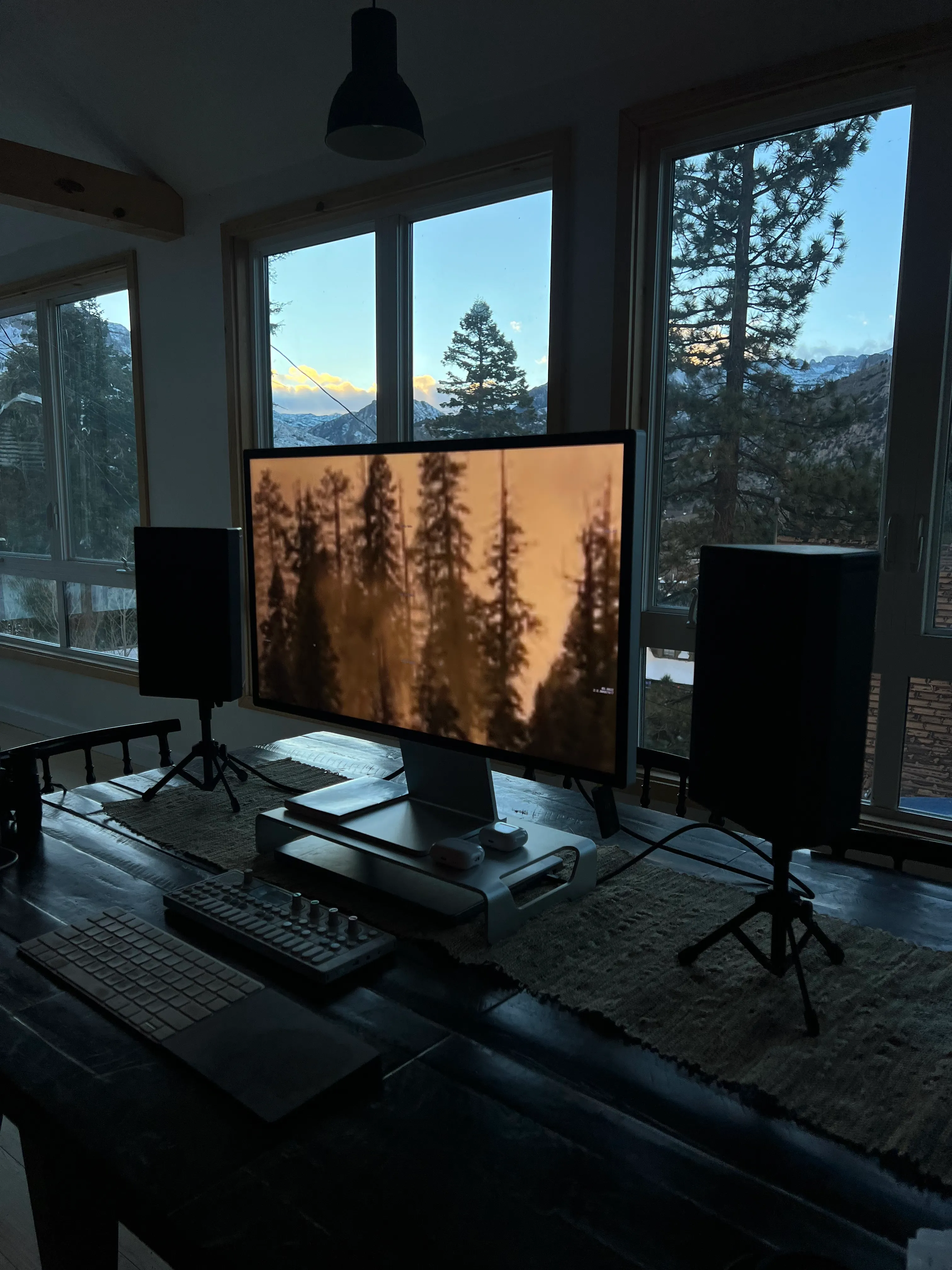
Sometimes you just have to sit on it. These loops were sat on for three years. Recorded in June Lake in the Eastern Sierra during the first winter storm of the season over a day or two.
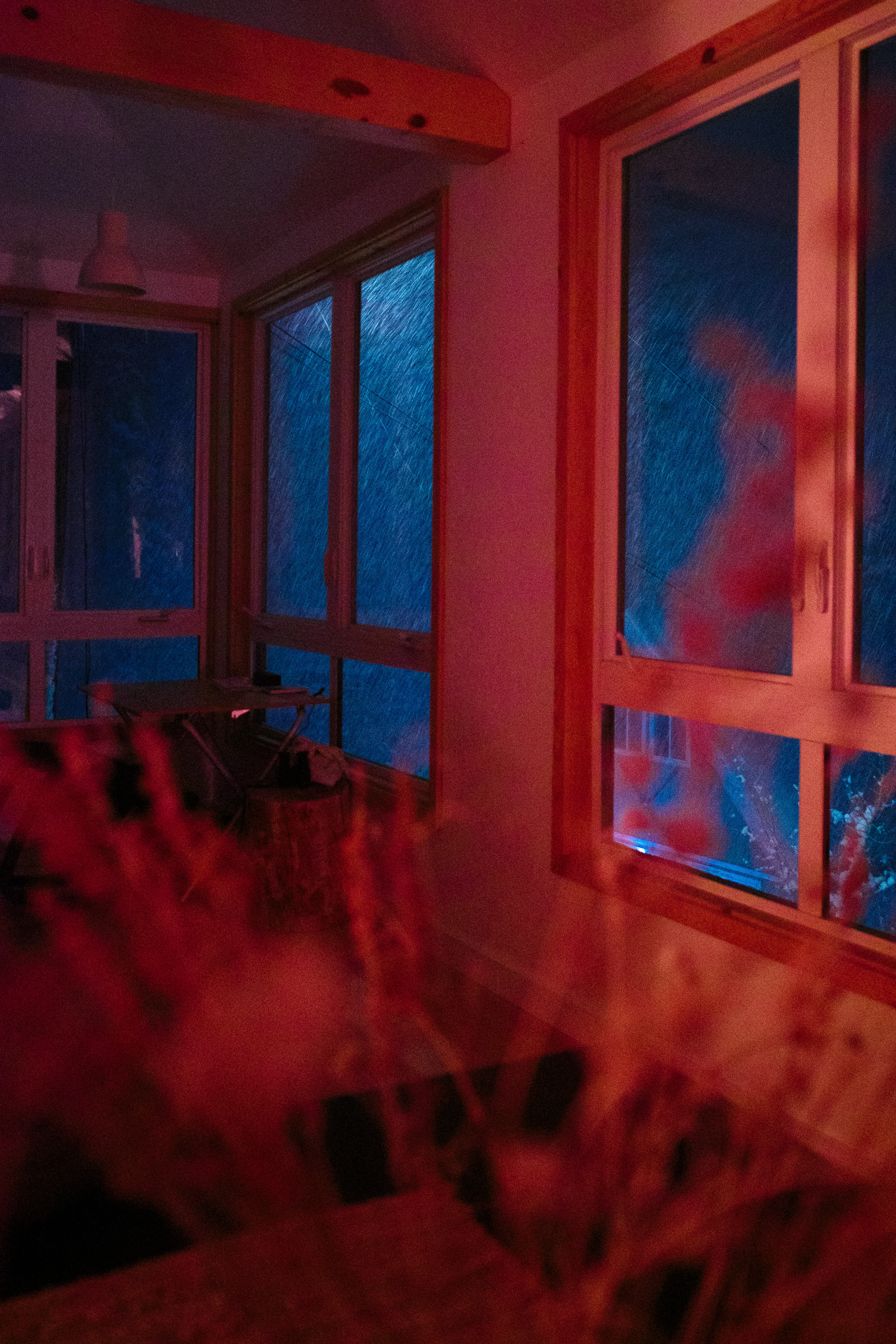
Snow just starting to fall. Watching it wrap around the contours of the hillside, falling past the windows. Eddies kicking up and carrying on down the street. The single pane glass no good at insulation, but great for shaking in the gusts, sonically signaling when velocity picked up out there, giving a connection despite being in here.
Making a loop takes devotion to repetition. It goes nowhere. If it’s good it takes you somewhere, though. Doesn’t evolve or change that much. You have to sit on it. A loop can be done as soon as it starts. That’s how these settled. Pretty quickly, but they didn’t feel done until now, although nothing changed, nothing happened to them between now and then. Can’t say the same about me. I guess that’s what it took.
The sound loops are paired with visual loops. Positioned and scaled by chance. Tap to intervene. Never the same twice. Listening now, as summer sets in, looking at the San Gabriel, it sounds like winter setting a few years back, looking at the Sierra. Seasons, repetition, all that, sure enough.
You can download the tracks, the video, the source for the interactive player by tapping download. You don’t need to install anything. Just drag the index.html file into your browser. If you want to fuck around, make it your own, replace the videos, replace the tracks, drag the folder into Claude Desktop and start describing the changes you want to make, remix it, whatever.
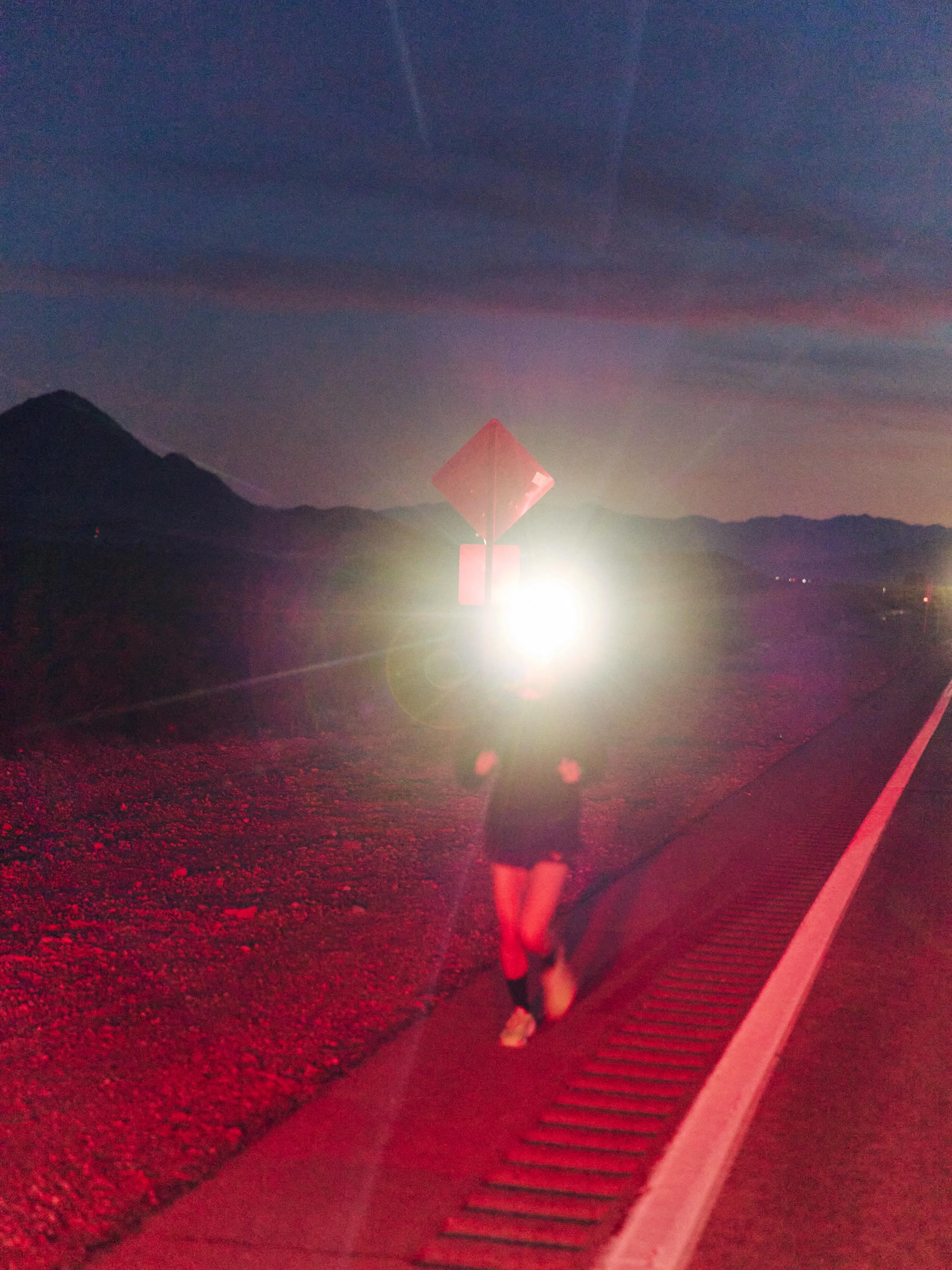
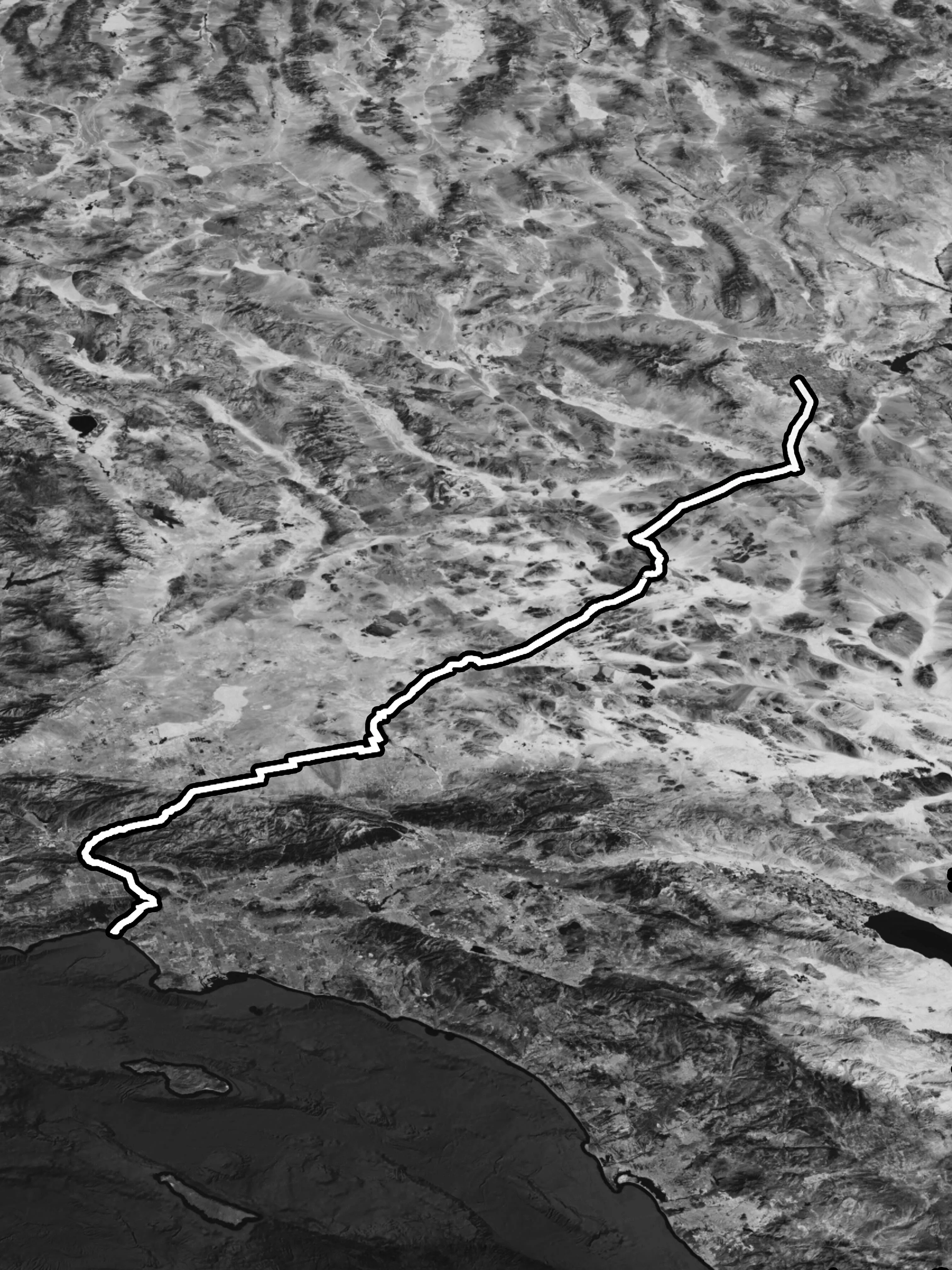
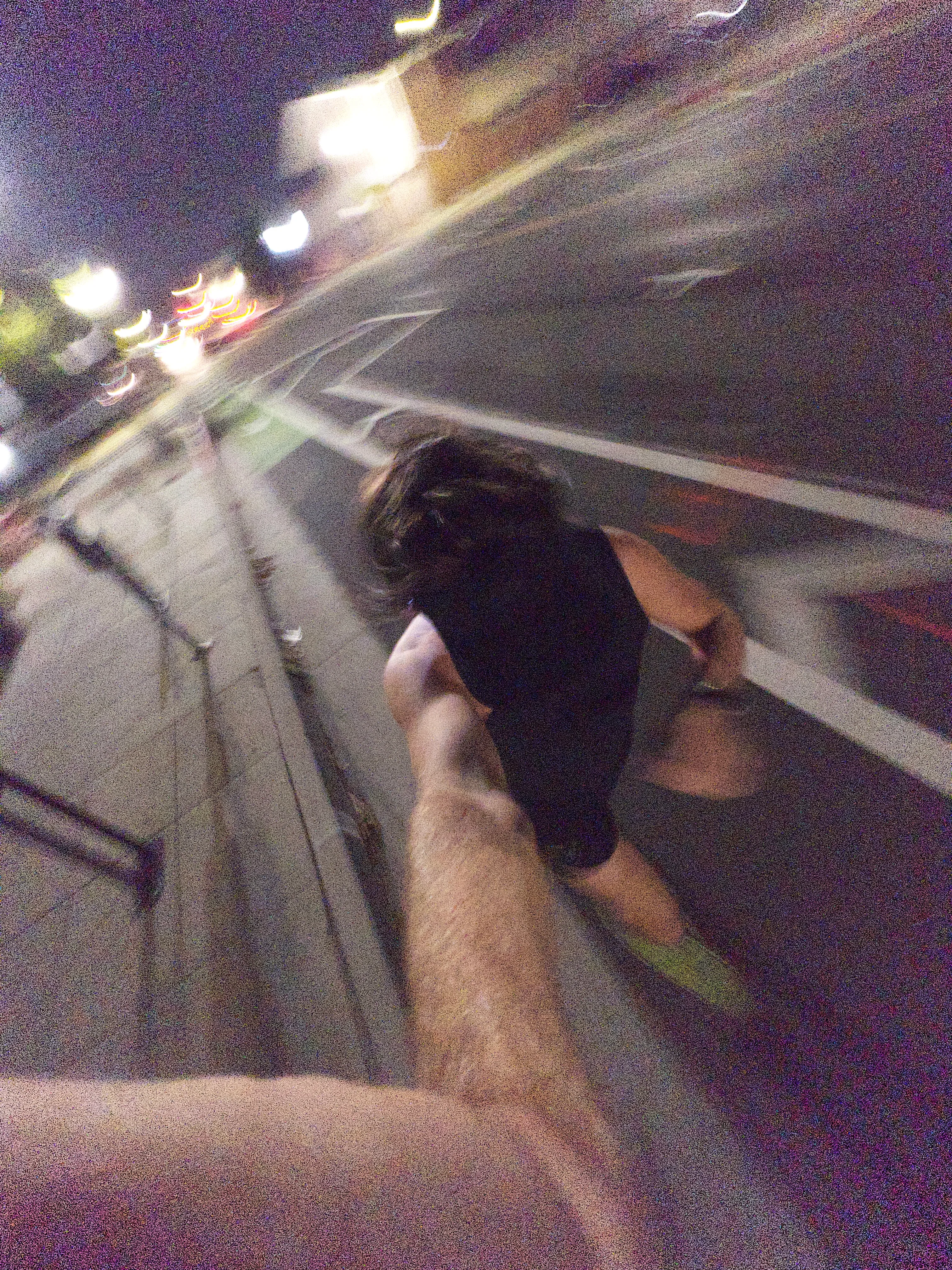
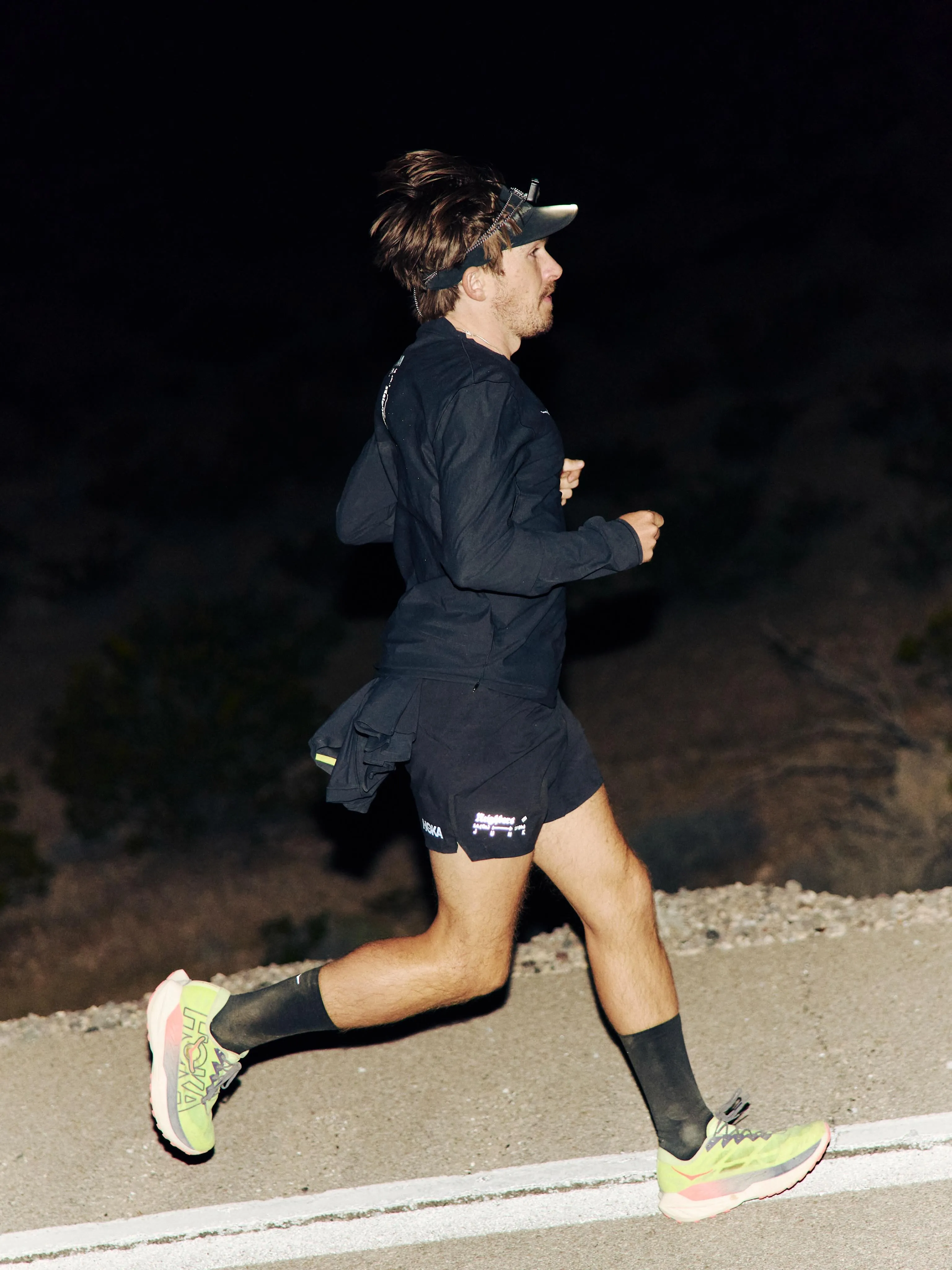
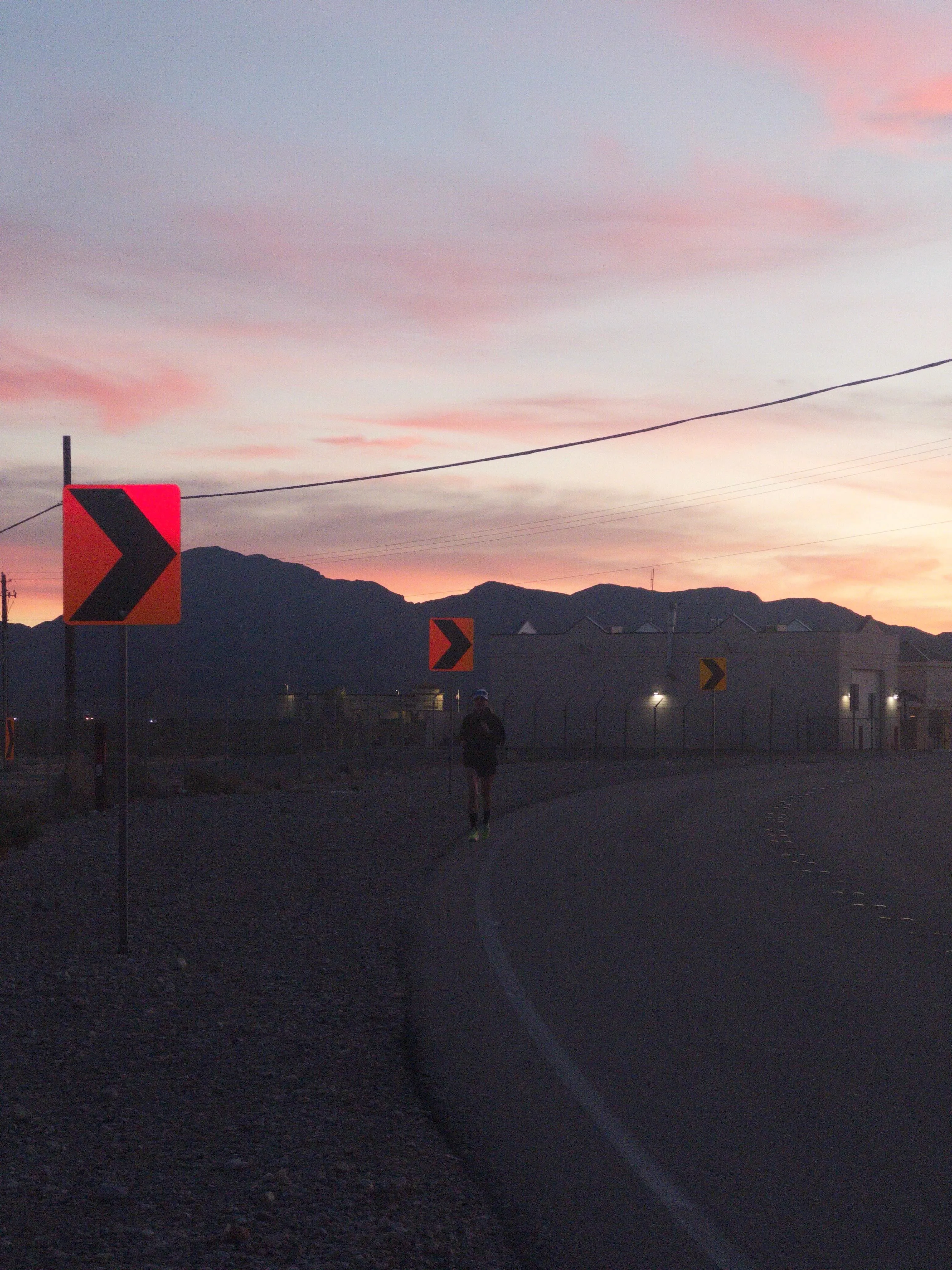
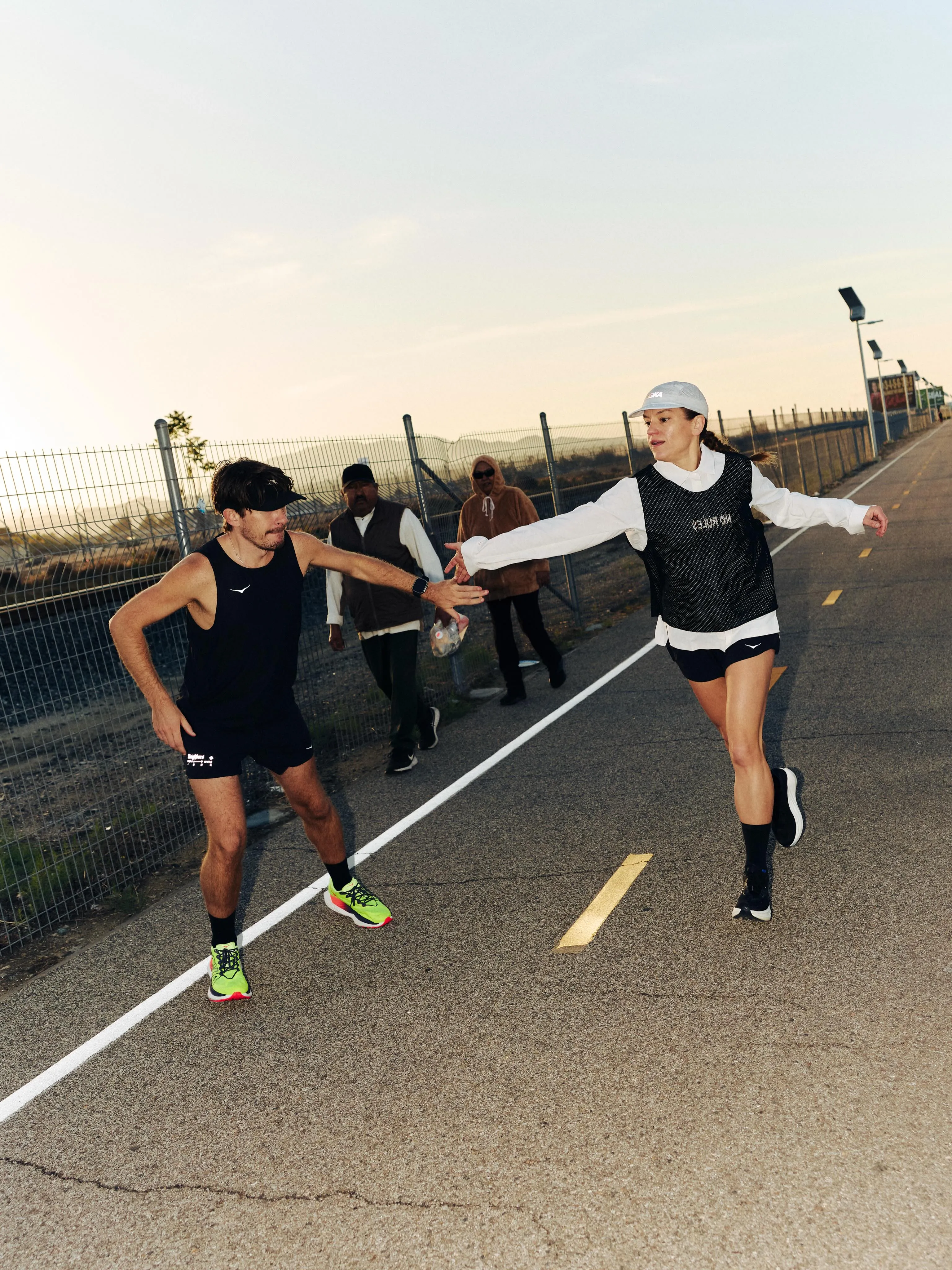
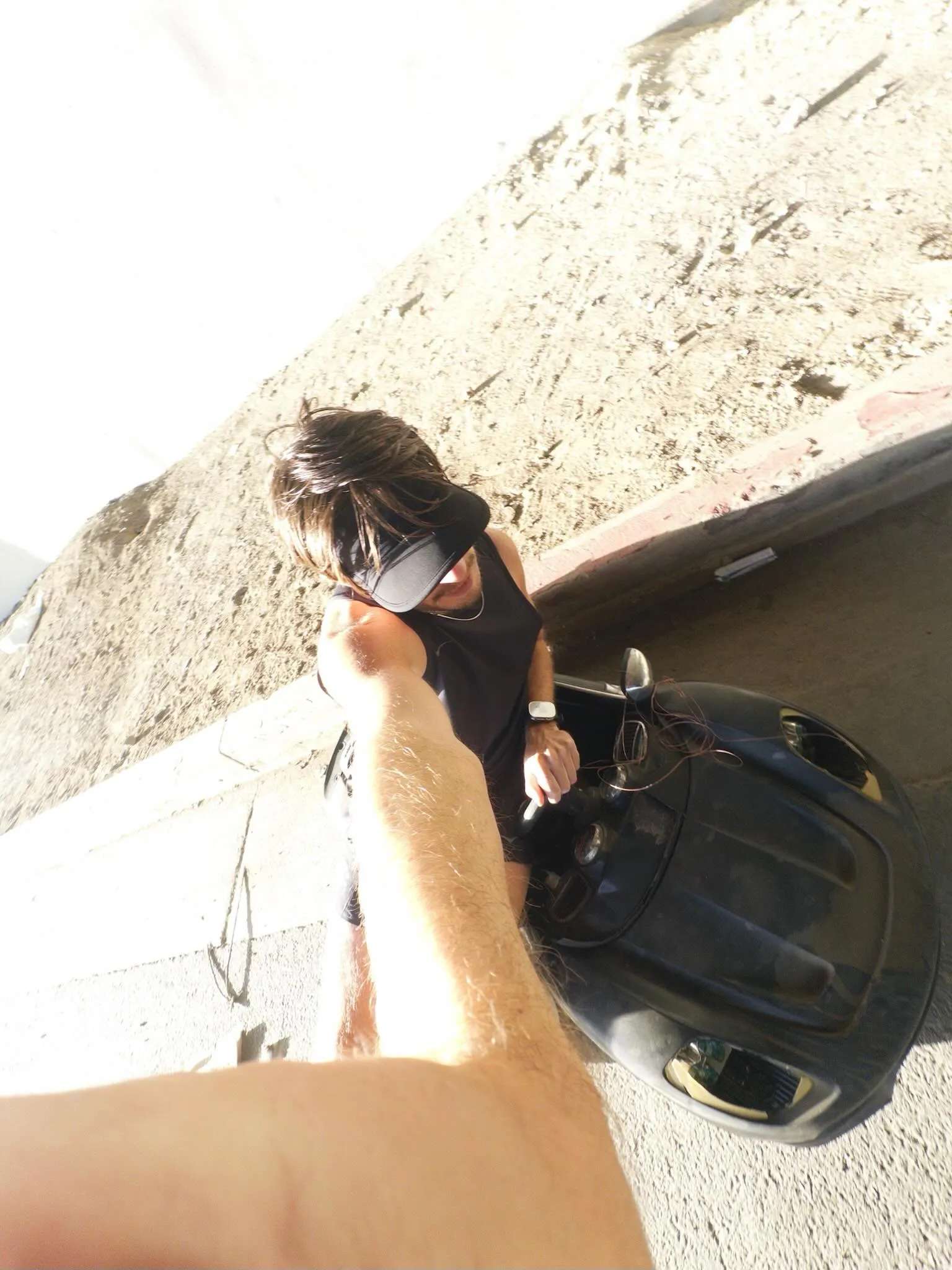
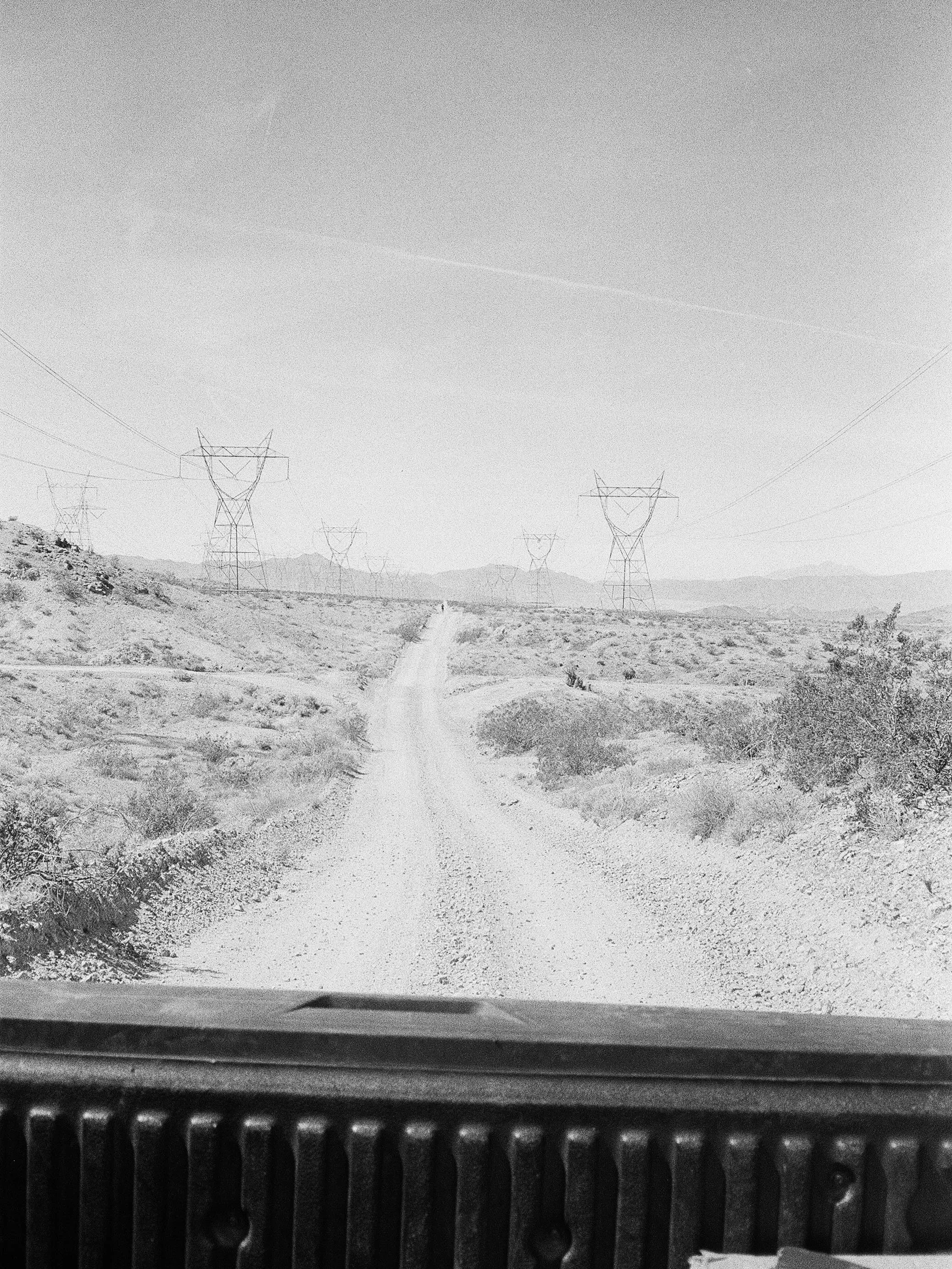
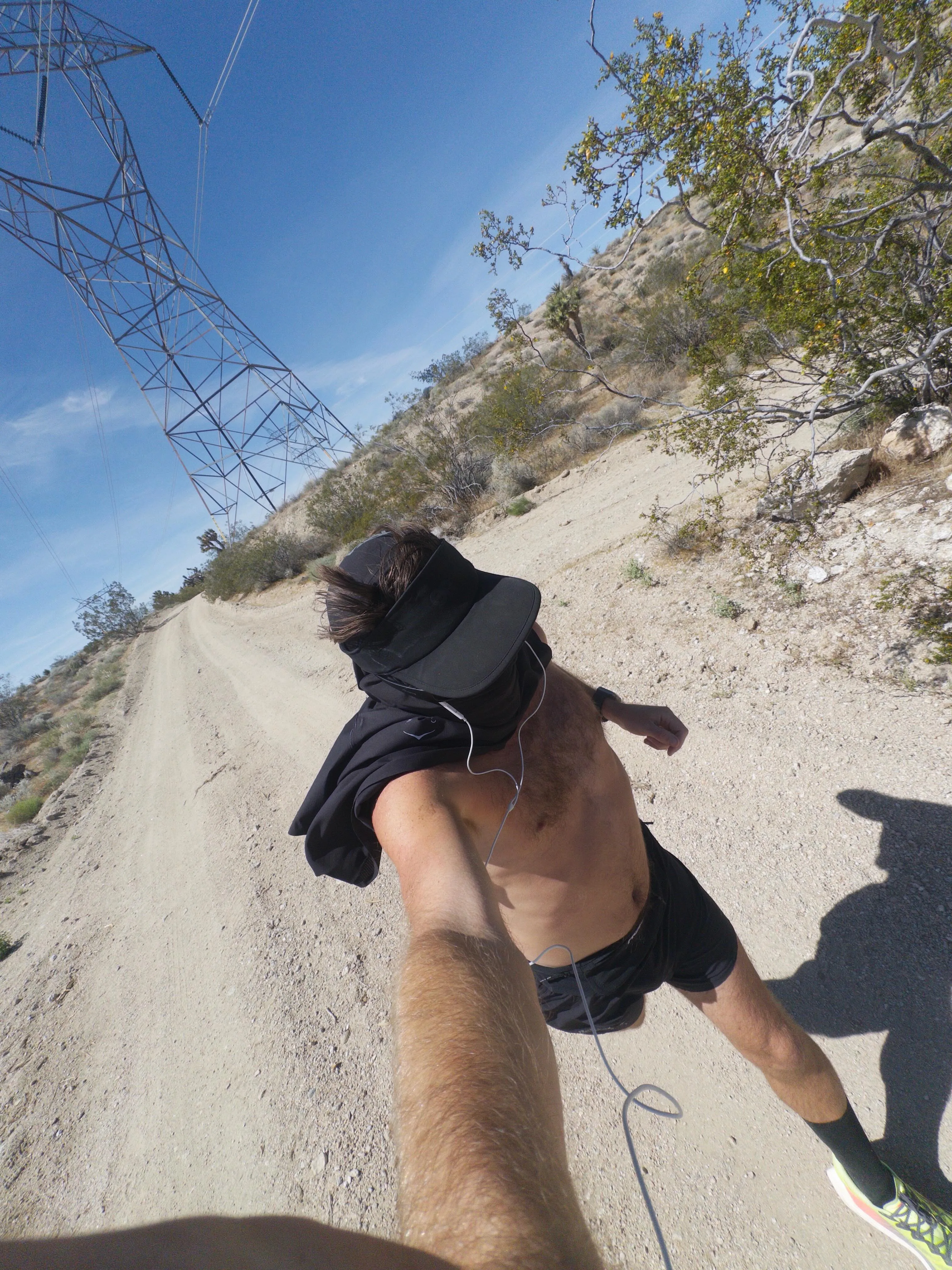
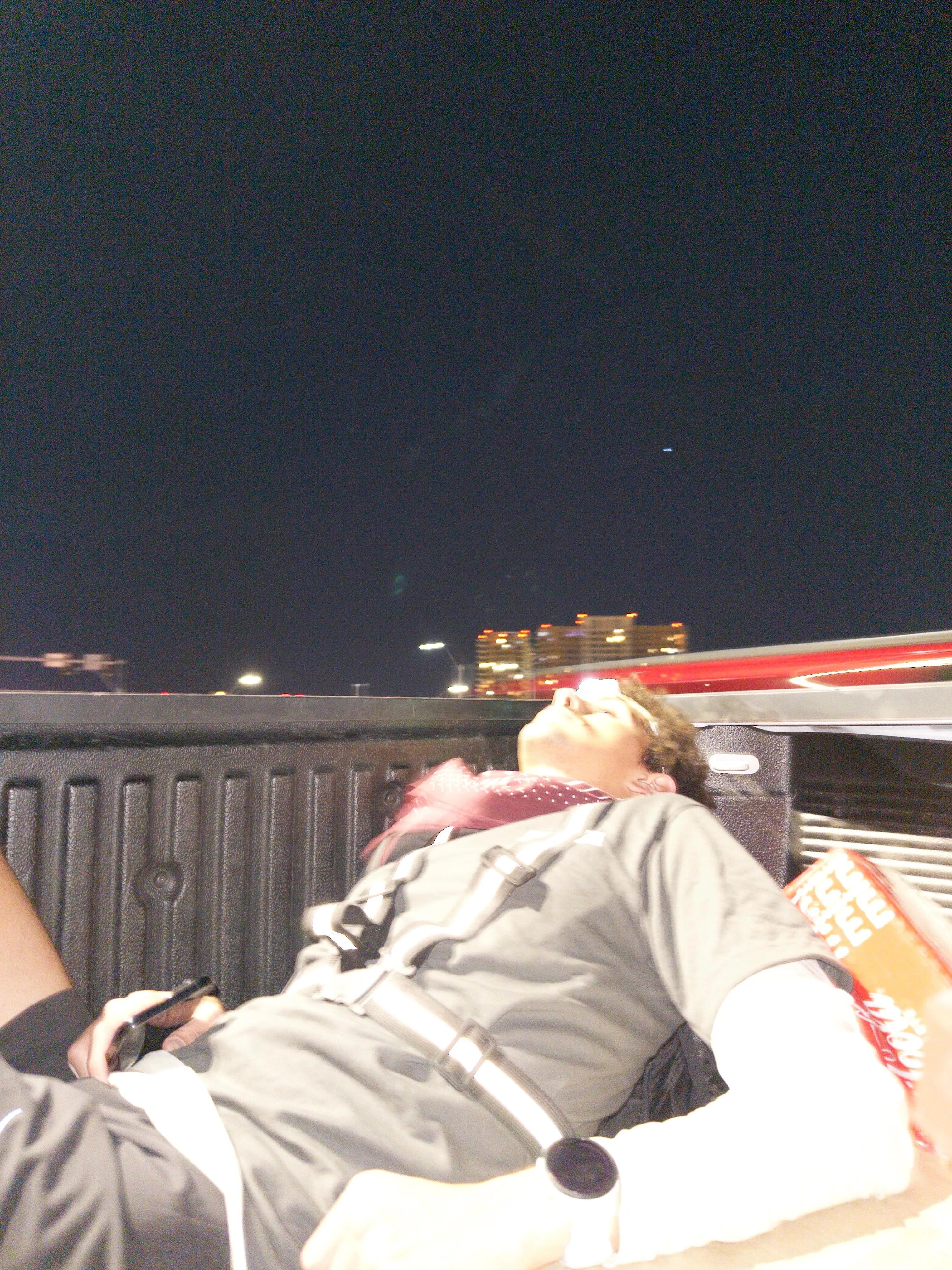
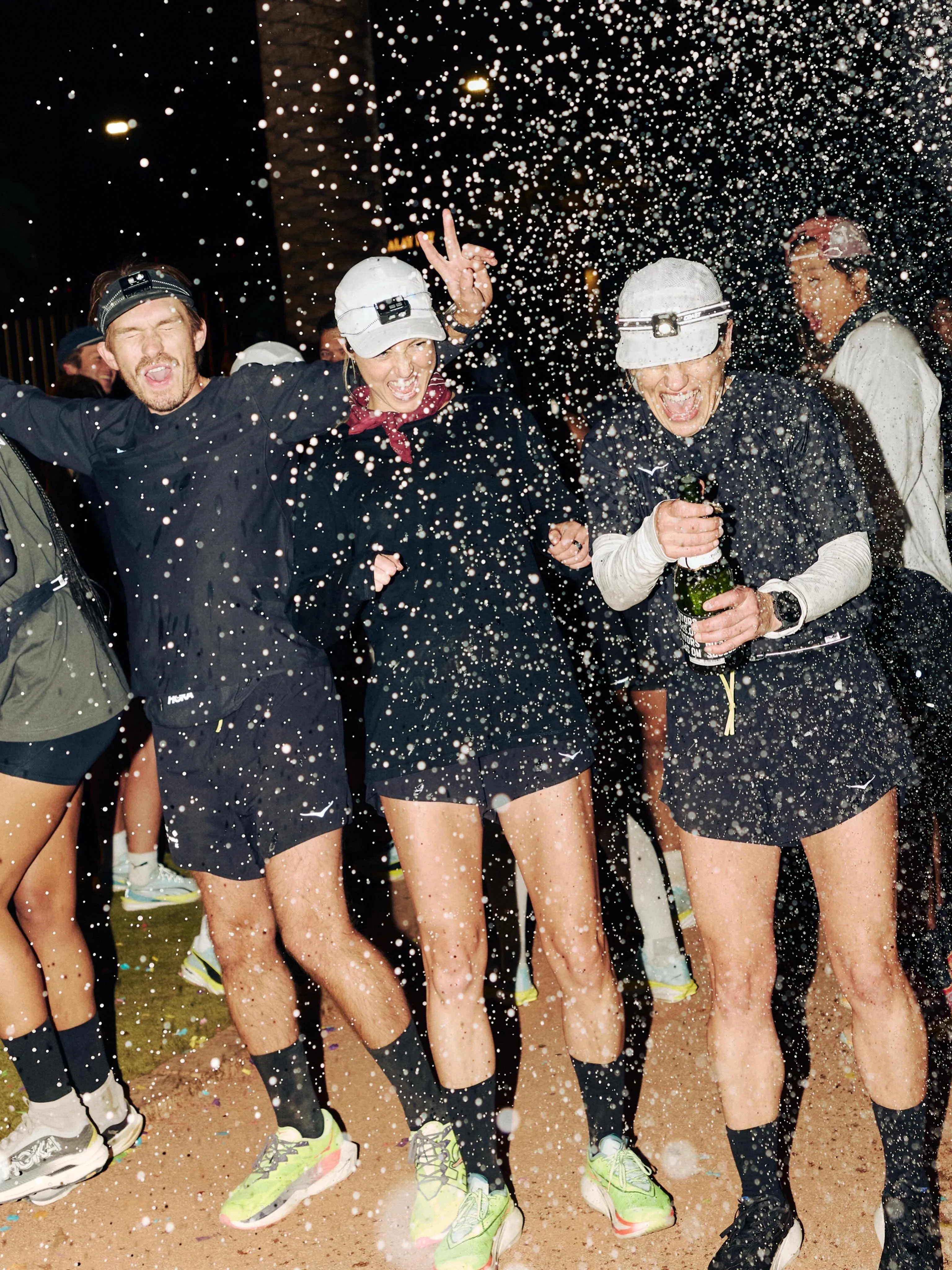
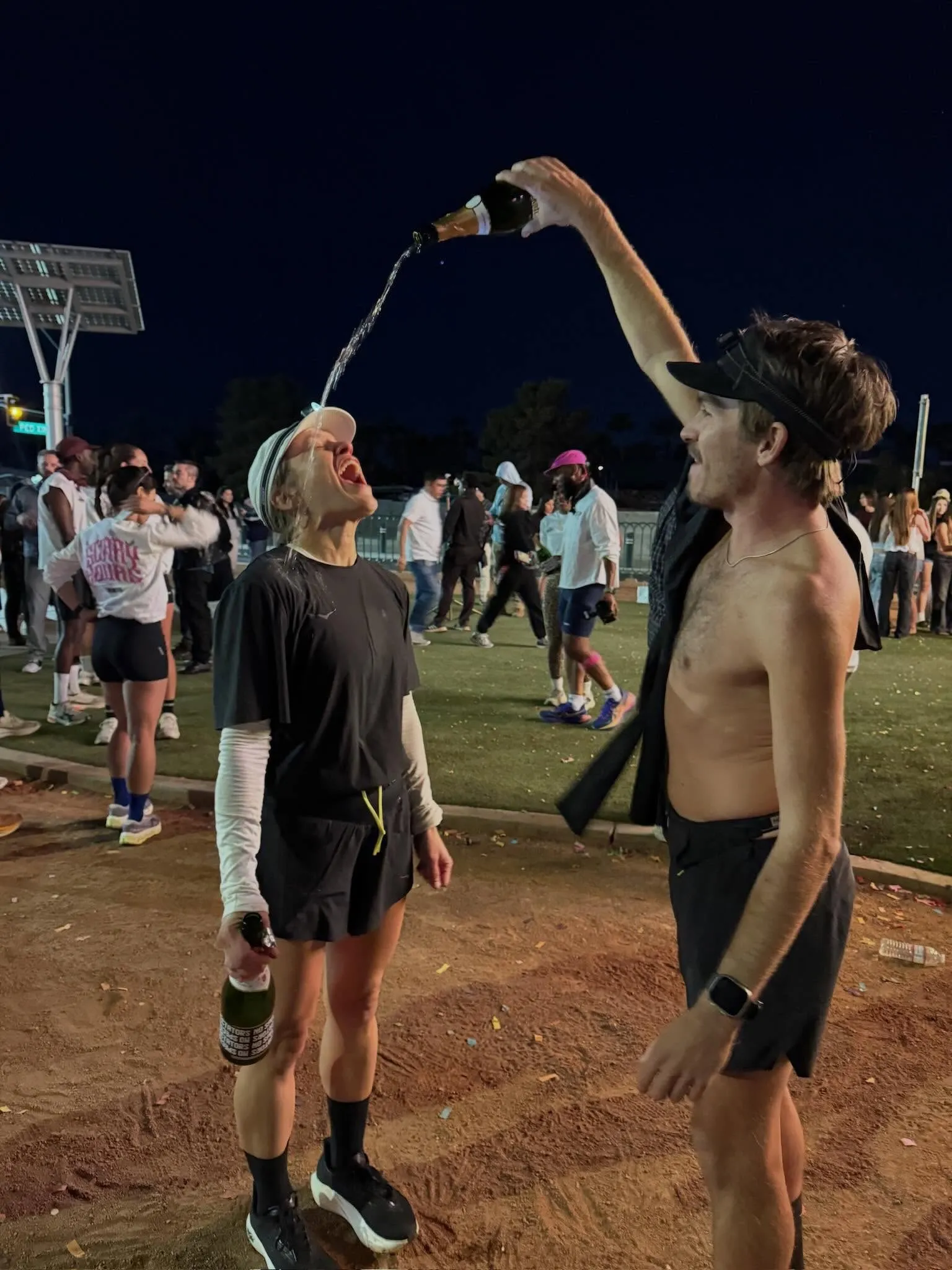
300 miles, 41 hours. 6 friends on foot, 4 crew. When you get asked “want to run a relay race from the beach to Las Vegas” one possible answer is no, but then none of this would’ve happened. Gather in the lot. Heavy eyes but we snap each other out of it. Rough idea, we head out.
Cold front spilling down Newhall pass, headwind like a hurricane climbing into the desert. Sand blasted. Hop out, run, handoff, hop in, again and again and again and… a lot of movement, a little progress.
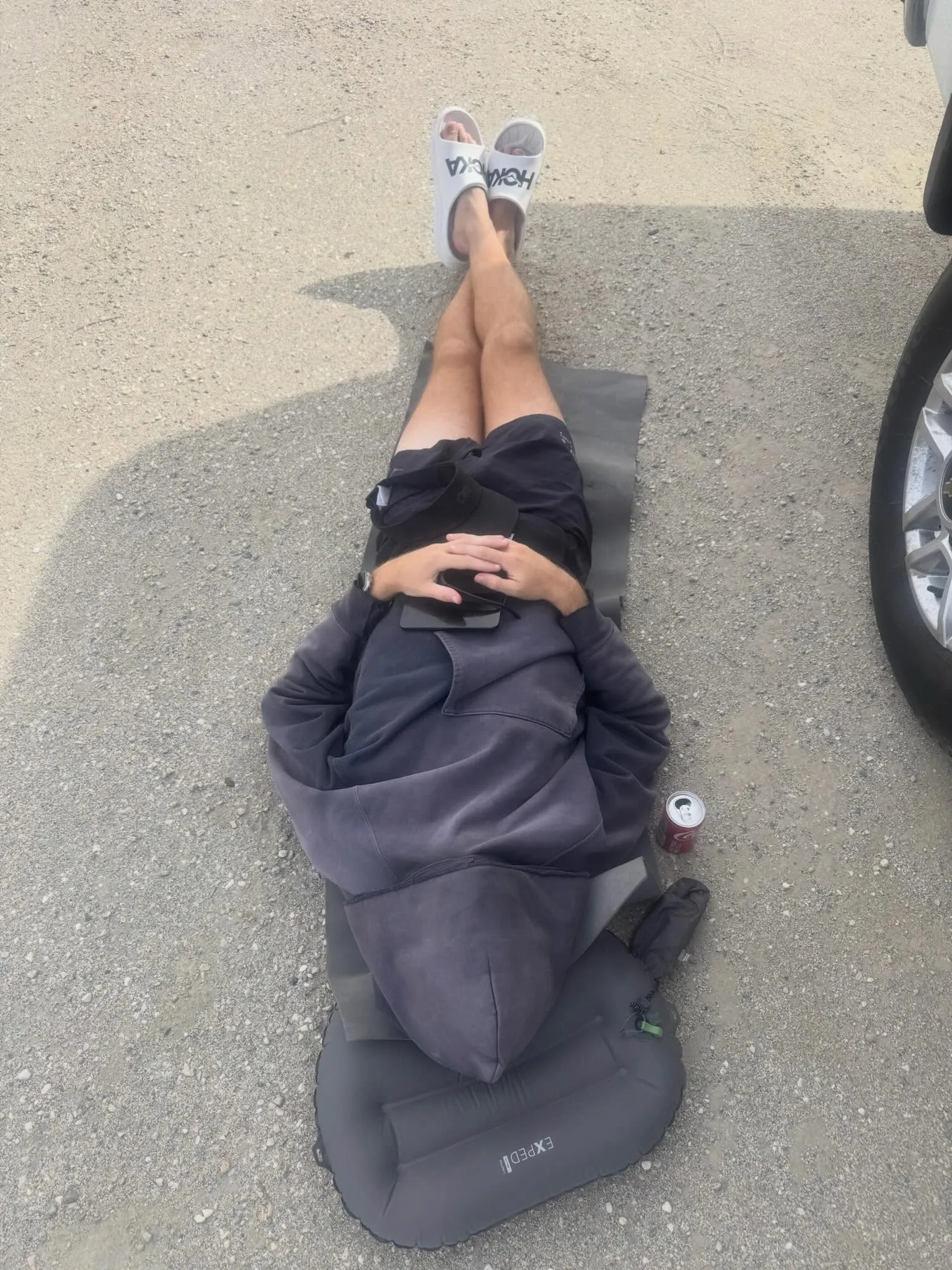
Ruffles and Electrolit never tasted so good. Pour the crumbles over me and let me bathe in it. Dirt naps never last long enough. Dogs bark as the sun dips heavy, headlights rip past while hugging the shoulder. Moonlight illuminates folding terrain as the chaparral cast dancing shadows.
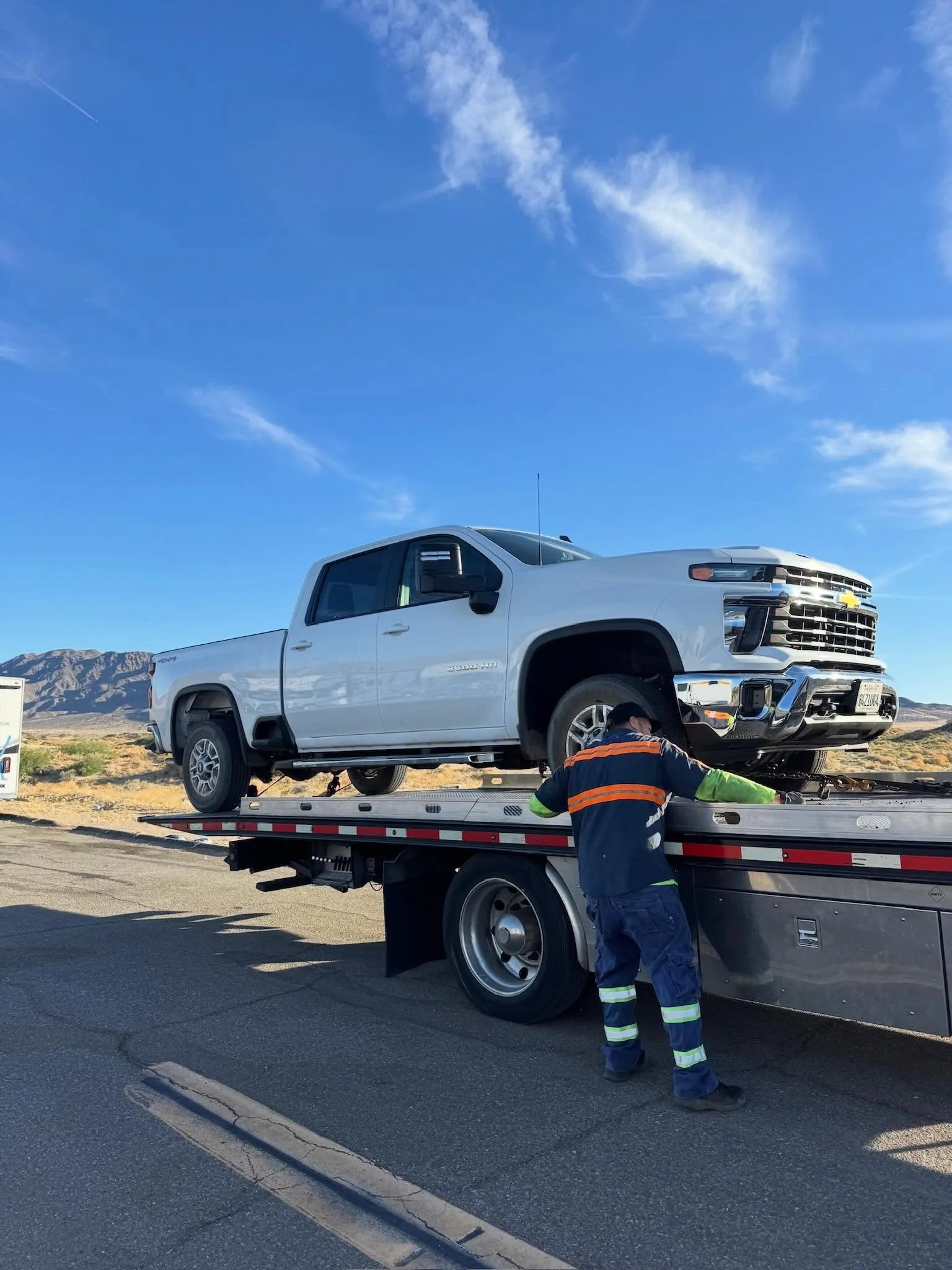
Sunrise. Heavy duty trucks aren’t supposed to fly like that. Any snapped necks? Somehow not. On the feet, on the toes. The other truck tosses in the hat and I might not be far behind. Tow it in. Sleep? What sleep? Nap here, nap there.
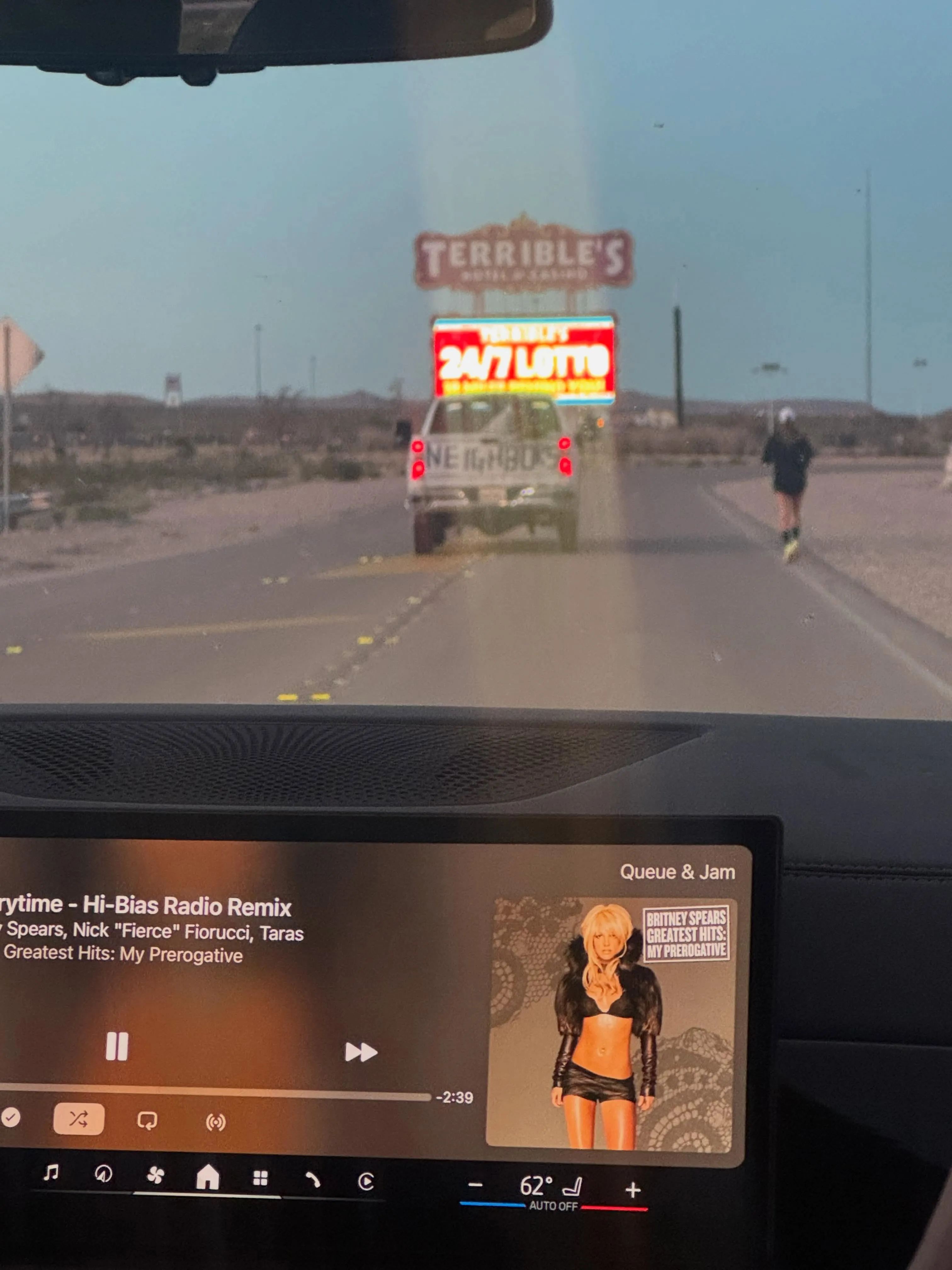
Roasting under power lines in the mid day. Where do they lead? Doesn’t matter. Another step, might as well be for eternity. Only this, always, forever, why not? Earth spins beneath our feet as we fall eastward towards the light. Forget the plan. Whoever has legs toss yourself out of the truck bed and get moving. Sprinting or crawling, whatever way it goes.
A special serving of 50 miles for each. Exiting the void, entering the mirage. Here it is, take it. Meandering the casino floors in a daze. Casino bathing in the style of forest bathing. Let the dust settle. There is always something to Learn from Las Vegas.